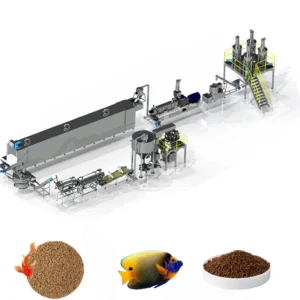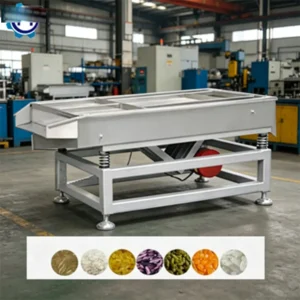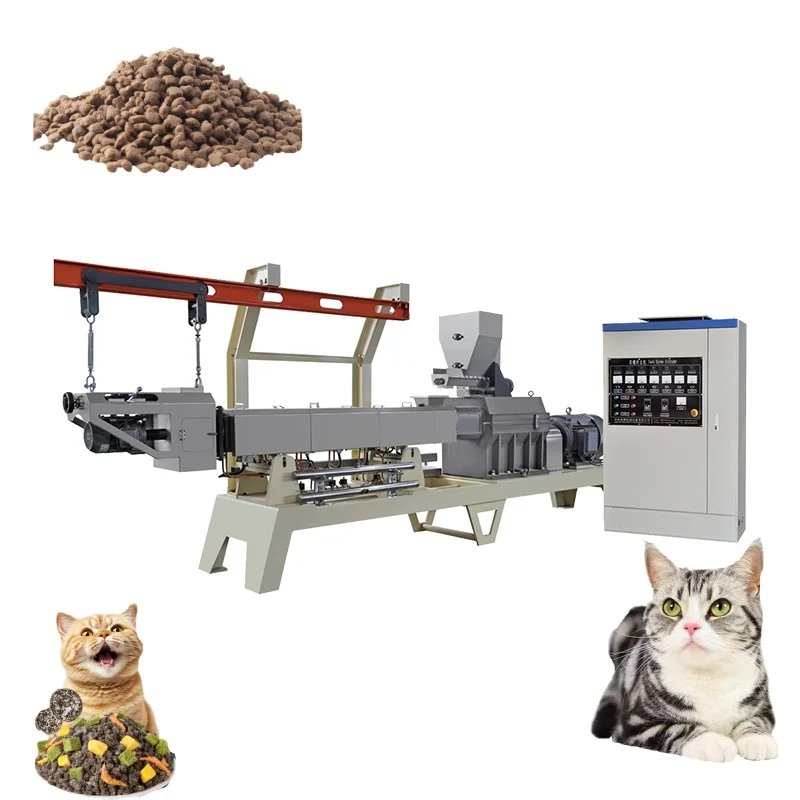
Screw geometry dialed to formulation — Every barrel zone, flight depth and die land length on this line is specified after running the buyer’s actual ingredient blend through our in-house testing workshop, preventing the density and texture drift that generic builds cause when real recipes meet the production floor.
Technical Specifications
| Parameter | Value |
|---|---|
| Product Type | Pet Food Extrusion Production Line |
| Extruder Type | Twin-screw |
| Output Capacity | Up to 3 tons per hour (basis not stated in source — confirm raw material formulation, moisture content, pellet size and density) |
| Applications Covered | Dry dog food, cat food, aquatic feed |
| Control System | PLC and MCC control |
| Line Stations | Batching, extrusion, drying, flavouring, coating, cooling, packing |
| Screw & Die Configuration | Matched to buyer’s raw material and target product |
| Contact Materials | Food-grade throughout |
| Pre-shipment Testing | In-house trial run on customer raw material |
| Warranty | 1 year |
| Certifications | CE, ISO |
Application Suitability
| Application | Material or Output |
|---|---|
| Dry kibble for dogs and cats | Corn, poultry meal, fish meal, rice, vitamin premix blends |
| Floating aquatic pellets | Soybean meal, wheat flour, fish meal, starch binders |
| Sinking aquatic feed | High-protein concentrates, mineral supplements, dense carbohydrate bases |
| Premium functional pet food | High fresh-meat inclusions, grain-free legume blends, hydrolyzed protein |
| Breed-specific kibble formats | Variable die geometries for small-bite to large-breed pellet shapes |
What "3 Tons per Hour" Leaves Out About twin screw pet food extrusion technology
Nominal throughput means nothing until it is validated against your specific ingredient deck, moisture window, and pellet density target.
I have watched lines get commissioned where the supplier quoted capacity on a standard corn-starch test recipe, then the buyer’s high-meat or grain-free formula hit the barrel and viscosity spiked. The screws could not convey, the die choked, and two days of production were lost to scrap [NEED_CITE: typical formulation-induced extrusion downtime]. That is the gap twin screw pet food extrusion technology must close — matching screw pitch, compression ratio, and barrel heating to the actual shear sensitivity of your raw materials before the machine ever leaves the factory.
How Screw Flight Depth Dictates Kibble Texture
The depth of the screw flights in the feed and compression zones determines how much mechanical energy transfers into the dough. Deeper flights move material gently, suited for fragile inclusions like dried liver pieces or vitamin carriers that break under high shear. Shallower flights in the metering zone generate the compression needed to gelatinize starch fully before the material reaches the die. Getting this gradient wrong means kibble that either crumbles during packing or stays too dense for palatability.
Barrel Zone Heating and Starch Gelatinisation Control
Each barrel zone operates at an independent temperature set point, creating a thermal profile that progresses from conditioning to full gelatinization. If the first zones run too hot, moisture flashes off before starch granules swell, and expansion becomes uneven. The later zones must hold enough heat to complete the phase change without scorching high-protein recipes [NEED_CITE: starch gelatinization temperature windows in twin-screw extrusion]. This zone-by-zone control is what separates consistent kibble density from batch-to-batch variation that downstream coating drums cannot mask.
Reading the Specs That Actually Matter
The L:D ratio — the length of the screws relative to their diameter — governs residence time inside the barrel. A higher ratio gives more mixing length, which matters when recipes include viscous meat slurries or high-fat additions that need extended shear to homogenize. Die land length controls backpressure; longer lands compress the melt more, producing denser sinking pellets, while short lands allow rapid expansion for floating feed or light kibble. Motor power must be sized not just for peak throughput but for the torque spikes that occur when cold, high-moisture material first enters the feed zone. PLC control lets operators save and recall recipes, so a Monday run of small-breed kibble and a Wednesday run of cat food each start from validated parameters rather than guesswork. The number of barrel heating and cooling zones directly limits how finely the thermal profile can be shaped — fewer zones mean broader compromises.
The Hidden Cost of Skipping the Trial Run
When an extruder ships without a documented trial on the buyer’s actual formulation, commissioning becomes the trial. Engineers spend days adjusting screw speed, feed rate, and barrel temperatures while raw material runs to waste [NEED_CITE: commissioning scrap rates without pre-shipment validation]. Worse, the screw and die configuration locked in at the factory may never produce the target pellet density, forcing expensive retrofit orders for new screw elements and die plates weeks after startup.
Why Source This Line Here
Every station from batching through packing is engineered under one supplier, so dryer capacity, coating drum volume, and cooler belt length are matched to the extruder’s actual output rather than sized from generic ratios. Screw elements and die plates are configured after reviewing the buyer’s ingredient list and target pellet specification, not pulled from a standard build. The in-house testing workshop runs customer-supplied raw material before shipment, generating a documented trial report with density, expansion, and throughput data. Food-grade contact materials are used across all product zones. PLC and MCC controls are programmed to the buyer’s voltage, frequency, and operational language before dispatch.
Documentation & Verification
- Screw and die configuration record matched to your submitted raw material formulation
- Trial run report with density, expansion ratio, and throughput data on your ingredients
- Barrel zone temperature profile and heating method detail per zone
- Electrical schematic with confirmed voltage, frequency, and control language
- Line layout drawing showing station throughput matching and utility connection points
- CE declaration of conformity and ISO certificate for the complete production line
Installation, Commissioning & Support
- Foundation plan specifying load points and leveling requirements for the twin-screw extruder and dryer
- Dedicated circuit sizing based on total connected kW across barrel heaters and main drive motor
- Modular line sections arrive labeled for sequential assembly matching the layout drawing
- First-run parameter tuning on your raw material with recorded screw speed and temperature settings
- Operator training covering recipe recall on the PLC, screw element inspection, and die cleaning procedures
- Wear parts list identifying screw flights, barrel liners, and die plates with replacement intervals
What We Need to Engineer Your Line
To specify screw configuration and barrel profiles accurately, share your target ingredient formulation including protein sources, starch base, fat percentage, and any fresh meat inclusion levels. Provide the kibble or pellet dimensions, target bulk density, and whether the product must float or sink. Confirm your workshop voltage and frequency, preferred control language, and available floor space with ceiling height so the line layout accounts for dryer exhaust routing and cooling conveyor length.
Frequently Asked Questions
Q: How do you determine screw configuration for my specific pet food formulation?
A: We review your ingredient list, protein-to-starch ratio, fat content, and target pellet density. Based on these, we select screw element geometry — flight depth, pitch, and kneading block arrangement — and run your actual raw material through our testing workshop to validate compression and expansion behavior before locking in the configuration.
Q: What barrel temperature profile achieves proper starch gelatinization without over-expansion?
A: The profile depends on your starch source and moisture level. Typically, early zones condition the blend below gelatinization onset, middle zones bring it through the phase change, and final zones stabilize temperature before the die. We map this during the trial run and record the set points in your recipe file on the PLC.
Q: How is floating versus sinking density controlled for aquatic feed?
A: Density is governed by die land length, screw speed, moisture injection rate, and barrel backpressure. Floating pellets require short die lands and high expansion; sinking pellets need longer lands and greater compression. We tune these parameters against your formulation during the pre-shipment trial and document the results.
Q: Can I run a trial on my own raw material before the extruder ships?
A: Yes. Send a representative sample of your actual formulation to our testing workshop. We run it through the configured extruder and provide a trial report documenting output rate, pellet density, expansion ratio, and the validated screw speed and temperature settings for your review before shipment.