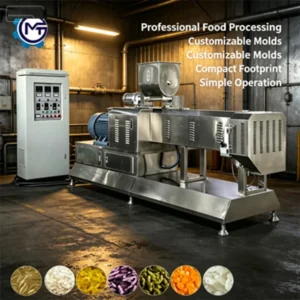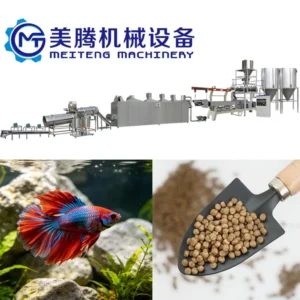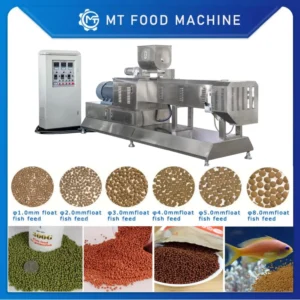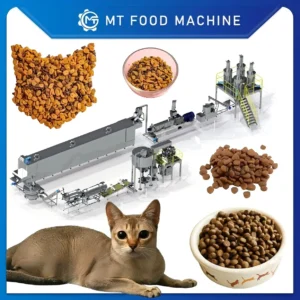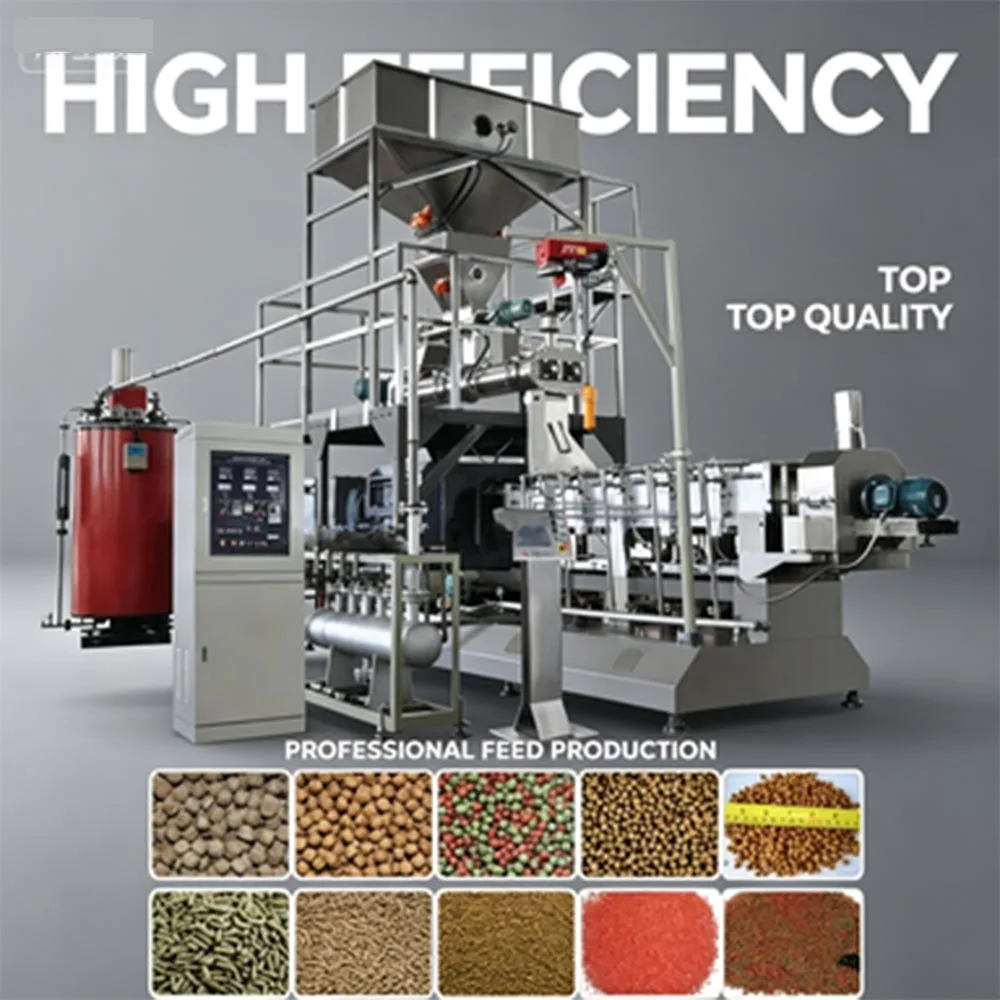
Precision Density Control — twin-screw extrusion technology matched to your raw material formulation ensures uniform floating and sinking pellet buoyancy without generic screw configurations
Technical Specifications
| Parameter | Value |
|---|---|
| Product Type | Twin Screw Aquatic Feed Extrusion Line |
| Extruder Type | Twin Screw |
| Control System | PLC Automatic Control |
| Contact Material | Food Grade 304 Stainless Steel |
| Output Capacity | large stable processing capacity (basis to be confirmed) |
| Pellet Types | Floating and Sinking |
| Raw Materials Supported | fish meal, soybean meal, corn powder, compound additives |
| Pellet Adjustability | size, hardness, buoyancy |
| Line Stations | mixer, extruder, dryer, seasoning coating machine, vibrating sieve, conveyor equipment |
| Automation Level | full continuous automatic production |
| Anti-corrosion Performance | 304 stainless steel construction |
| Energy Design | optimized energy saving transmission structure and heating system |
| Operation Interface | humanized, supports simple parameter adjustment |
Application Suitability
| Application | Material or Output |
|---|---|
| Commercial koi and goldfish feed production | Floating pellets from fish meal, soybean meal and corn powder |
| Tropical fish nutrition manufacturing | High-protein sinking pellets using compound additives |
| Freshwater aquaculture feed operations | Variable buoyancy pellets adjusted to species feeding habits |
| Medium to large scale uninterrupted production runs | Continuous extrusion with matched dryer and coating throughput |
Why Generic Screw Configurations Sink Your Floating Pellets
The barrel temperature profile and screw combination must match your specific raw material formulation, not a catalog template.
I have seen twin screw fish feed extrusion line technology fail when suppliers copy screw and die setups from generic builds. The pellets look acceptable during factory trials using standard test materials, but when the buyer switches to their actual fish meal and soybean meal blend, the density shifts. Floating pellets sink within minutes. The market rejects the product because fish cannot access feed at the water surface. This happens because starch gelatinisation requires precise moisture and shear conditions that vary with each raw material batch [NEED_CITE: starch gelatinisation requirements in aquatic feed extrusion].
Barrel Temperature Profile and Moisture Control
The twin screw fish feed extrusion line technology processes material through multiple heating zones where temperature and moisture determine starch gelatinisation degree. Each zone applies different shear forces that affect pellet expansion and final density. Floating pellets require higher expansion ratios achieved through precise moisture injection and rapid pressure release at the die. Sinking pellets demand denser structures with controlled gelatinisation that limits expansion while maintaining nutritional integrity.
Screw Configuration Matched to Raw Material Behavior
Fish meal, soybean meal and corn powder exhibit different gelatinisation temperatures and moisture absorption rates. The screw configuration must account for these variations by adjusting flight depth, compression ratio and residence time across processing zones. Compound additives introduce further complexity because vitamins and minerals degrade at excessive temperatures. The Twin Screw Aquatic Feed Extrusion Line allows screw element rearrangement so that each raw material blend receives optimal thermal and mechanical treatment.
How Die Design Affects Pellet Surface Finish and Water Stability
Die geometry determines pellet shape, surface area and initial moisture evaporation rate. Smooth surface finishes reduce water absorption speed, giving fish adequate feeding time before pellets disintegrate. Rough surfaces accelerate nutrient leaching into the water column. The die diameter and land length work together with extruder pressure to control expansion ratio at the moment of pressure release. Matching die design to your target pellet size and buoyancy specification prevents post-extrusion density drift [NEED_CITE: die design parameters for aquatic feed water stability].
Reading the Specification Sheet Correctly
Food Grade 304 Stainless Steel contact materials resist corrosion from high-moisture environments and acidic feed formulations. PLC Automatic Control maintains consistent barrel temperatures and screw speeds across production shifts, reducing batch-to-batch variation. The full continuous automatic production sequence from mixer through vibrating sieve ensures that throughput at each station matches extruder output, preventing bottlenecks where wet pellets accumulate before drying. Energy saving transmission structures reduce motor heat transfer into temperature-sensitive zones where premature gelatinisation could occur.
The Hidden Cost of Mismatched Line Stations
An extruder producing at full capacity while the dryer operates below design throughput creates a backlog of wet pellets that stick together and develop mold. The seasoning coating machine receives uneven feed rates, resulting in some pellets over-coated and others bare. Vibrating screens become overloaded, allowing undersized pellets to pass into final packaging. These imbalances do not appear in factory tests using short trial runs but emerge during continuous industrial operation when cumulative effects compound [NEED_CITE: production line throughput balancing in feed manufacturing].
Why Procurement Decisions Should Include Trial Verification
The in-house testing workshop runs your actual raw material formulation through the Twin Screw Aquatic Feed Extrusion Line before shipment, documenting pellet density, buoyancy and surface finish against your specifications. Screw and die configurations are adjusted based on trial results rather than assumed from catalog recommendations. The factory test record shows temperature profiles and moisture settings that produced acceptable pellets with your specific fish meal and soybean meal blend. This eliminates commissioning delays where product development begins only after installation at your facility.
Documentation & Verification
- Screw and die configuration record matched to your fish meal and soybean meal formulation
- Factory test record showing pellet buoyancy and density measurements on your raw material
- Electrical schematic with PLC programming and voltage confirmation for your facility
- Line layout showing throughput calculations across mixer, extruder, dryer and coating stations
Installation, Commissioning & Support
- Foundation requirements based on Twin Screw Aquatic Feed Extrusion Line weight distribution and vibration characteristics
- Electrical supply specifications matching PLC control system voltage and frequency requirements
- Barrel assembly sequence ensuring proper heating element connections and thermocouple placement
- First-run parameter adjustment using your raw material to verify pellet density targets
- Screw element replacement procedures and wear part inventory recommendations
- Daily cleaning protocols for food-grade 304 stainless steel contact surfaces
What Information We Need From You
Provide your raw material formulation including fish meal percentage, soybean meal ratio and any compound additives that require temperature-sensitive handling. Specify target pellet sizes, buoyancy requirements for different fish species and daily production volume. Share your facility voltage and frequency standards, available floor space for line layout planning and any existing upstream or downstream equipment that must integrate with the Twin Screw Aquatic Feed Extrusion Line.
Frequently Asked Questions
Q: How is screw configuration matched to my specific raw material formulation?
A: We run your actual fish meal, soybean meal and compound additive blend through the testing workshop, measuring pellet density and buoyancy at different screw combinations. Flight depth, compression ratio and residence time are adjusted until floating and sinking specifications are met. The configuration record documents which screw elements produced acceptable results with your formulation.
Q: What temperature settings produce floating versus sinking pellets?
A: Floating pellets require higher barrel temperatures and moisture levels that maximize starch expansion at the die. Sinking pellets use lower temperatures with controlled gelatinisation that limits expansion while maintaining nutritional value. The PLC stores separate temperature profiles for each pellet type, allowing rapid changeover between production runs.
Q: How is throughput balanced across all line stations?
A: Capacity calculations ensure the dryer handles full extruder output without pellet accumulation. The seasoning coating machine receives consistent feed rates through conveyor speed adjustment. Vibrating sieve capacity matches production volume so undersized pellets are removed without creating bottlenecks during continuous operation.
Q: Can you perform a trial run on my raw material before shipment?
A: The testing workshop processes your raw material formulation through the complete Twin Screw Aquatic Feed Extrusion Line, producing sample pellets for density and buoyancy verification. The trial report documents which screw configuration, die design and temperature profile met your specifications. Adjustments are made before final assembly and shipment.