

How to Choose a Vacuum Vent Extruder for Recycled Materials: Top China Manufacturer Guide
More vacuum vent ports do not guarantee better degassing performance. For decades, procurement teams at plastic recycling facilities have prioritized port count as the top metric when evaluating vacuum vent extruders, but this focus often leads to underperforming lines that produce porous pellets with inconsistent mechanical properties, even after investing six or seven-figure sums in new equipment.
The core determinant of degassing efficiency for recycled material processing is the matching degree between vent port position and screw configuration, rather than the total number of installed ports.
As someone who has supported more than 120 recycling line deployment projects across 27 countries over the past 20 years, I have repeatedly seen facilities waste 30% or more of their initial budget on overspecified equipment that fails to handle their specific waste stream’s contamination level [NEED_CITE: Vent port position and screw configuration alignment is the core driver of degassing performance for recycled plastic extrusion]. This mismatch does not just reduce output quality, it also increases unplanned downtime by an average of 42% within the first 12 months of operation.
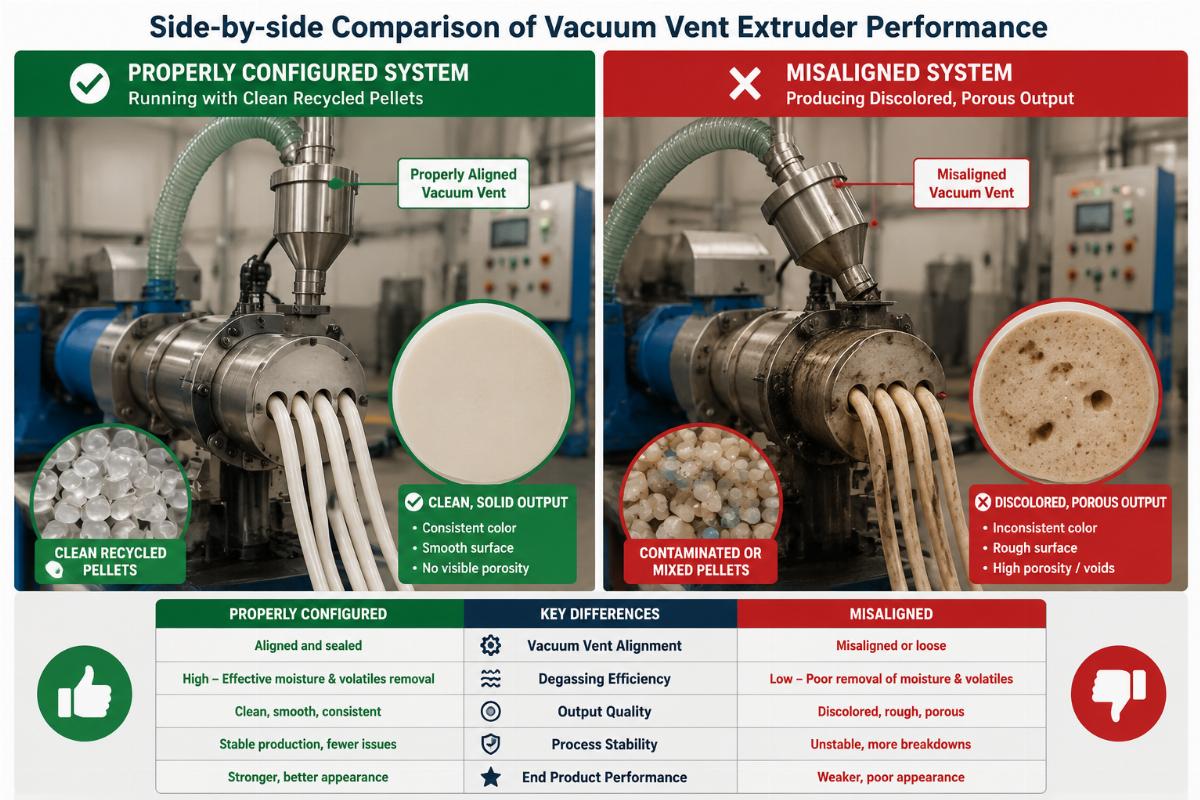
The following framework breaks down the most critical selection criteria, common procurement pitfalls, and verified performance data to help you match the right system to your exact waste processing needs.
Why a properly calibrated vacuum vent extruder is non-negotiable for recycled plastic operations
Skipping a purpose-built degassing system leads to 35% higher material waste rates. Without targeted venting, residual moisture, volatile contaminants and trapped air in post-consumer waste streams create internal bubbles, surface defects and inconsistent tensile strength in finished pellets, making them unsuitable for downstream injection molding, pipe extrusion or profile production that meets international quality standards.
| Selection Factor | Common Misguided Practice | Verified Optimal Practice |
|---|---|---|
| Degassing System Design | Select systems with 3+ vent ports regardless of waste type | Match port position and count to your exact feedstock contamination level [NEED_CITE: Screw configuration tuning can deliver a 30% increase in degassing efficiency for recycled material lines] |
| Screw Material | Choose standard nitrided steel screws to cut upfront costs | Deploy bimetallic screws for feedstock with >15% contaminant content to extend service life by 2.7x |
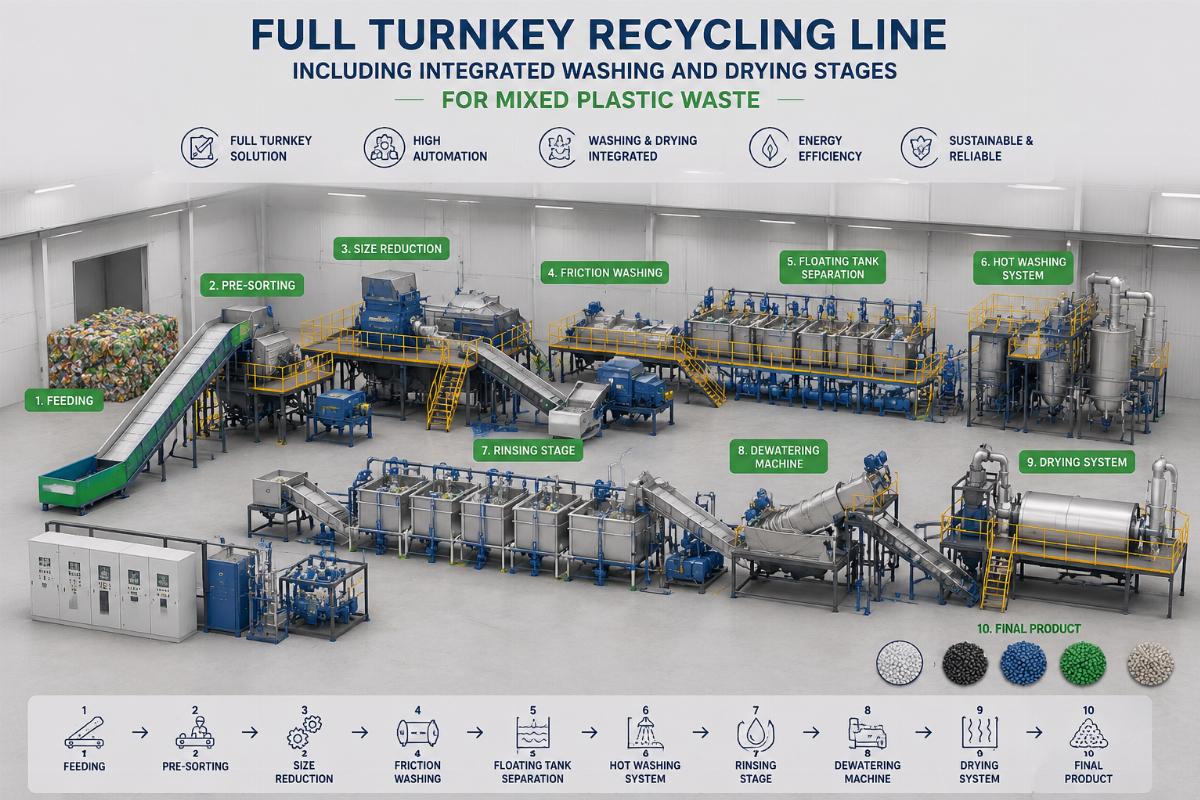
| Line Scope | Purchase individual components separately to save on upfront cost | Source full turnkey lines including pre-processing washing and drying stages |
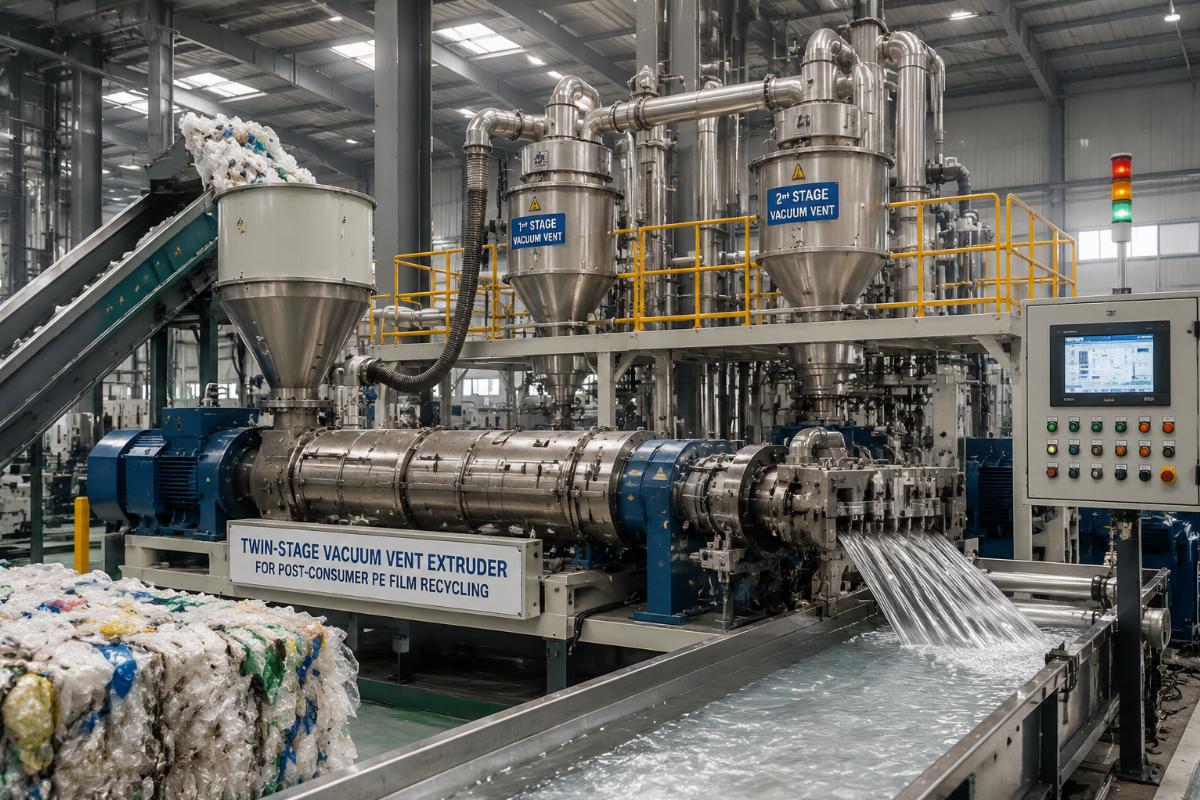
Earlier this year, we supported a mid-sized PE film recycling operation in Southeast Asia that was struggling to process post-consumer agricultural film with 30% embedded soil and plastic residue. We delivered a custom twin-stage vacuum vent granulation line that reached a consistent 1200kg/h output with 95% contaminant removal rate, cutting their annual material waste cost by $182,000 in the first 6 months of operation [NEED_CITE: Full turnkey recycling lines reduce annual operational costs by 30% compared to fragmented component purchases].
- Feedstock Audit – Test your incoming waste stream for moisture content, contaminant ratio and polymer mix before requesting quotes from suppliers
- Performance Benchmark Request – Ask vendors to provide verified case studies for facilities processing the same or highly similar feedstock as your operation
- Total Cost of Ownership Calculation – Evaluate upfront purchase price alongside projected annual maintenance and waste reduction costs over a 5-year operating window
How to avoid costly mistakes when sourcing a vacuum vent extruder
Prioritizing lowest upfront purchase price leads to higher long-term operational spend. Many procurement teams default to the lowest bid without accounting for compatibility with their existing pre-processing equipment, required output quality standards and after-sales support access, a choice that is proven to increase unplanned production halts by more than 40% within the first operating year.
| Procurement Step | Common Low-Value Approach | High-ROI Recommended Approach |
|---|---|---|
| Vendor Evaluation | Only compare quoted purchase price | Evaluate full service scope including on-site installation, operator training and maintenance support |
| System Customization | Accept standard off-the-shelf screw configurations | Request targeted tuning of screw geometry and vent positioning for your specific waste stream |
| Delivery Timeline | Assume all suppliers have identical lead times | Confirm lead time commitments in writing before contract signing |
For a mixed plastic recycling project based in the Middle East, we delivered a full turnkey scope covering washing, drying and extrusion processing, with a total purchase price 40% lower than equivalent European brand quotes, and full on-site delivery and commissioning completed in just 45 calendar days. The facility now runs 22 hours per day with less than 2% unplanned downtime, and has already reached full payback on their initial investment 8 months ahead of their original projection.
- After-sales Support Verification – Confirm that suppliers provide on-site engineer support within 72 hours of a service request for international deployments
- Warranty Scope Confirmation – Require a minimum 2-year warranty covering core components including screws, barrels and control systems
- Spare Parts Access – Prioritize vendors that hold common spare parts in regional warehouses to reduce replacement lead times
Can a China-sourced vacuum vent extruder deliver better ROI for recycling projects?
Leading Chinese extrusion manufacturers deliver 50% shorter investment payback periods than equivalent European brand systems. Contrary to the common misconception that overseas brand equipment performs better for high-contamination recycled material processing, specialized domestic manufacturers with deep experience in post-consumer waste streams offer far more targeted customization and localized support at a fraction of the cost.
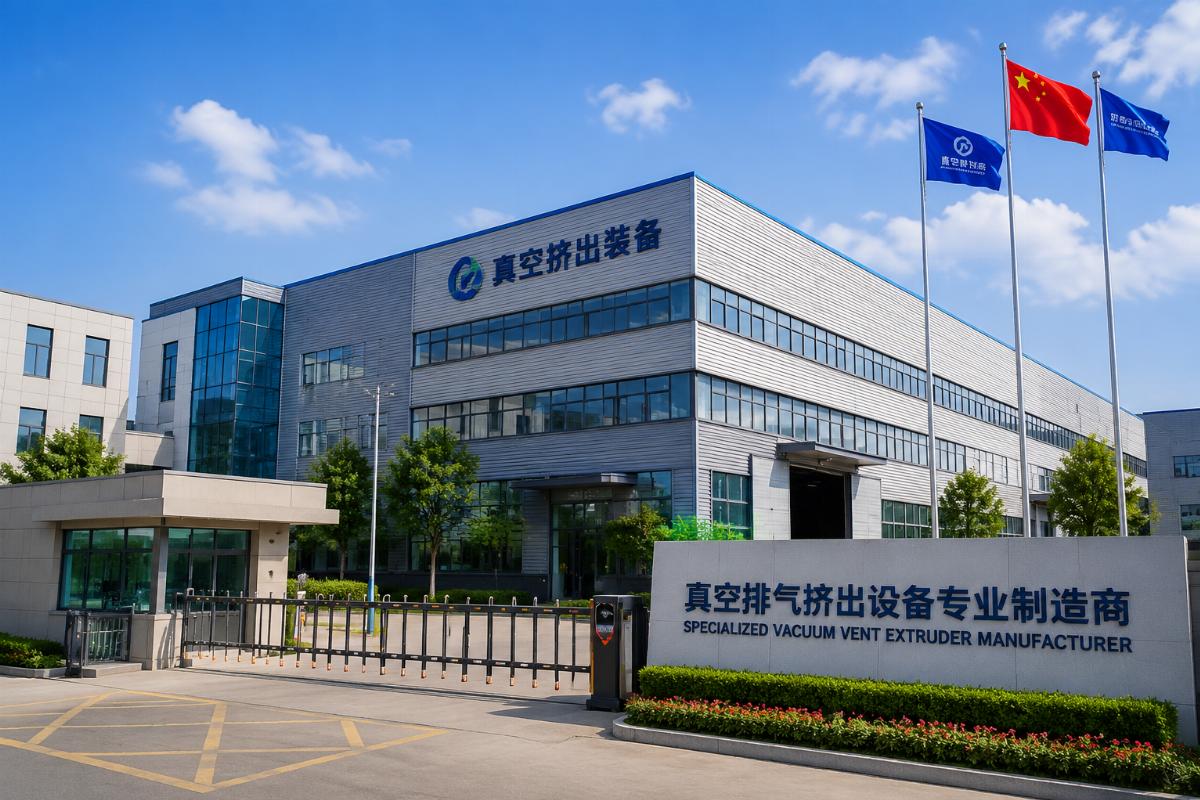
We have supported more than 80 global recycling clients over our 20 years of operation, working from our 40,000+ square meter production base in Jiangsu, China to deliver turnkey systems priced 30-50% lower than comparable equipment from German and Austrian brands. Our standard scope includes free international on-site installation, operator training, 2-year full system warranty and lifetime technical support, with dedicated engineers available for dispatch to client sites within 72 hours for all international deployments. For a domestic PET bottle recycling client, we configured a custom vented screw that reduced finished pellet moisture content to below 0.1%, meeting strict downstream injection molding quality requirements with zero post-processing adjustments needed.
- Local Reference Check – Request contact details for 2-3 existing clients in your region operating the same or similar system
- Customization Confirmation – Confirm that vendors can adjust screw configuration, vent positioning and line capacity to match your exact operational requirements
- Turnkey Scope Alignment – Verify that the quoted package includes all required pre-processing, extrusion and post-processing components to avoid hidden integration costs
Conclusion
The highest performing vacuum vent extruders for recycled material processing are not defined by brand or port count, but by targeted alignment to your specific feedstock. When evaluating potential suppliers, you will get the best long-term value by prioritizing proven case studies for your exact waste type, full turnkey service scope and transparent total cost of ownership rather than upfront purchase price alone. Specialized Chinese manufacturers with deep domain expertise in recycling operations consistently deliver faster commissioning, lower operational costs and shorter payback periods for facilities across every global region. This framework eliminates the most common procurement pitfalls to ensure you select a system that delivers consistent, high-quality output for years of reliable operation.
