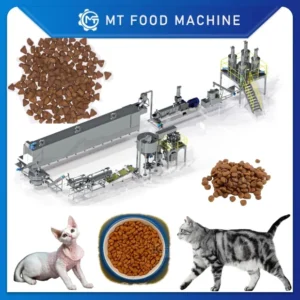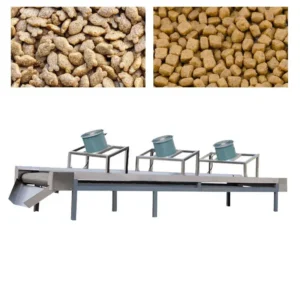
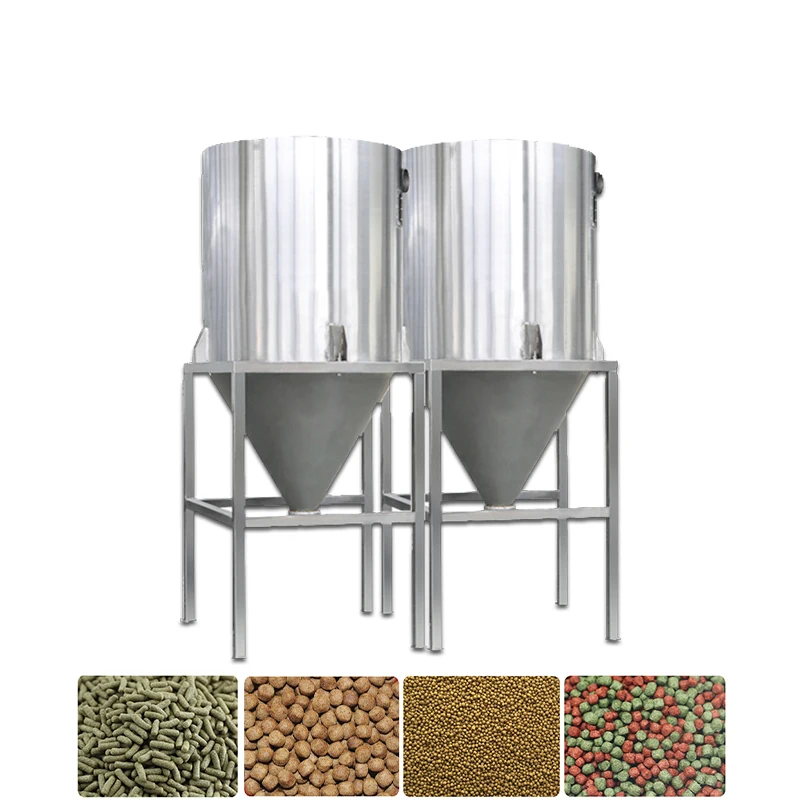
Screw configuration matched to formulation — Every twin-screw build starts with your raw material profile, not a generic catalog blueprint.
Technical Specifications
| Parameter | Value |
|---|---|
| Product Type | Pet Food Extrusion Production Line |
| Screw Type | Twin-screw |
| Output Capacity | Up to 3 tons per hour (basis not stated in source — confirm raw material formulation, moisture content, and kibble size) |
| Line Stations | Batching, extrusion, drying, flavouring, packing |
| Control System | PLC and MCC |
| Applications Coverage | Dog food, cat food, fish feed |
| Warranty | 1 year |
| Process Documentation | Process flow drawing included |
| Assembly State | Complete production line |
| Certification | CE |
Application Suitability
| Application | Material or Output |
|---|---|
| Dry kibble for dogs and cats | Corn, meat meal, bone meal, poultry by-products, grain blends at controlled moisture |
| Floating aquatic feed | Starch-rich formulations for catfish and tilapia requiring low-density expansion |
| Sinking aquatic feed | High-protein formulations for shrimp and bottom-feeding species requiring controlled density |
| Multi-recipe contract production | Quick die and screw changeover across varying formulations on a single line |
Why Nominal Throughput Figures Mislead Pet Food Buyers
A rated capacity only matters when it is measured on the exact raw material blend you intend to run.
Buyers often receive quotes stating a headline throughput number for a pet food extrusion production line specifications sheet, yet that figure was derived from a standard corn-starch test recipe rather than the buyer’s actual formulation. When bone meal ratios climb or fat content increases, the material behaves differently inside the barrel. Shear forces drop, gelatinisation becomes uneven, and the extruder cannot sustain the quoted output without sacrificing kibble density and float-sink behaviour. [NEED_CITE: starch gelatinisation behaviour in high-fat extrusion formulations]
I have watched lines stall well below their nameplate rating because the screw configuration was never adjusted for heavy animal-protein recipes. The extruder was simply not configured for the material it was asked to process.
How Barrel Temperature Profiling Controls Expansion
Starch gelatinisation in a pet food extrusion production line specifications context depends on maintaining distinct temperature zones along the barrel length. The twin-screw design allows operators to set independent heating and cooling stages, so the material experiences a controlled thermal ramp rather than a single uniform heat level. Early zones hydrate the starch granules while later zones drive expansion at the die face. If any zone drifts outside its target window, the kibble either collapses after exiting or fails to expand adequately, producing inconsistent density across the batch.
Die Geometry and Kibble Density Targeting
The die plate determines the cross-sectional shape and the pressure drop that the material experiences at the moment of exit. For floating aquatic feed, the die must allow rapid steam flash-off so that the pellet locks in a low-density, porous structure. For sinking shrimp feed, a tighter die geometry restricts expansion and produces a denser pellet. Matching die design to the target product is a step that must happen before the line ships, not after installation when the buyer discovers the kibble does not meet market specifications. [NEED_CITE: die pressure drop relationship to extrudate expansion in twin-screw systems]
What the Core Parameters Actually Mean on the Floor
The twin-screw configuration gives this line its formulation flexibility. Counter-rotating or co-rotating screw pairs create a self-wiping action that prevents material buildup inside the barrel, which matters when switching between a high-fat dog food recipe and a lean fish feed blend. The PLC and MCC control architecture handles barrel zone temperatures, screw speed, and feeder rates from a single interface, reducing the operator variables that cause batch-to-batch drift. A line that integrates batching through packing under one supplier means the dryer capacity, flavouring drum residence time, and conveyor speeds are all calculated against the extruder’s actual output rather than treated as independent purchases that may bottleneck downstream.
The Cost of Skipping Pre-Shipment Material Trials
When a line leaves the factory without running the buyer’s raw material, all product development compresses into the commissioning window at the installation site. That delays market launch, wastes raw material, and often forces compromise on kibble texture or density. I have seen producers spend weeks adjusting screw elements on the shop floor because nobody validated the configuration beforehand. The result is lost production time and a recipe that never quite reaches the intended specification. [NEED_CITE: commissioning delays in untested extrusion line installations]
Why This Line Is Built Around Your Material
The screw combination and die design are specified against your raw material formulation and target kibble density, not copied from a reference build. The in-house testing workshop runs your actual ingredients before the line ships, generating a trial run report that documents output, density, and expansion on your recipe. Throughput matching across every station eliminates the bottleneck that forms when an extruder outpaces its dryer or coating drum. The electrical schematic confirms voltage, frequency, and control language for your facility before production begins, preventing commissioning delays caused by mismatched power supplies.
Documentation & Verification
- Screw and die configuration record tied to your specific formulation and kibble target
- Trial run report generated on your raw material in the testing workshop before dispatch
- Line layout and capacity calculation balancing throughput at every station
- Electrical schematic confirming voltage, frequency, and PLC language for your market
- CE declaration of conformity covering the complete assembled line
Installation, Commissioning & Support
- Foundation and floor space planned against the full line layout from batching to packing
- Dedicated power circuits sized for PLC and MCC control cabinet requirements
- Modular station assembly allowing phased installation within existing facility clearances
- First-run parameter setting covering barrel zones, screw speed, and feeder calibration
- Operator training on recipe changeover, die swaps, and screw element replacement
- Wear parts list covering screws, dies, and barrel liners with reorder references
Preparing Your Inquiry
To configure a line that holds its throughput on your recipe, share your raw material formulation including protein, fat, and starch ratios along with the target kibble size and density range. Confirm your facility voltage and frequency, the available floor area and ceiling height, and whether you need the testing workshop to validate your blend before the line ships.
Frequently Asked Questions
Q: How is the output capacity verified, and on what formulation is it based?
A: The capacity rating must be confirmed against your specific raw material blend, moisture level, and kibble size. We run your formulation in the testing workshop and document actual throughput, density, and expansion in a trial run report before shipment, so the figure you receive reflects your recipe rather than a generic test standard.
Q: How are screw configuration and die design selected for a specific recipe?
A: The screw element sequence and die geometry are chosen based on your formulation’s protein-to-starch ratio, fat content, and the target kibble texture. High-bone-meal or high-fat recipes require different shear profiles than grain-dominant blends, and the die must match the intended expansion and density outcome.
Q: What barrel temperature and moisture conditions support proper gelatinisation?
A: Barrel zones are set in a progressive profile that hydrates starch in early sections and drives expansion near the die. Moisture content at the conditioning stage typically influences how completely starch granules gelatinise, and the PLC maintains these zone temperatures within tight tolerances across every batch.
Q: How is throughput balanced across the extruder, dryer, and flavouring stations?
A: Each downstream station is sized against the extruder’s verified output on your recipe. The dryer belt length and air flow, the flavouring drum diameter and residence time, and the conveyor speeds are all calculated together so no single station restricts the line.
Q: Can a trial run happen on our raw material before shipment?
A: Yes. The testing workshop runs your supplied ingredients through the configured screw and die setup. The resulting report records throughput, kibble density, expansion ratio, and visual product assessment, giving you confirmed production data before the line leaves the factory.