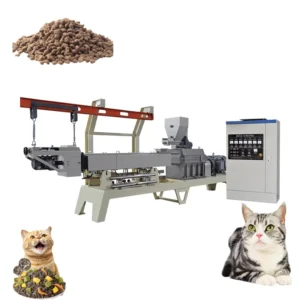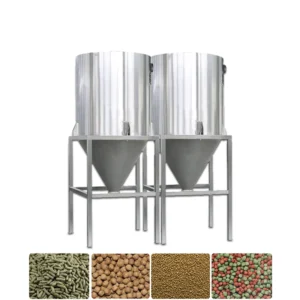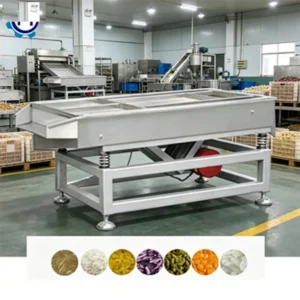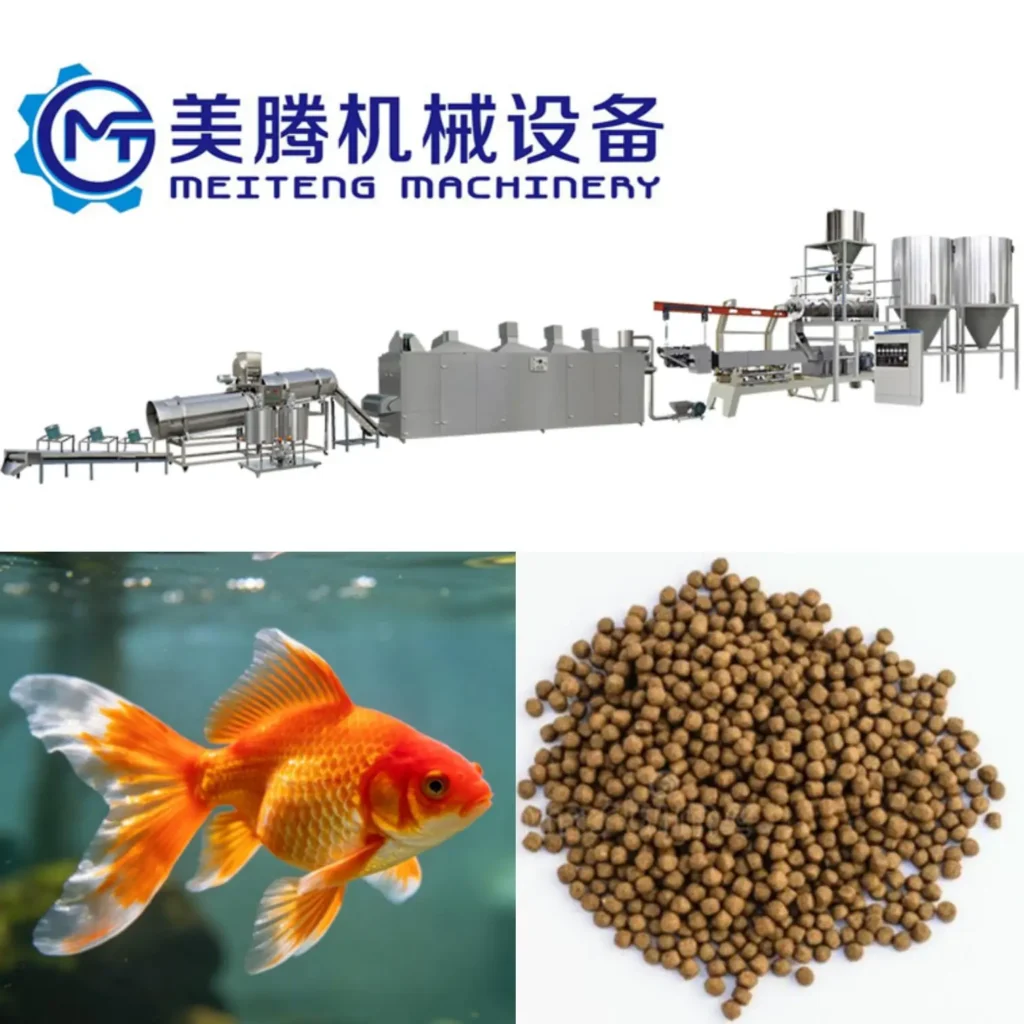
Screw Geometry Matched to Feed Density — every barrel zone and die land is tuned against the buyer’s actual formulation, not copied from a catalog build.
Technical Specifications
| Parameter | Value |
|---|---|
| Product Type | Twin-Screw Fish Feed Extrusion Line |
| Screw Type | Twin-screw |
| Output Capacity | Up to 600 kg/h (basis not stated in source — confirm raw material formulation, moisture content, pellet size) |
| Construction Material | 304 stainless steel (food-contact parts) |
| Control System | PLC or MCC control (basis to be confirmed) |
| Voltage & Frequency | Configurable to target market standard (basis to be confirmed) |
| Die Configuration | Multiple pellet diameter and shape options (basis to be confirmed) |
| Line Stations | Mixer, dryer, cooler, coating drum, packing station (basis to be confirmed) |
| Certification | CE and ISO compliant (referenced in company profile; confirm applicability to this specific line) |
Application Suitability
| Application | Material or Output |
|---|---|
| Floating pellets for surface-feeding species | Trout and salmon feed based on fish meal, soy protein, and starch binders |
| Sinking pellets for bottom-feeding species | Catfish and carp feed with higher fiber and lower starch content |
| Multi-species production on a single line | Die changeover across pellet diameters from 2 mm to 8 mm for fry to grower stages |
Why Floating Pellets Sink: The Twin-Screw Fish Feed Extrusion Line Screw Configuration Gap
Density misses almost always start at the screw and die, not the dryer.
When a line produces feed that sinks in the pond despite a target float time of several hours, the cause is rarely a single wrong number on the control panel. More often, the screw profile was specified for a generic starch-rich formula, while the buyer’s actual mix contains a higher share of protein or fiber that resists expansion. The twin-screw fish feed extrusion line screw configuration must account for how each ingredient responds to shear and heat, and that tuning only happens when trials run on the real formulation [NEED_CITE: starch gelatinisation behaviour under varying protein-to-starch ratios in extrusion].
Shear, Moisture, and the Barrel Temperature Profile
Extrusion is a negotiation between mechanical shear and thermal input. The barrel is divided into multiple heating zones, each set independently so that the feed mass reaches a specific viscosity before it hits the die. Too much heat too early causes premature gelatinisation and a rubbery pellet that collapses after cutting; too little leaves raw starch that aquatic species cannot digest. The twin-screw fish feed extrusion line screw configuration determines the residence time inside each zone, and that residence time dictates how thoroughly moisture penetrates the particle matrix. Adjusting screw flight pitch and kneading block angle shifts the balance between conveying and mixing, letting the operator hold gelatinisation within a narrow window even when ambient humidity changes between seasons.
Die Land Length and Pellet Density Control
Once the melt reaches the die, the land length — the straight channel the material passes through before exiting — governs how much pressure is released at the cut face. A longer land holds back expansion, producing a denser pellet suited for sinking applications. A shorter land lets the pellet expand rapidly, trapping air cells that keep it on the surface. Swapping die plates is straightforward, but the upstream screw profile must be matched to the new die geometry, or the extruder will surge and create inconsistent pellet lengths. This is why die changes on a multi-species line involve more than a physical swap; they require documented screw settings tied to each die set [NEED_CITE: die land geometry effects on extrudate expansion in aquatic feed].
Reading the Spec Sheet Against Your Raw Material
A capacity figure of 600 kg/h means little without knowing whether it was measured on a 25 % starch premix or a 45 % fish meal blend. High-protein formulations increase melt viscosity and demand more torque from the drive motor, often reducing throughput compared with the rated value. The 304 stainless steel contact surfaces resist the corrosive salts in marine-based meals, but they do not change the rheology inside the barrel. What matters is whether the twin-screw fish feed extrusion line screw configuration was calculated for the buyer’s specific ingredient list, including the moisture percentage at the preconditioner outlet and the target pellet diameter. Without that calculation, the motor amperage will drift upward, wear on the screw flights will accelerate, and pellet density will vary batch to batch.
The Hidden Cost of a Generic Screw Build
Lines assembled from catalog defaults often run acceptably during the factory acceptance test, where the supplier uses a standard reference recipe. Problems appear weeks later when the buyer introduces local soybean meal or a different fat coating, and pellets begin sinking or crumbling during transport. Diagnosing the issue on a working production floor means stopping output, pulling the screws, and trial-fitting new elements — downtime that could have been avoided with a pre-shipment trial on the actual formulation [NEED_CITE: post-installation extrusion troubleshooting in aquaculture feed mills].
Why This Line Is Configured Differently
The screw profile and die set are specified only after the buyer’s raw material has been run in the in-house testing workshop, producing a trial report that documents barrel temperatures, screw speed, and pellet density. Line stations — mixer, extruder, dryer, coating drum, cooler, packing — are sized so that throughput at each stage matches the extruder’s real output rather than a nameplate figure. Food-grade 304 stainless steel is used across every product-contact surface, reducing corrosion risk from fish meal salts and fat coatings. Electrical schematics are confirmed against the buyer’s facility voltage before panel fabrication, preventing commissioning delays. The twin-screw fish feed extrusion line screw configuration record is handed over with the machine, giving the buyer a baseline for future formulation changes.
Documentation & Verification
- Screw and die configuration record tied to your specific raw material formulation
- Trial run report from in-house testing workshop before dispatch
- Electrical schematic with voltage and frequency matched to your facility standard
- Line layout and capacity calculation showing throughput balance across every station
- CE declaration of conformity for the extrusion line as delivered
Installation, Commissioning & Support
- Foundation plan accounts for extruder vibration and dryer thermal expansion clearances
- Dedicated power circuit sized to the confirmed motor rating and control panel load
- Barrel and screw elements shipped separately for safe handling and on-site assembly
- First-run commissioning includes barrel temperature calibration against your ingredient moisture
- Operator training covers screw speed adjustment for die changeover between pellet sizes
- Wear parts list with reorder codes for screw flights, die plates, and cutter blades
What to Share Before Requesting a Quote
Send the ingredient list with approximate percentages, the target pellet diameter for each fish species, and the moisture content you typically achieve after preconditioning. Include your facility voltage, frequency, and preferred control language. If you already run a dryer or coating drum, share its capacity so the extruder throughput can be matched without creating a bottleneck.
Frequently Asked Questions
Q: How is the screw configuration determined for floating versus sinking fish feed pellets?
A: Floating pellets need a screw profile that holds the melt under pressure long enough for starch to fully gelatinise, then releases it through a short die land for rapid expansion. Sinking pellets use a more open screw with a longer die land to limit expansion and increase density. Each setup is validated on the buyer’s formulation before the line ships.
Q: What barrel temperature profile and moisture level are needed for proper starch gelatinisation?
A: Most aquatic feed formulations require barrel zones between 90 °C and 140 °C with preconditioner moisture around 25 %. The exact profile depends on starch source and protein content. Running a sample of the buyer’s raw material in the testing workshop establishes the zone settings that deliver consistent gelatinisation without overcooking.
Q: Can the die design accommodate multiple pellet diameters on the same line?
A: Yes, interchangeable die plates allow the same extruder to produce pellet sizes from fine fry feed to larger grower pellets. Each die change requires a documented adjustment to screw speed and barrel temperature so that expansion rate and pellet density stay within specification across all diameters.
Q: Is a trial run on my specific raw material formulation available before shipment?
A: The in-house testing workshop runs the buyer’s actual ingredients through the extruder before the line is packed. The resulting trial report records screw speed, barrel temperatures, moisture levels, and pellet density, giving the buyer a verified baseline to reproduce on their own production floor from day one.