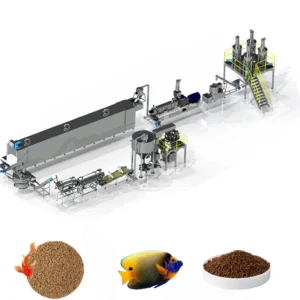
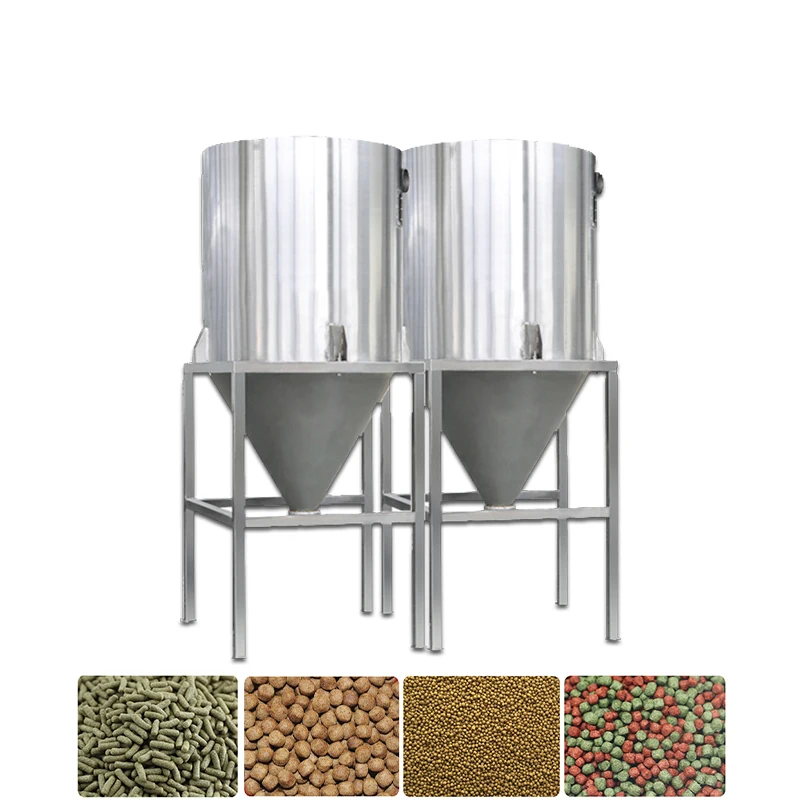
Precision-matched screw geometry — trial runs on your exact raw material confirm expansion and density before the extruder ships.
Technical Specifications
| Parameter | Value |
|---|---|
| Product Type | Pet Food Extrusion Production Line |
| Screw Configuration | Twin-screw |
| Output Capacity | Up to 3 tons per hour (basis not stated in source — confirm raw material, moisture content, pellet size) |
| Control System | PLC and MCC automation (configuration to be confirmed per site requirements) |
| Target Applications | Dry dog kibble, cat food, aquatic feed pellets |
| Process Documentation | Process flow drawing included |
| Warranty | 1 year |
| Voltage and Frequency | Configurable to target market (specifications to be confirmed prior to build) |
Application Suitability
| Application | Material or Output |
|---|---|
| Dry dog kibble production | Corn flour, meat meal, bone meal, grain blends at controlled moisture |
| Cat food pellet extrusion | High-protein formulations with fresh meat inclusion and starch binders |
| Aquatic feed manufacturing | Floating and sinking pellet diets for fish using soy, wheat, and fish meal |
| Specialty pet treat formats | Core-filled or multi-texture shapes requiring precise die and shear control |
Why the Screw Profile Dictates Your Real Daily Output
A machine rated on standard starch will underperform the moment your recipe introduces high fat or fresh meat.
Many buyers evaluate a pet food extrusion machine manufacturer based on a single headline capacity figure. That figure is almost always generated running corn flour or pure starch under ideal moisture conditions. When a pet food formulation shifts toward animal protein, fat content rises and the dough viscosity drops, which changes how the material responds to shear inside the barrel. If the screw elements were selected for a low-fat starch profile, the material slips rather than compresses, expansion collapses, and the line stalls at a fraction of its rated volume. I have watched lines arrive on-site only to require days of re-profiling because the initial configuration never saw the buyer’s actual recipe [NEED_CITE: raw material impact on twin-screw extrusion throughput].
Shear, Moisture, and the Expansion Window
The twin-screw design gives operators independent control over mechanical shear and thermal input. Barrel zones can be heated or cooled in sequence, while screw element spacing determines how aggressively the material is worked. For a dense, slow-sinking aquatic pellet, the screw profile keeps shear low and residence time long, allowing starch to gelatinise without puffing the pellet. For a light, crunchy dog kibble, high-shear kneading blocks create the pressure differential that drives expansion at the die face. Selecting the right pet food extrusion machine manufacturer means confirming that these screw element choices are mapped to your specific recipe before the barrel is assembled.
Die Geometry and Kibble Density Control
The die plate is where the extruded dough meets atmospheric pressure, and its hole diameter, land length, and spacing directly govern pellet shape and internal cell structure. A short land produces rapid expansion and a lighter kibble; a longer land restricts flow and yields a denser bite. For cat food, where palatability testing often hinges on a specific crunch texture, die selection is non-negotiable. The pet food extrusion machine manufacturer must supply a die configuration record that ties hole geometry to the target bulk density the buyer’s market expects [NEED_CITE: die land length influence on extrudate expansion].
Reading the Specs That Actually Matter
Screw length-to-diameter ratio determines how much residence time the material has inside the barrel. A higher ratio gives more zones for gradual temperature staging, which is critical when processing heat-sensitive ingredients like vitamin premixes or fresh meat slurries. Motor power must be evaluated against the toughest formulation in your product range, not the easiest; high-fat doughs demand more torque at lower screw speeds. The PLC control architecture should allow recipe storage so that operators can recall barrel temperature profiles and screw speed settings for each SKU, keeping batch-to-batch density consistent across long production runs.
The Cost of a Mismatched Line Configuration
When the extruder is sized correctly but the downstream dryer is not, the line bottlenecks at the drying stage and wet kibble backs up, forcing operators to slow the screw speed. If the coating drum cannot handle the throughput, fat and palatant application becomes uneven, leading to palatability complaints from end consumers. These mismatches are invisible in a single-machine quotation and only surface during commissioning, when the buyer has already paid for shipping and installation [NEED_CITE: throughput balancing across extrusion line stations].
Why Sourcing the Full Line from One Builder Matters
Having every station — batching, extrusion, drying, flavouring, cooling, and packing — designed by the same engineering team means throughput calculations are matched before metal is cut. The screw configuration and die design are specified against the buyer’s raw material, not a generic template. An in-house testing workshop allows trial runs on customer-supplied ingredients so that capacity claims are verified before the crate is sealed. Pre-sales consultation carries through to on-site installation, operator training, and ongoing wear parts support, keeping the line running long after the first production shift.
Documentation & Verification
- Line layout showing matched throughput at every station from batching to packing
- Screw and die configuration record tied to your raw material formulation
- Trial run report generated on your ingredients before dispatch
- Electrical schematic confirming voltage, frequency, and control language
- Factory test record and CE declaration of conformity
- Operation and maintenance manual with wear parts list
Installation, Commissioning & Support
- Foundation plan and utility drop points matched to the line footprint and PLC cabinet load
- Dedicated power circuit sizing confirmed against extruder motor and dryer heating requirements
- Segmented barrel and screw assembly sequence documented for on-site reassembly
- First-run parameter logging across barrel zones, screw speed, and feeder rates
- Operator training covering recipe recall, die changes, and emergency stop procedures
- Wear parts inventory list for screws, dies, and cutter bearings with reorder intervals
What to Prepare Before Requesting a Quotation
To size the extruder and downstream stations accurately, share your target kibble format, the primary protein and starch sources in your recipe, and the moisture range you plan to run. Confirm your local voltage and frequency, the control interface language your operators need, and whether your facility has existing batching or packing equipment that the new line must integrate with. If your formulation includes high fresh-meat inclusion or unusual fat levels, sending a sample for trial runs in the testing workshop will produce a far more reliable capacity figure than any catalogue number.
Frequently Asked Questions
Q: How is output capacity verified on my specific raw material formulation?
A: Before shipment, your ingredients are run through the extruder in the in-house testing workshop. The trial generates a report documenting actual throughput, expansion ratio, and pellet density under your recipe conditions. This report accompanies the machine so you have a verified baseline rather than a generic catalogue figure.
Q: What screw configuration and die design will match my target kibble density?
A: Screw element spacing and kneading block placement are selected based on your formulation’s fat and starch content. Die hole diameter and land length are then matched to the bulk density your market requires. Both are recorded in a configuration sheet you receive before the line ships.
Q: How do you ensure the dryer and coating stations match extruder output?
A: Every station is sized against the extruder’s verified throughput on your material. Dryer bed area and residence time are calculated for the moisture removal your kibble requires, and the coating drum volume is matched to the fat application rate your recipe specifies.
Q: Can I send my raw material for trial runs before the line ships?
A: Yes. You can ship a representative batch of your ingredients to the testing workshop. The trial run confirms screw profile, barrel temperature staging, and die selection, and the results are shared with you before the equipment is crated for dispatch.
Q: What documentation confirms voltage, frequency, and control language for my factory?
A: An electrical schematic is provided showing motor ratings, heating element loads, and PLC I/O mapping configured for your site’s power supply. The control interface language and alarm text are confirmed during the specification review stage before the panel is wired.