Precision Screw Config — Every twin-screw profile and die geometry is mapped to your bone meal ratio and starch content before metal is cut, eliminating the buoyancy failures that sink floating pellets in the first production week.
Technical Specifications
| Parameter | Value |
|---|---|
| Product Type | Floating Fish Feed Production Line |
| Extruder Type | Twin Screw |
| Control System | PLC Automatic Control |
| Contact Material | Food Grade 304 Stainless Steel |
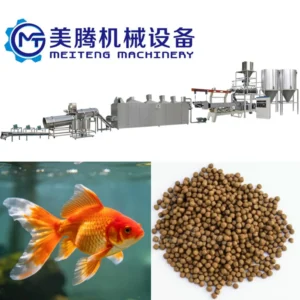
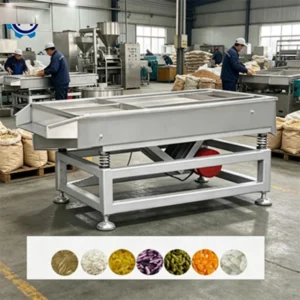
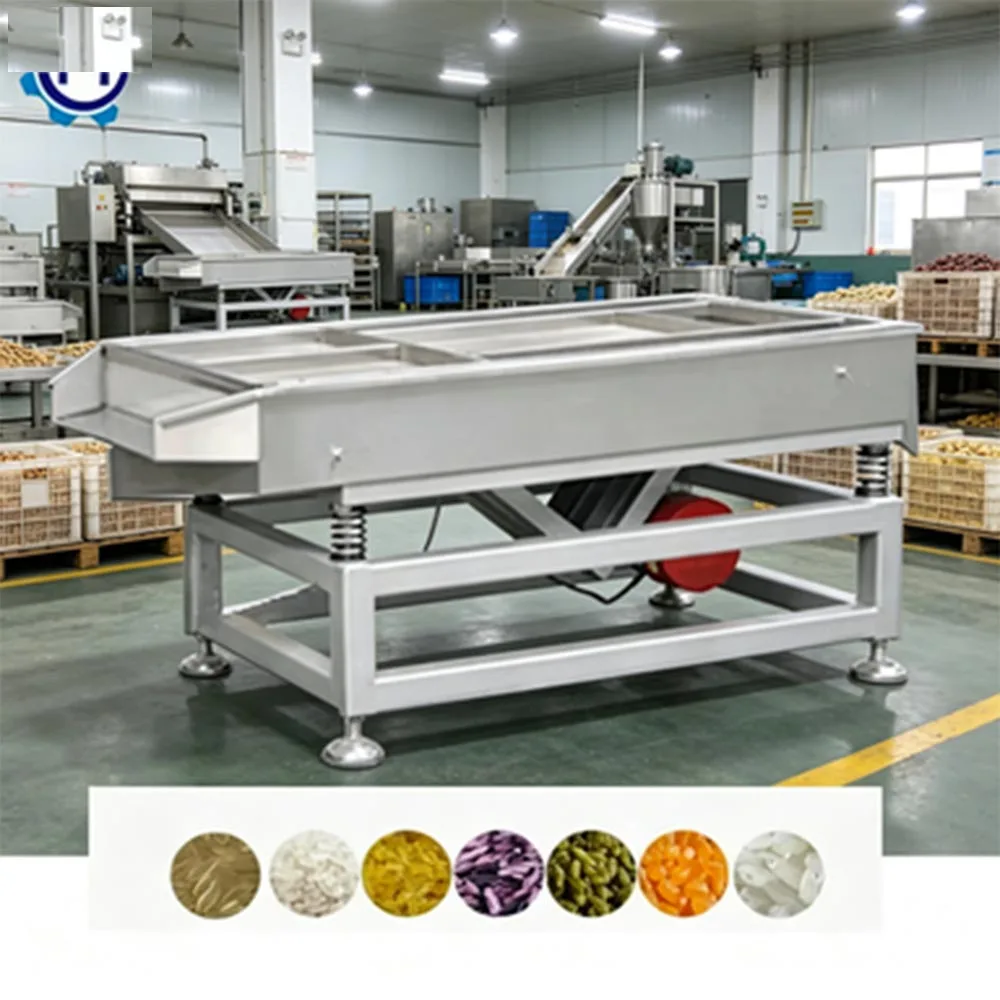
| Line Stations | Raw Material Mixer, Extruder, Dryer, Seasoning Coating Machine, Vibrating Sieve, Conveyor Equipment |
| Output Capacity | Continuous production rate (basis to be confirmed based on raw material formulation) |
| Pellet Adjustability | Size, Hardness, Buoyancy (floating and sinking) |
| Applicable Raw Materials | Fish Meal, Soybean Meal, Corn Powder, Compound Additives |
| Automation Level | Full Continuous Automatic Production |
| Standards | CE, ISO certified production |
Application Suitability
| Application | Material or Output |
|---|---|
| Commercial koi and goldfish feed | High-protein floating pellets from fish meal and soybean meal blends |
| Tropical ornamental fish nutrition | Slow-sinking micro pellets from compound additive formulations |
| Freshwater aquaculture operations | Extruded floating feed based on corn powder and protein concentrates |
| Multi-species hatchery supply | Adjustable buoyancy pellets by altering die geometry and moisture profile |
Why Floating Pellets Sink When the Screw Profile Is Wrong
Buoyancy is dictated by the expansion ratio achieved at the die face, which in turn depends on screw element sequencing and barrel zone temperatures matched precisely to your raw material’s starch-to-protein ratio.
When a line is configured using a generic screw build designed for corn snacks instead of aquatic feed, the shear profile inside the barrel fails to fully gelatinise the starch matrix. The result is a dense pellet that sinks regardless of die diameter adjustments. In my time running installations across South Asia and Africa, I watched operators waste weeks adjusting feed rates and moisture levels, never realising the screw elements themselves were the bottleneck. The twin screw extrusion fish feed production line must be spec’d from the formulation backward, not from a catalogue forward [NEED_CITE: starch gelatinisation thresholds in high-protein aquatic feed formulations].
Barrel Zone Sequencing and Starch Gelatinisation
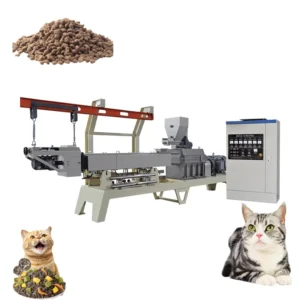
The barrel is divided into independently heated zones, each governing a specific phase of the extrusion cycle: preconditioning, compression, gelatinisation, and metering. For floating aquatic feed, the gelatinisation zone must sustain temperatures high enough to rupture starch granules completely while the screw elements maintain a controlled residence time. If the compression zone is too aggressive, the material densifies before expansion can occur at the die. This twin screw extrusion fish feed production line uses a PLC system to monitor and adjust each zone independently, allowing process engineers to tune the thermal profile without stopping production.
Die Geometry and Expansion Ratio Control
The die plate determines pellet diameter, but the die land length and hole taper govern how much the extrudate expands upon exiting into atmospheric pressure. Floating pellets require a higher expansion ratio, achieved through shorter die lands that allow rapid steam release and cellular structure formation. Sinking feed demands the opposite: longer die lands that compress the matrix into a denser, slower-hydrating pellet. Swapping die plates between production runs is straightforward, but the screw configuration feeding that die must also shift to deliver the correct pressure and shear at the die face [NEED_CITE: relationship between die land length and extrudate density in twin-screw systems].
Screw Element Selection for Compound Additive Blends
Aquatic feed formulations often include compound additives — vitamin premixes, mineral binders, lipid coatings — that behave differently under shear and heat than pure grain or protein stocks. Some additives degrade above certain barrel temperatures, while others require aggressive mixing elements to disperse uniformly through the matrix. The screw configuration on this twin screw extrusion fish feed production line is built from modular elements: kneading blocks, conveying flights, and reverse-screw sections, each positioned to address a specific mixing or thermal requirement. This modular approach means the same extruder can be reconfigured for different formulations rather than requiring a separate machine for each product.
Reading the Specs That Actually Matter
The motor power rating indicates the maximum torque available to push viscous, high-protein material through the die, but the amperage draw during steady-state operation reveals whether the screw configuration is correctly matched to the formulation — an undersized motor will trip breakers under load, while an oversized one masks poor screw design with brute force. The food-grade 304 stainless steel contact surfaces resist corrosion from fish meal acids and additive salts, extending component life in continuous production environments. The PLC automatic control system logs barrel temperatures, screw RPM, and feeder rates in real time, giving operators a baseline to replicate successful runs and trace deviations when pellet quality drifts [NEED_CITE: industrial PLC data logging standards for food processing traceability].
The Hidden Cost of Skipping the Trial Run
A line that performs flawlessly on the manufacturer’s standard test material can behave entirely differently when your bone meal blend enters the hopper. Density, oil content, particle size, and moisture absorption rates all shift the extrusion dynamics. Without a pre-shipment trial run on your actual formulation, the first production cycle becomes an expensive commissioning exercise — raw material wasted, delivery deadlines missed, and replacement screw elements air-freighted at premium cost. I have seen lines sit idle for months in Nigeria and Bangladesh waiting for corrected screw sets that should have been identified in a two-day factory test.
Why the Engineering Match Matters Here
Screw configuration and die design are specified against your raw material sample and target pellet buoyancy, not pulled from a generic build library. The in-house testing workshop runs your formulation through the extruder before shipment, generating a trial run report that confirms density, expansion ratio, and throughput on your actual blend. Every station — mixer, extruder, dryer, coating drum — is capacity-matched so the line runs continuously rather than bottlenecking at one point. The electrical schematic and voltage confirmation are locked to your facility’s utility supply before production begins, preventing the commissioning delays that occur when a 380V machine arrives at a 415V site. Documentation includes the screw and die configuration record, so replacement wear parts are reorderable without reverse-engineering the build.
Documentation & Verification
- Line layout drawing showing throughput capacity at each station for your target output
- Screw and die configuration record tied to your raw material sample and pellet density target
- Trial run report from in-house testing workshop on your formulation before shipment
- Electrical schematic with voltage and frequency confirmed to your facility’s utility supply
- CE declaration of conformity for machinery safety compliance in your export market
- Operation manual with PLC parameter baselines for your specific formulation
Installation, Commissioning & Support
- Foundation plan specifying load-bearing requirements for the extruder, dryer, and coating drum footprint
- Dedicated circuit specification for PLC control cabinet and main drive motor amperage draw
- Station-by-station assembly sequence with conveyor alignment tolerances for continuous material flow
- First-run parameter logging on your raw material to establish PLC baseline for repeatability
- Operator training on die plate changeover procedure for switching between floating and sinking pellet production
- Wear parts inventory list covering screws, dies, and barrel liners with reorder intervals
What We Need to Spec Your Line
Provide your raw material formulation with moisture content and particle size distribution, your target pellet diameter and buoyancy requirement (floating, sinking, or both), and your facility’s voltage and frequency standard. If you are replacing an existing line or adding capacity alongside current equipment, share the upstream mixer output rate and downstream packing speed so the twin screw extrusion fish feed production line can be matched to your actual flow. A raw material sample shipped to our testing workshop allows us to confirm screw configuration and throughput before quotation.
Frequently Asked Questions
Q: How is screw configuration and die design specified for floating versus sinking pellet buoyancy?
A: Floating pellets require a screw profile that maximises starch gelatinisation and expansion at the die face, paired with shorter die lands for rapid cellular structure formation. Sinking pellets use a compression-heavy screw sequence and longer die lands to produce denser, slower-hydrating extrudate. The configuration is matched to your raw material’s protein-to-starch ratio during the pre-shipment trial run.
Q: What barrel temperature profile and moisture range are required for full starch gelatinisation in aquatic feed?
A: Gelatinisation thresholds depend on starch source and protein content in your formulation. Generally, barrel zones must sustain sufficient heat to rupture starch granules while moisture preconditioning ensures uniform hydration before material enters the compression zone. The PLC logs temperature and moisture data during the trial run, establishing a repeatable baseline for your specific blend.
Q: How is capacity verified against the buyer’s actual raw material formulation during trial runs?
A: Your raw material sample is processed through the extruder in the testing workshop under production-representative conditions. The trial run measures actual throughput, pellet density, expansion ratio, and buoyancy, generating a report that confirms whether the line meets your output requirement on your specific formulation rather than on a generic test stock.
Q: What is the relationship between extrusion shear, expansion ratio, and final pellet density?
A: Higher shear from kneading blocks increases mechanical energy input, raising melt temperature and promoting expansion at the die exit for lower-density floating pellets. Lower shear with extended residence time produces a denser matrix suitable for sinking feed. The twin screw extrusion fish feed production line allows screw element repositioning to tune shear levels without replacing the entire screw assembly.
Q: How are dryer capacity and coating drum throughput matched to extruder output to avoid bottlenecking?
A: Each station’s capacity is calculated based on the extruder’s confirmed output rate on your raw material, ensuring the dryer can remove moisture from the full pellet flow without backlog, and the coating drum can apply lipid or flavouring evenly at line speed. Undersized downstream equipment creates bottlenecks that reduce effective throughput below the extruder’s rated capability.