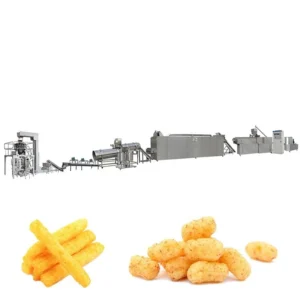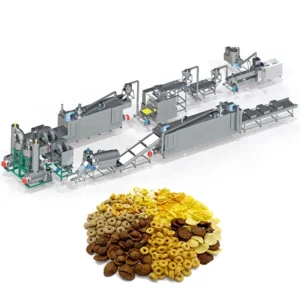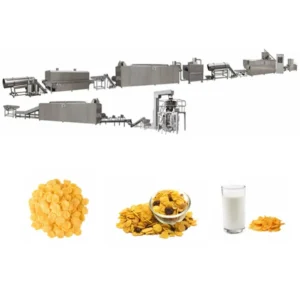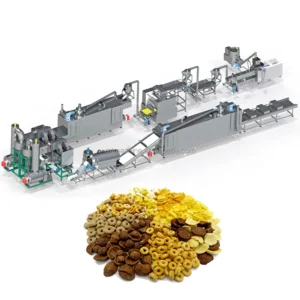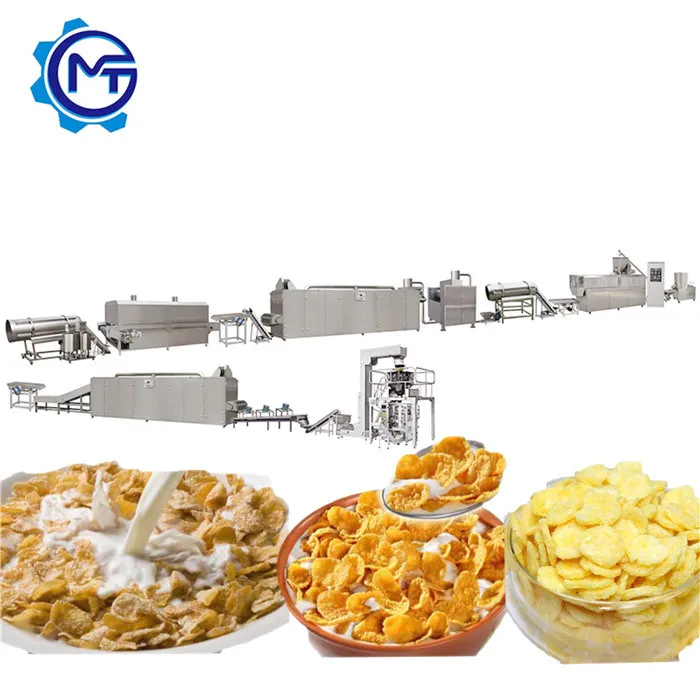
Screw Configuration Matched to Raw Material — Die design and barrel profile specified for each buyer’s grain blend, ensuring consistent starch gelatinisation and flake density from the first batch onward.
Technical Specifications
| Parameter | Value |
|---|---|
| Product Type | Corn Flakes Production Line |
| Model | MT75 (line configuration); MT-75 Twin Screw Extruder (core extruder) |
| Screw Type | Twin Screw |
| Installed Power | 210 KW (source value — verify against manufacturer catalog) |
| Power Consumption | 150 KW (source value — verify against manufacturer catalog) |
| Output Capacity | 300–500 KG/HR (basis not stated in source) |
| Overall Dimensions | 45 × 1.5 × 3.5 m |
| Control System | PLC control system (flaking machinery); automatic lubricating and cooling (extruder) |
| Heating Source (Dryer) | Gas or Electric, configurable |
| Flaking Machinery | Hydraulic double-roller system; double motors for separate roller driving; infrared temperature sensor for even control |
| Hot Air Roasting Oven | Vibrating pan with high-temperature spraying tubes; conciliation burner; dual circulating fans; cyclone dust removal |
| Coating System | Double tumble for sugar melting, elevator, coating drum, spraying nozzle |
| Assembly State | Complete production line |
Application Suitability
| Application | Material or Output |
|---|---|
| Natural corn flakes from grain powder | Corn, rice, wheat, oat, barley blends |
| Sugar-coated breakfast cereal flakes | Corn-based extruded flakes with syrup coating |
| Shaped breakfast cereal pieces | Ball, tube, stick, ring, fruit loop, star, wheel, flower, heart forms via die swap |
| Fortified cereal production | Cereal powders blended with vitamin and mineral premixes |
| Multi-grain flake lines | Mixed grain recipes requiring adjusted barrel temperature profiles |
What "300 to 500 KG per Hour" Leaves Out About Corn Flakes Extrusion
Capacity means nothing when the corn flakes extrusion technology cannot hold consistent gelatinisation on your specific grain blend.
I once watched a breakfast cereal line stall because the sugar coating drum could not keep pace with the extruder output. Half-dried flakes sat on the conveyor, clumped together, and the entire line had to throttle down. Throughput is only meaningful when every station — mixing, extruding, flaking, drying, roasting, coating — is balanced against the actual raw material and target product. A quoted number based on an undefined grain mix tells you nothing about what your corn, oat, or multi-grain recipe will actually produce [NEED_CITE: industrial line throughput matching standards for cereal processing].
Barrel Temperature Profile and Starch Gelatinisation
The breakfast cereal extrusion process hinges on how thoroughly starch granules break down inside the barrel. On the MT75 line, the twin-screw extruder manages feeding, extruding, cutting, heating, and gearing through distinct zones, each with independent temperature control. This allows the operator to set a rising profile that matches the moisture absorption rate of the incoming grain blend, preventing under-cooked dough from reaching the flaking rollers.
Die Design and Flake Expansion Control
Once the gelatinised mass exits the die, its density and expansion behaviour determine whether the final flake achieves the crunch the market expects. Screw configuration and die geometry are specified to the buyer’s raw material rather than copied from a generic build. This is what separates corn flakes extrusion technology that produces uniform, blistered flakes from equipment that yields flat, hard discs the consumer rejects.
Flaking Roller Precision and Thickness Uniformity
The flaking station uses a hydraulic system driving two independent motors on the double rollers, with an infrared sensor monitoring roller surface temperature in real time. Uniform temperature across the roller face prevents edge-thickening — a common cause of inconsistent flake thickness that leads to uneven roasting downstream. The PLC-controlled pressure setting allows operators to dial in flake thickness within a narrow tolerance band without manual shimming [NEED_CITE: hydraulic roller pressure calibration methods for cereal flaking].
Roasting Oven Airflow and Surface Bubbling
After drying, flakes enter the hot air roasting oven where a conciliation burner and dual circulating fans deliver controlled high-temperature air through the vibrating pan. Spraying tubes distribute heat across the flake bed while the cyclone dust removal device captures fine particulates. This stage develops the surface blistering and colour that consumers associate with properly roasted corn flakes, and the dual-fan arrangement prevents hot spots that scorch one side of the tray.
Reading the Specs That Actually Matter
Twin-screw versus single-screw extrusion determines how the line handles varying grain compositions. A twin-screw design provides better mixing and self-cleaning action inside the barrel, which matters when a producer switches between corn, wheat, and multi-grain recipes on the same line. The installed power of 210 KW and power consumption of 150 KW indicate significant thermal and mechanical energy available for gelatinisation, though actual draw depends on recipe moisture and throughput. The overall line footprint of 45 × 1.5 × 3.5 metres requires a clear rectangular bay with adequate headroom for the elevator and coating drum above the main conveyor run. Gas or electric heating options for the dryer allow the line to match whichever energy source is economical at the installation site.
What Happens When Configuration Is Guesswork
When screw configuration is copied from a standard build rather than matched to the buyer’s grain blend, the breakfast cereal extrusion process produces flakes with the wrong density. Too dense and the consumer gets a hard, unappetising bite; too light and the flakes disintegrate in milk. A flaking roller set without infrared monitoring produces thicker edges that roast unevenly, creating batches where some flakes are pale and doughy while others are scorched [NEED_CITE: flake density tolerance expectations in retail breakfast cereal markets]. If the sugar coating drum capacity falls below the extruder output, the entire line slows to match the bottleneck, and partially dried coated flakes clump on the conveyor before reaching the second dryer.
Why Procurement Belongs in One Conversation
Screw and die design are specified against your raw material sample, not pulled from a catalogue — this removes the guesswork that causes density and texture failures on first production run.
Every station from mixing through packing is sized under one supplier so throughput matches at each transfer point, eliminating the bottleneck scenario where one machine idles while another backs up.
An in-house testing workshop runs your actual grain blend through the extruder before shipment, producing a trial run report that confirms texture, expansion, and flake behaviour before the line leaves the factory.
PLC control architecture extends across the flaking machinery and coating system, giving operators a single interface for the complete breakfast cereal extrusion process rather than juggling separate panels from different vendors.
Pre-sales consultation covers line layout and capacity calculation, electrical schematic confirmation, and voltage alignment so the installation crew encounters no surprises on day one.
Documentation & Verification
- Line layout and capacity calculation showing throughput balance across all MT75 stations
- Screw and die configuration record matched to your grain blend and target flake density
- Electrical schematic and voltage confirmation aligned to your facility utility supply
- Trial run report on your raw material conducted in the testing workshop before dispatch
- CE declaration of conformity and ISO certificate for export documentation
- Operation and maintenance manual with wear parts list for screws, dies, and roller surfaces
Installation, Commissioning & Support
- 45-metre line length requires a clear rectangular bay with minimum 3.5-metre ceiling height for elevator clearance
- Gas or electric dryer heating source must be confirmed and connected before the roasting oven commissioning
- PLC control panel language and HMI interface configured to operator preference during on-site setup
- Hydraulic flaking roller pressure calibrated with your grain recipe during initial production trials
- Automatic lubricating and cooling system on the extruder serviced at intervals specified in the maintenance manual
- Wear parts including screws, dies, and roller covers stocked per the supplied list for first-year replacement
What We Need to Move Forward
To configure this line correctly, share your target grain blend composition, the flake density and thickness your market expects, and whether the final product is natural or sugar-coated. Confirm your factory voltage, frequency, and preferred control language so the electrical schematic is finalised before production begins. If you have existing upstream mixers or downstream packing equipment, provide their throughput rates so we can match the MT75 stations accordingly.
Frequently Asked Questions
Q: How are screw configuration and die design matched to different cereal raw materials?
A: We run your grain blend through the twin-screw extruder in the testing workshop, adjusting screw element arrangement and die aperture until the extrudate achieves the target gelatinisation degree and expansion ratio. The final configuration is recorded in a screw and die configuration document that ships with the line, so operators can replicate the same profile for every production run without trial and error on the factory floor.
Q: What barrel temperature profile and moisture range produce optimal starch gelatinisation for corn flakes?
A: The profile varies by grain composition, but generally a rising temperature curve across the barrel zones combined with preconditioned moisture in the range typical for corn-based recipes yields full gelatinisation without over-shearing. The MT75 extruder provides independent heating zone control so operators can fine-tune the curve once the recipe is established during commissioning.
Q: Can a trial run on our raw material be performed before shipment?
A: Yes. The in-house testing workshop accepts your grain samples and runs them through the complete extrusion, flaking, and roasting sequence. The resulting trial run report documents extrudate texture, flake thickness, and roasting colour, giving you confirmation that the line will produce your target product before it leaves the factory.
Q: How is throughput matched between extruder, flaking, drying, and roasting stations?
A: Each station is sized during the line layout and capacity calculation phase based on the buyer’s confirmed raw material and target output. The flaking machinery hydraulic roller speed, dryer belt length, and roasting oven pan area are all proportioned so that no single station forces the rest of the line to slow down or accumulate backlog.
Q: What electrical voltage, frequency, and control language options are confirmed before commissioning?
A: Voltage and frequency are confirmed during the specification stage and documented in the electrical schematic. The PLC interface language is set to the operator’s preference before the control panels are assembled, and the voltage confirmation document is signed off by both parties before the extruder and flaking station enter final assembly.