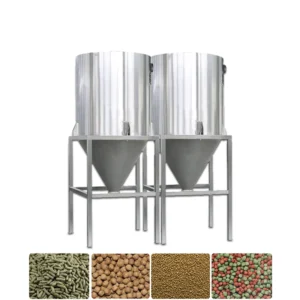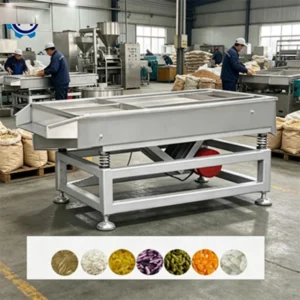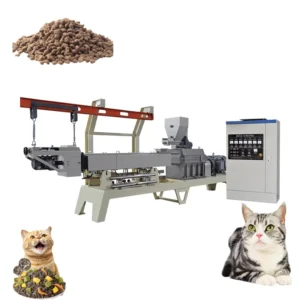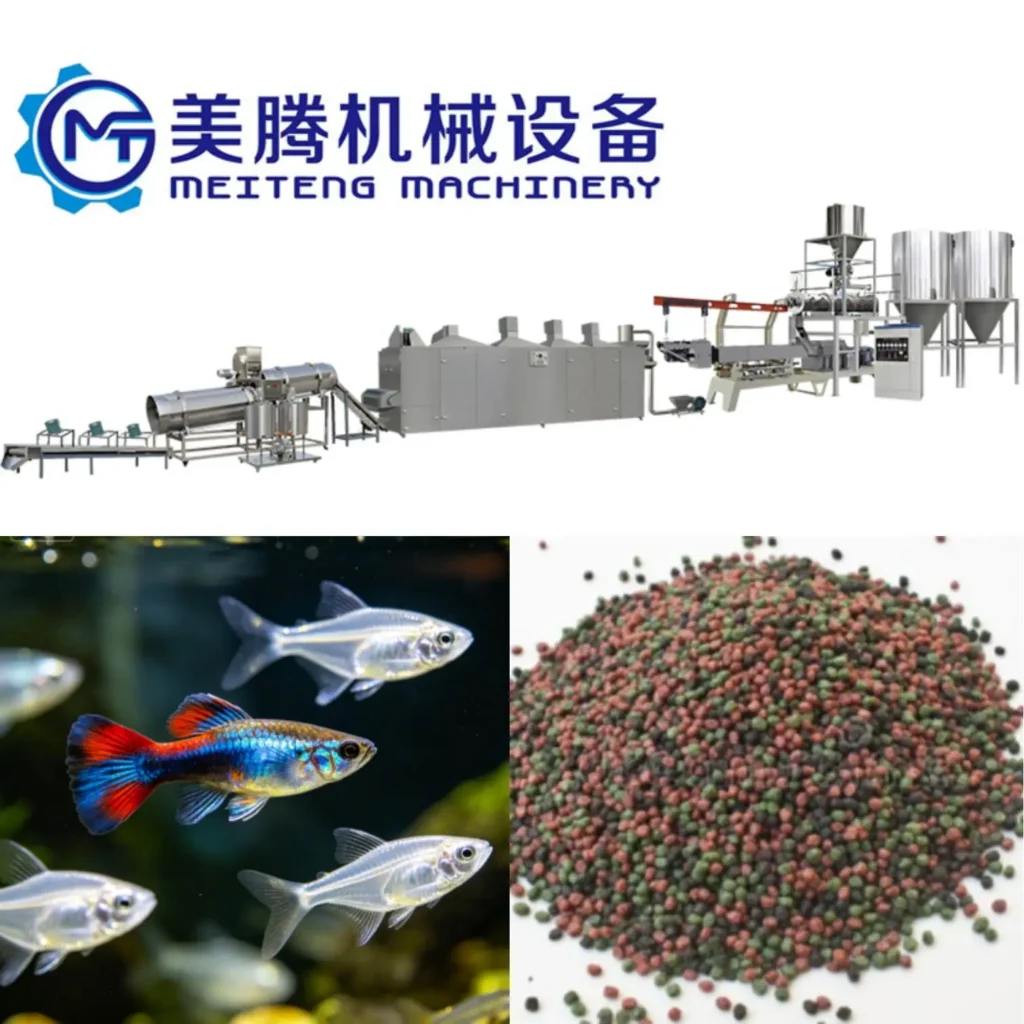
Specified Extrusion Geometry — Every screw element and die insert is configured against your aquatic formulation, so pellet density and floatability are engineered before the line ever leaves the workshop.
Technical Specifications
| Parameter | Value |
|---|---|
| Product Type | Twin-Screw Fish Feed Extrusion Line |
| Extruder Type | Twin-screw |
| Output Capacity | 200–300 kg/h (basis not stated in source — confirm raw material formulation, moisture content and pellet size) |
| Construction Material | 304 stainless steel (food-contact parts) |
| Control System | PLC and MCC (per company profile; source content does not specify) |
| Target Species | Trout, salmon, catfish and other fish species |
| Screw Configuration | Matched to raw material and pellet specification |
| Die Configuration | Specified per target pellet shape and density |
| Line Stations | Batching, extrusion, drying, coating, cooling, packing |
| Certification | CE (since 2014), ISO |
| Assembly State | Complete production line |
Application Suitability
| Application | Material or Output |
|---|---|
| Floating aquaculture feed for trout and salmon | High-protein fish meal, corn starch and wheat gluten blends requiring high expansion |
| Sinking pellets for catfish and tilapia | Denser carbohydrate-protein mixtures conditioned for minimal expansion |
| Shrimp and bottom-feeder aquatic feed | Fine-grind raw materials requiring controlled gelatinisation and water stability |
| Fortified nutritional fish feed | Vitamin and mineral premixes integrated into starch-protein matrices |
Why Generic Screw Builds Sink Floating Pellets
When a twin-screw fish feed extrusion line ships with a copied screw configuration, the pellets either refuse to float or lose buoyancy after minutes in water. Matching screw geometry and die design to the buyer’s actual formulation is the only way to guarantee floatability and sink rate on the first production run. I have watched entire container loads of sinking trout feed get rejected at the hatchery because the extruder was set up for a generic corn-based recipe while the customer was running a high-fish-meal formulation [NEED_CITE: starch gelatinisation thresholds in high-protein aquatic feed extrusion]. The shear profile inside the barrel simply did not generate enough gelatinisation to trap the gas bubbles required for buoyancy. Swapping two screw elements and adjusting the barrel zone temperatures resolved the issue, but only after weeks of lost production and damaged buyer trust.
Barrel Zone Profiling for Starch Gelatinisation Control
The barrel on this twin-screw fish feed extrusion line is divided into independently heated and cooled zones, allowing the temperature gradient to follow the material’s gelatinisation curve. Moisture and shear interact continuously inside the barrel; a sudden spike in barrel temperature without corresponding moisture adjustment can cause premature expansion, while a flat profile across all zones leaves starch partially raw and weakens pellet water stability. Operators adjust the zone sequence to match the specific starch source in the formulation, whether it is corn, wheat, cassava or a blended base.
Die Geometry and Pellet Density Engineering
Die orifice diameter, land length and face configuration together dictate how the extrudate expands as it exits the barrel under pressure. For floating pellets targeting trout or salmon, a shorter land length allows greater radial expansion and lower bulk density. For sinking catfish feed, a longer land restricts expansion and produces a denser pellet that drops quickly in the water column [NEED_CITE: die land length influence on extrudate expansion ratio in aquatic feed production]. Die inserts are swapped between production runs, and the configuration record is documented so repeat orders stay consistent.
Reading the Specifications for Your Formulation
The 304 stainless steel food-contact construction resists the corrosive salts and organic acids present in fish meal and shrimp meal blends, extending contact-part life compared to carbon steel alternatives. Twin-screw extrusion handles a wider range of particle sizes and fat contents than single-screw designs, which matters when formulations shift between species targets across the same production week. The PLC and MCC control integration means barrel temperatures, screw speed and feeder rates are logged per batch, providing traceability when hatchery buyers request production records. Output capacity of 200–300 kg/h is listed as a reference range; the confirmed throughput depends on the raw material formulation, moisture content and target pellet diameter you specify during the pre-shipment trial.
What Happens When Extrusion Stations Are Mismatched
An extruder running at full output into an undersized dryer creates a bottleneck where pellets pile up with residual moisture above safe storage levels. Within days, mould develops in the packing bags and the entire batch is rejected at the farm [NEED_CITE: moisture content thresholds for stored aquaculture feed stability]. Similarly, a coating drum that cannot keep pace with the extruder forces operators to slow the line, wasting the thermal energy already invested in the barrel. These mismatches are not visible in a spec sheet that only lists the extruder in isolation.
Why Engineers Source This Line Here
Every station from batching through packing is specified under one engineering responsibility, meaning throughput calculations are balanced across the full line rather than assembled from separate vendor quotes. The in-house testing workshop runs your actual raw material before shipment, producing a trial run report that documents pellet density, floatability time and expansion ratio against your target specification. Screw configuration and die design records are provided as part of the documentation package, not kept as proprietary information. The line carries CE and ISO certification, supporting import compliance in markets that require machinery directive documentation [NEED_CITE: CE machinery directive requirements for industrial food processing equipment]. On-site installation, commissioning and operator training are included in the project scope, covering parameter setup specific to your formulation.
Documentation & Verification
- Line layout and capacity calculation showing throughput balance across all stations
- Screw and die configuration record matched to your raw material formulation
- Trial run report on customer raw material confirming pellet density and floatability
- Electrical schematic with voltage and frequency confirmed for your installation site
- CE declaration of conformity and ISO certificate included in shipment documentation
- Operation and maintenance manual with wear parts list for screw elements and die inserts
Installation, Commissioning & Support
- Foundation and utility planning based on the full line footprint including dryer and cooling conveyor
- Dedicated electrical circuit sized for the PLC and MCC control system and total connected load
- Extruder barrel and screw assembly verified on site after transit with alignment check
- First production run supervised with barrel temperature and screw speed parameters logged
- Operator training covers formulation changeover procedures for different pellet density targets
- Wear parts inventory including replacement screw elements and die inserts supplied at commissioning
Preparing Your Extrusion Specification
Before we configure the twin-screw fish feed extrusion line for your project, share your target species, raw material formulation with starch and protein percentages, and the pellet diameter range you need. We also need your installation site voltage and frequency, preferred control language for the PLC interface, and whether you plan to run both floating and sinking pellets on the same line. If you can send a sample of your raw material blend, we will conduct a trial run in the testing workshop and return the parameter data with our proposal.
Frequently Asked Questions
Q: How is output capacity verified, and what raw material formulation and moisture level is it based on?
A: The listed capacity range is a reference based on standard aquatic feed formulations. We confirm actual throughput during a trial run using your specific raw material blend, measuring output at the target moisture content and pellet size. The verified capacity is documented in the trial run report before shipment.
Q: How is screw configuration and die design selected for floating versus sinking fish feed pellets?
A: Floating pellets require a screw profile that maximises shear and gas retention, paired with a die that allows full radial expansion. Sinking pellets use a lower-shear configuration and a restricted die to limit expansion. Both setups are tested on your formulation in the workshop before the line ships.
Q: What barrel temperature profile and moisture range are used for different aquatic feed formulations?
A: Barrel zones are set individually to follow the gelatinisation curve of the starch source in your blend. High-fish-meal formulations typically need lower barrel temperatures and higher preconditioning moisture than high-corn recipes. Exact values are established during the trial run and recorded in the configuration document.
Q: Is a trial run on the buyer’s actual raw material performed before shipment?
A: Yes. We run your raw material through the extruder in our testing workshop and produce a trial run report documenting pellet density, floatability duration and expansion ratio. This report ships with the line so your team can replicate the parameters from day one of production.