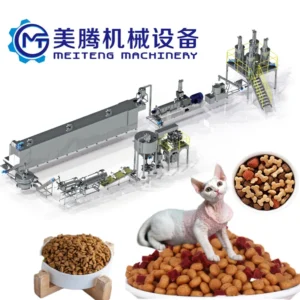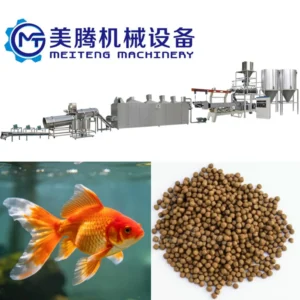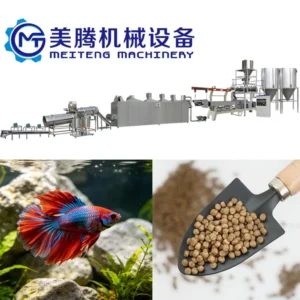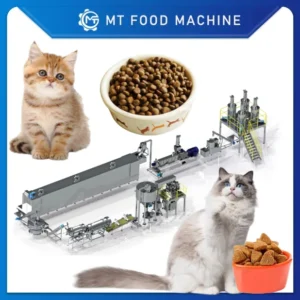
Precision screw profiling — We map extruder screw elements and die geometry directly to your raw material blend and target pellet density, so floating or sinking behavior is engineered in rather than adjusted on-site.
Technical Specifications
| Parameter | Value |
|---|---|
| Product Type | Twin Screw Extrusion Production Line for Aquatic and Pet Feed |
| Screw Type | Twin Screw |
| Control System | PLC Automatic Control System |
| Material Contact Parts | Food Grade 304 Stainless Steel |
| Machine Body Material | Food Grade 304 Stainless Steel |
| Pellet Properties | Adjustable size, hardness, buoyancy (floating and sinking) |
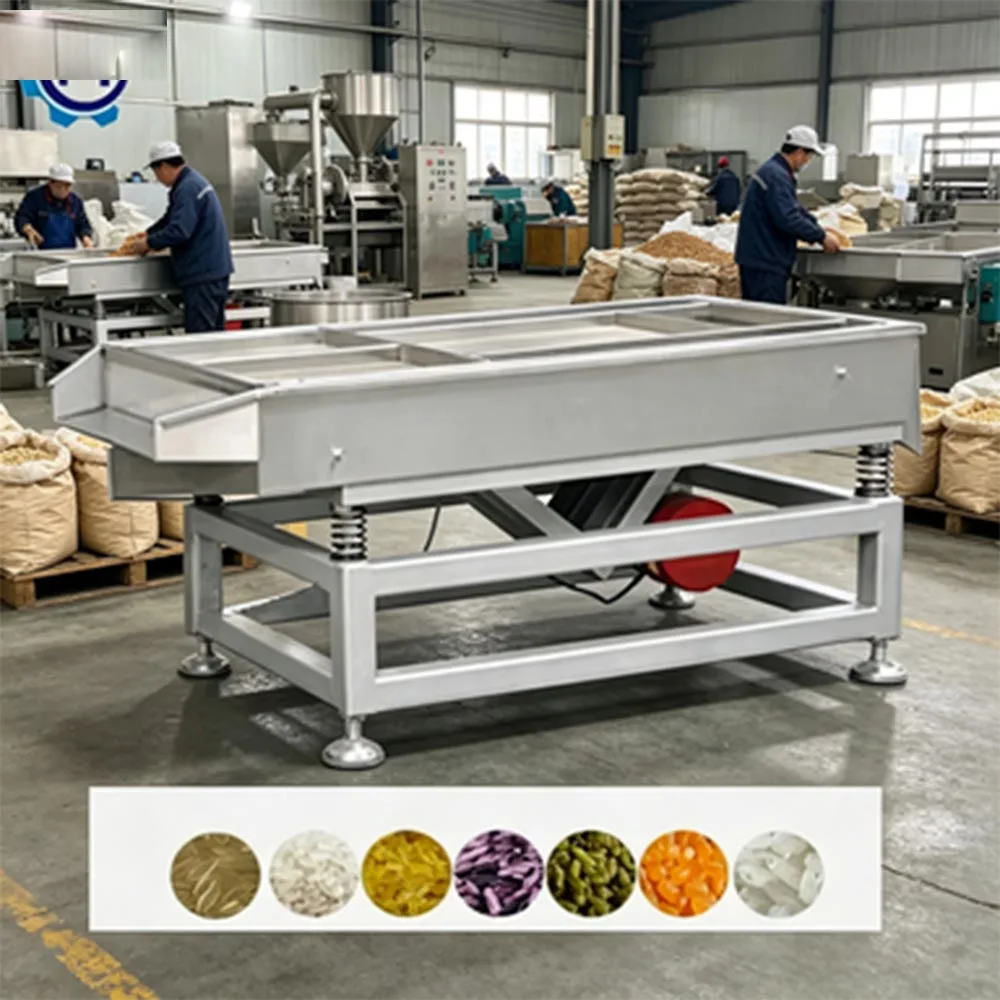
| Line Stations | Raw material mixer, extruder, dryer, seasoning coating machine, vibrating sieve, conveyor equipment |
| Production Mode | Full continuous automatic production |
| Energy Design | Optimized energy-saving transmission structure and heating system |
| Output Capacity | Large stable processing capacity for medium-large scale industrial commercial production (basis to be confirmed — depends on raw material formulation, pellet size, and moisture content) |
| Voltage & Frequency | Configurable to target market electrical standard (basis to be confirmed) |
| Screw Diameter | Varies by model configuration (basis to be confirmed) |
| L:D Ratio | Varies by model configuration (basis to be confirmed) |
| Standards | CE, ISO |
Application Suitability
| Application | Material or Output |
|---|---|
| Floating aquatic feed pellets | Fish meal, soybean meal, corn powder, compound additives for koi, goldfish, tropical fish |
| Sinking aquatic feed pellets | High-protein formulations for catfish, tilapia, shrimp |
| Dry pet kibble | Meat meal, grain blends, nutritional additives for dog and cat feed |
| Specialty pet treats | Extruded shapes with adjustable hardness and density |
| Fortified feed pellets | Compound additives and vitamin premixes integrated into base formulation |
Why Pellet Density Misses the Spec — And What Twin Screw Extrusion Technology for Aquatic and Pet Feed Actually Controls
Buoyancy and expansion are outcomes of screw configuration and thermal profile, not raw material defects.
When floating feed sinks or kibble lands outside the density window a market expects, the root cause almost always traces back to mismatched screw elements or an incorrect barrel temperature gradient. I recall a project for a South American client where our trial used standard corn flour, but their actual formulation carried a heavy fish meal ratio. The material behaved completely differently under shear — expansion collapsed, pellet density spiked, and it took a full week of on-site parameter tuning before the line produced acceptable output. That experience reshaped how we handle every order: no machine ships without a trial run on the buyer’s actual material. [NEED_CITE: starch gelatinisation thresholds in high-protein extrusion]
Screw Element Sequencing and Shear Control
The arrangement of conveying, kneading, and reverse-flight elements along the screw shaft determines how much mechanical energy transfers into the material at each stage. Twin screw extrusion technology for aquatic and pet feed relies on this modularity — a high-fish-meal aquatic formula needs a gentler kneading sequence than a corn-dominant pet kibble recipe. We specify the element order based on your raw material data sheet and target pellet format before any metal is cut.
Barrel Temperature Zoning and Moisture Management
Each barrel section has independent heating and cooling circuits. The temperature gradient from feed zone to die face governs starch gelatinisation degree, which directly sets the expansion ratio at the die exit. Too little gelatinisation and pellets remain dense and sink; too much and they fracture after drying. Moisture injection volume and steam conditioning work alongside these thermal zones to hold the product within the expansion window your market requires. [NEED_CITE: barrel temperature profiling for floating versus sinking pellet targets]
Reading the Spec Sheet: What Actually Matters for Your Line
The twin-screw design gives this line its material versatility — two intermeshing screws create a self-wiping action that handles sticky, high-fat, or high-protein blends without material buildup inside the barrel. The L:D ratio governs residence time: a longer barrel allows more complete gelatinisation for formulations heavy in complex starches, while a shorter ratio suits simpler grain-based pet kibble. Die configuration sets the final pellet cross-section and cut length, meaning the same extruder can produce 2mm sinking shrimp feed or 12mm floating koi pellets simply by swapping die plates and adjusting cut-off speed. The PLC control system logs and maintains all process variables — screw speed, barrel temperatures, feed rate, moisture dosing — so batch-to-batch consistency is a function of programmed parameters, not operator memory. Food-grade 304 stainless steel throughout all contact surfaces prevents corrosion from the acidic and saline compounds common in aquatic feed formulations.
The Hidden Cost of a Copied Configuration
When an extruder leaves the factory with a screw setup copied from a generic build rather than engineered for your specific formulation, the consequences unfold gradually. Pellet density drifts outside tolerance. The dryer runs longer to compensate for uneven moisture, creating a bottleneck that drops actual throughput below the line’s rated capacity. Coating adhesion suffers because surface porosity varies from pellet to pellet. Buyers often spend months blaming raw material suppliers before realizing the extrusion parameters were never matched to their recipe. [NEED_CITE: extrusion parameter mismatch and downstream throughput loss]
Why Source This Line Here
Every station on this production line — mixer, extruder, dryer, coating drum, cooler, packing — is sized and matched under one supplier, so throughput does not bottleneck at any single point. Screw configuration and die design are specified against your raw material formulation and target pellet density before production begins. Our in-house testing workshop runs your actual material on the machine before shipment, generating a trial report that confirms buoyancy, expansion ratio, and pellet dimensions. The PLC and MCC control architecture is confirmed against your site voltage, frequency, and preferred operator language well ahead of dispatch. Twin-screw expertise across aquatic feed, pet kibble, and specialty treat applications means the engineering team has encountered formulations similar to yours before.
Documentation & Verification
- Line layout and capacity calculation matching every station from mixer to packing
- Screw and die configuration record mapped to your raw material and pellet target
- Trial run report on customer raw material conducted before shipment
- Electrical schematic with voltage and frequency confirmed to site standard
- CE declaration of conformity and ISO certificate included with each line
- Operation and maintenance manual with wear parts list in operator language
Installation, Commissioning & Support
- Foundation plan based on actual line footprint and station weight distribution
- Power circuit spec covering PLC panel, extruder main drive, and dryer heating loads
- Equipment arrives in modular sections for positioning within standard workshop clearances
- Commissioning includes parameter tuning on your production formulation at operating speed
- Operator training covers screw element changes, die swaps, and PLC recipe storage
- Wear parts inventory list with recommended first-order quantities for screws and dies
Preparing Your Inquiry
To configure a line that matches your production target, share your raw material formulation including fish meal or meat meal percentage, desired pellet diameter and buoyancy requirement, daily or hourly output goal, and workshop dimensions. We also need your local voltage and frequency standard along with the preferred PLC interface language. If you have existing upstream milling or downstream packing equipment, let us know the interface specifications so the line integrates cleanly. Sending a representative sample of your raw material blend allows us to run a pre-shipment trial and confirm pellet properties before the machine leaves our workshop.
Frequently Asked Questions
Q: How is screw configuration and die design selected for different raw material formulations and target pellet densities?
A: We review your raw material data sheet — protein content, starch source, fat level, and moisture — then select conveying, kneading, and reverse-flight screw elements in sequence to deliver the right shear profile. Die plate hole diameter and land length are matched to your target pellet size and expansion ratio. The configuration is documented and validated during the pre-shipment trial run on your material.
Q: What barrel temperature profile and moisture levels are needed to achieve proper starch gelatinisation for floating versus sinking pellets?
A: Floating pellets require a higher degree of gelatinisation and greater expansion at the die, which means higher barrel temperatures in the final zones and carefully controlled moisture injection. Sinking pellets need a denser structure with less expansion, achieved through lower thermal input and higher die land pressure. Exact temperatures and moisture percentages depend entirely on your specific starch source and protein ratio.
Q: How is pellet buoyancy and expansion ratio verified during trial runs before shipment?
A: During the workshop trial on your raw material, we measure pellet diameter, unit weight, and water displacement to calculate expansion ratio and bulk density. Floating samples are tested in a water column to confirm they remain at the surface for the required duration. Results are recorded in a trial report shared with you before the line is cleared for packing.
Q: How does the extruder throughput match with dryer and coating station capacity to prevent line bottlenecks?
A: Each station is sized during the line layout phase so that the dryer residence time, coating drum volume, and conveyor speeds all align with the extruder’s actual output on your formulation. This prevents situations where the extruder produces faster than the dryer can handle, which would force operators to slow the entire line and lose effective capacity.
Q: What voltage, frequency, and PLC control language options are available for different target markets?
A: The electrical system is configured to your site’s voltage and frequency standard before production begins. The PLC interface and HMI can be set to your preferred operator language. We confirm these specifications during the quotation stage and verify them again on the electrical schematic before the control panel is wired, so commissioning delays from electrical mismatches are avoided.