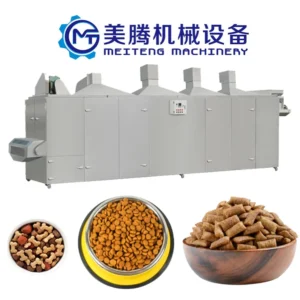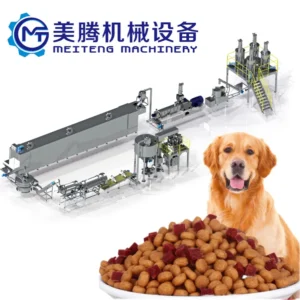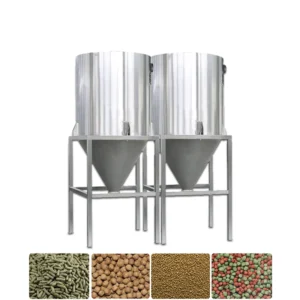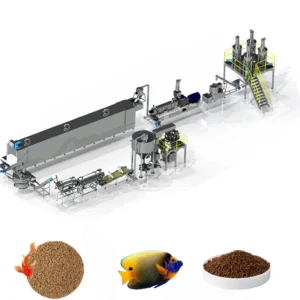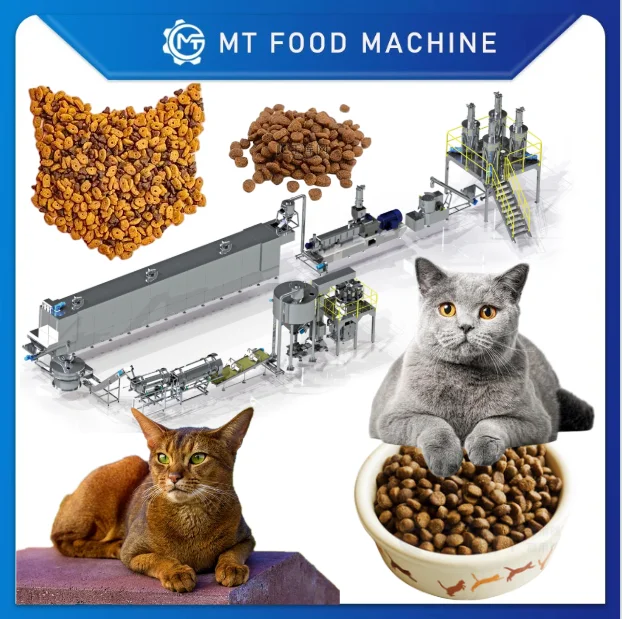
Screw Geometry Matched to Formulation — Twin-screw configuration and die design specified to your raw material and target kibble density, not copied from a generic build.
Technical Specifications
| Parameter | Value |
|---|---|
| Product Type | Pet Food Extrusion Processing Line |
| Output Capacity | 250–300 kg/h (basis not stated in source — confirm raw material formulation, moisture content, and kibble size) |
| Screw Type | Twin-screw |
| Control System | PLC Controlled |
| Automation Level | Full Automation |
| Supported Product Formats | Dry kibble, semi-moist, treats |
| Target Species | Multi-species (cat food focus) |
| Line Stations | Batching → Extrusion → Drying → Coating → Packing |
| Energy Design | Energy Saving & Eco-Friendly Design (qualitative — specific consumption not stated) |
| User Interface | User-Friendly Interface (HMI language options to be confirmed) |
| Standards | CE, ISO |
Application Suitability
| Application | Material or Output |
|---|---|
| Dry kibble production for cats | Corn, rice, wheat, meat meal, fish meal, tallow blends |
| Semi-moist diet extrusion | High-moisture meat slurries with starch binders |
| Multi-species companion feed | Variable protein-to-carbohydrate ratios across dog, cat, and small animal recipes |
| Treat format runs | Concentrated meat-based doughs with functional additives |
| Prescription diet processing | Heat-sensitive nutrient blends requiring precise thermal profiling |
Why the Screw Question Should Come Before the Price
A PLC controlled pet food processing line only delivers consistent kibble if the screw configuration and die geometry are matched to your exact formulation — not pulled from a catalogue.
Floating feed that sinks, kibble that crumbles during coating, or density readings outside your market specification almost always trace back to a screw and die mismatch. I have watched production teams spend weeks adjusting barrel temperatures and moisture injection trying to compensate for what is fundamentally a mechanical geometry problem. The extruder barrel zones, screw element sequencing, and die orifice sizing must be calculated from your raw material’s starch gelatinisation temperature, fat absorption rate, and target expansion ratio before any steel is cut [NEED_CITE: twin-screw extrusion screw element configuration principles]. Skipping this step means you are commissioning a machine that will run, but never run right.
Barrel Temperature Profiling for Repeatable Gelatinisation
Starch gelatinisation inside a twin-screw extruder is not a single event but a staged progression. Each barrel zone serves a distinct function: preconditioning, compression, cooking, and metering. On this PLC controlled pet food processing line, the automated barrel temperature profiling manages these zones independently, allowing the operator to set distinct thermal targets for each section. When a recipe shifts from a high-corn formulation to a meat-heavy slurry, the gelatinisation onset changes, and the PLC adjusts zone temperatures accordingly to maintain consistent dough viscosity entering the die plate.
Die Design and Kibble Density Control
The die plate is where product identity is formed. Orifice diameter, land length, and face geometry determine the pressure drop at the exit, which directly governs expansion ratio and final kibble density. A die specified for a low-density floating fish feed will produce cat kibble that is too light and friable. On this line, the die design is selected based on the buyer’s target kibble density, piece size, and coating absorption requirements. Multiple die plates can be prepared for different product formats, allowing changeover between dry kibble and treat runs without mechanical modification to the extruder barrel [NEED_CITE: die geometry effect on extrudate expansion and density].
Reading the Specs That Matter
The twin-screw configuration on this extrusion line allows processing of both high-starch and high-protein formulations, which a single-screw design cannot handle without severe throughput loss. Full PLC automation means barrel temperatures, screw speed, feeder rates, and moisture injection are interlocked — a change in one parameter triggers compensating adjustments in others, which is critical for batch-to-batch consistency. The supported formats of dry kibble, semi-moist, and treats each demand different moisture levels at the die face and different dryer residence times downstream; the line stations from batching through packing are throughput-matched to prevent bottlenecking at any single point. CE and ISO certification confirms the machine meets European machinery safety directives and quality management standards required for regulated export markets [NEED_CITE: CE machinery directive requirements for food processing equipment].
The Cost of Skipping Configuration Verification
When screw elements are sequenced for a generic recipe rather than your actual formulation, the consequences compound downstream. Kibble density drifts outside specification, the coating drum cannot achieve uniform fat absorption, and packing weights become inconsistent. I have seen entire production runs quarantined because the extruder was never tested against the buyer’s raw material before shipment — the first real trial happened on the factory floor, with raw material already paid for and delivery deadlines already slipping [NEED_CITE: pre-shipment trial run importance for extrusion lines]. Voltage mismatches discovered at installation can delay commissioning by weeks if the control cabinet was built to the wrong grid standard.
Why Source This Line Here
Complete line integration from batching through packing under a single supplier means throughput is balanced at every station — the dryer and coating drum are sized to the extruder’s actual output on your formulation, not its nameplate rating. Screw configuration and die design are documented to your specific raw material and target kibble density before fabrication begins. An in-house testing workshop allows trial runs on your supplied raw material before the line ships, so product development starts before installation, not after. Twin-screw expertise spans pet food, aquatic feed, snack, cereal, and protein applications, meaning screw geometry is selected from a wide reference base rather than a single product template. Pre-sales engineering through on-site commissioning and ongoing maintenance support is handled by the same team that configured the line.
Documentation & Verification
- Line layout and capacity calculation matched to your target kibble size and daily volume
- Screw and die configuration record specifying element sequence, orifice diameter, and land length
- Electrical schematic with voltage, frequency, and control language confirmed for your facility
- Trial run report on your raw material documenting kibble density, expansion ratio, and moisture at die exit
- CE declaration of conformity and ISO certificate for export compliance
- Factory test record and packing photographs before container loading
Installation, Commissioning & Support
- Foundation load and floor space plan based on the full batching-to-packing line footprint
- Dedicated power circuit specification matching PLC cabinet voltage and frequency requirements
- Modular assembly sequence for extruder, dryer, and coating drum fitting standard container access
- First-run parameter logging of barrel zone temperatures, screw speed, and moisture injection settings
- Operator training covering recipe changeover, HMI navigation, and emergency stop procedures
- Wear parts list with screw elements, die plates, and cutter bearings identified by replacement interval
What to Prepare Before Inquiring
To configure this line accurately, provide your primary raw material formulation including protein, starch, and fat percentages along with target kibble dimensions and density range. Specify your local voltage, frequency, and preferred PLC interface language. If you are producing multiple formats such as dry kibble and semi-moist on the same platform, note each format’s target output rate so the dryer and coating drum can be sized to handle the highest-demand recipe without bottlenecking.
Frequently Asked Questions
Q: How is extrusion capacity verified against the buyer’s actual raw material formulation?
A: Capacity is confirmed through an in-house trial run using the buyer’s supplied raw material. The testing workshop documents actual output rate, kibble density, expansion ratio, and moisture content at the die exit under production-representative conditions. These results form the basis for final line throughput calculations rather than relying on nominal catalogue ratings.
Q: What screw configuration and die design process ensures correct kibble density and texture?
A: Screw element sequencing, compression ratio, and die orifice geometry are selected based on the buyer’s raw material starch-to-protein ratio, target expansion rate, and final kibble density specification. Configuration records are documented before fabrication, and trial runs validate density readings against the product specification sheet.
Q: How are barrel temperature zones and moisture injection tuned for starch gelatinisation consistency?
A: The PLC manages each barrel zone independently with interlocked moisture injection. Gelatinisation temperature varies by starch source, so the control system allows zone-by-zone thermal adjustment. Once optimal settings are established during trial runs, they are saved as recipe profiles for repeatable batch-to-batch output.
Q: What PLC control language and HMI options are available for the target market?
A: The PLC interface language is confirmed during the specification stage before production begins. Voltage, frequency, and control panel labeling are matched to the buyer’s local grid standard and operator requirements. These details are documented in the electrical schematic and verified during the factory test before shipment.
Q: How is extruder output balanced with downstream dryer and coating drum capacity to avoid bottlenecks?
A: Each line station is sized based on the extruder’s verified output on the buyer’s specific formulation, not the machine’s nameplate maximum. The dryer residence time, coating drum volume, and cooling conveyor length are calculated from the trial run data so that no single station restricts overall line throughput.