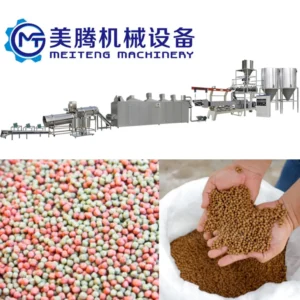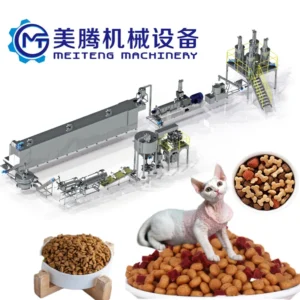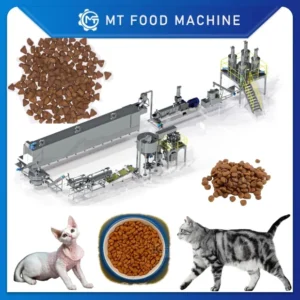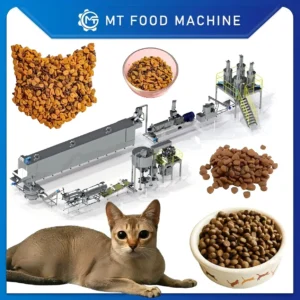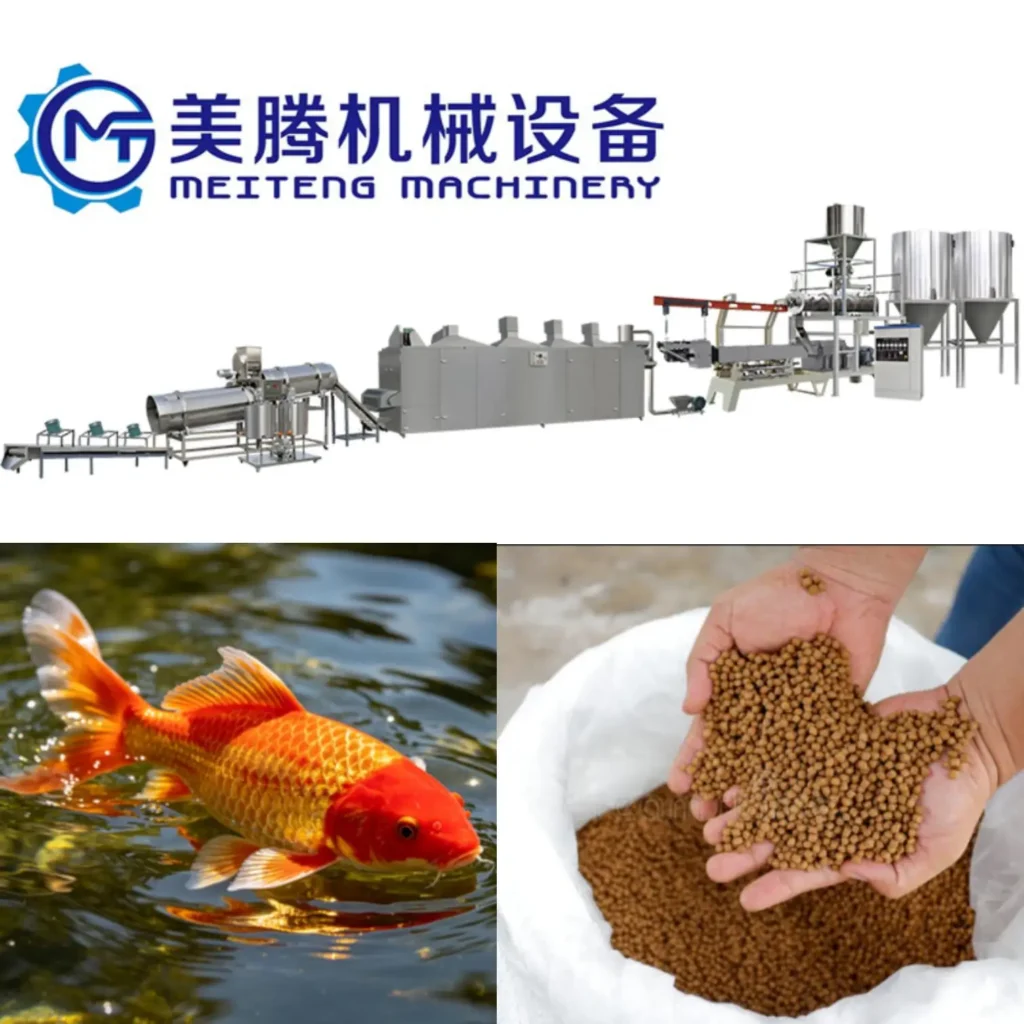
Extrusion Process Mastery — Twin-screw configuration and die geometry calibrated to raw material formulation determine whether fish feed pellets float or sink on your aquaculture operation.
Technical Specifications
| Parameter | Value |
|---|---|
| Product Type | Fish Feed Processing Line |
| Extruder Type | Twin-screw extruder |
| Output Capacity | 1.0–1.5 t/h (basis not stated in source — confirm raw material formulation, moisture content and pellet size) |
| Construction Material | 304 stainless steel (food-contact parts) |
| Control System | PLC / MCC (options to be confirmed) |
| Voltage & Frequency | Configurable to site requirements (to be confirmed before order) |
| Standards | CE, ISO |
Application Suitability
| Application | Material or Output |
|---|---|
| Floating trout and salmon pellets | High-protein formulations requiring controlled starch gelatinisation for positive buoyancy |
| Sinking catfish and bottom-feeder feed | Dense formulations processed with specific moisture and shear profiles |
| Multi-species production on one line | Formulation changeovers across trout, salmon, catfish and other aquaculture species |
Why "Rated Capacity" Misses the Real Constraint in Fish Feed Extrusion
Output capacity only matters when tied to your exact raw material blend, moisture content and pellet diameter.
Many producers discover that a line rated for a certain throughput cannot maintain that rate once their specific formulation enters the barrel. High fish meal content changes viscosity, fat percentage alters expansion behaviour, and target pellet size directly affects throughput. A machine that performs on a standard test recipe may stall or produce inconsistent density when faced with real production formulations. I have seen buyers invest in capacity they never actually achieve because the fish feed extrusion line specifications were quoted without material context [NEED_CITE: aquaculture feed formulation variability and extruder throughput].
Screw Configuration and Barrel Temperature Define Pellet Buoyancy
The screw profile, flight depth and barrel zone temperatures collectively control shear, residence time and starch gelatinisation inside the extruder. Floating pellets require high expansion achieved through precise moisture and thermal management, while sinking pellets demand denser output with controlled gelatinisation. Every fish feed extrusion line specifications sheet should document the screw and die configuration selected for your target product, not a generic build copied across all orders.
Die Geometry and Moisture Shear Balance Control Final Density
The die plate hole diameter, land length and open area ratio determine how much the extrudate expands upon exiting the barrel. Combined with preconditioning moisture and barrel zone profiling, these parameters set the pellet density that decides whether feed floats at the surface or sinks to the bottom. Producers targeting multiple species on a single line need die sets that can be swapped or configured to cover the full buoyancy range their market demands [NEED_CITE: die design parameters and extrudate expansion in aquatic feed production].
Reading the Specs That Actually Matter for Your Output
The twin-screw configuration allows broader raw material tolerance compared to single-screw designs, handling higher fat and protein levels without surging. Barrel zone count and independent temperature control in each zone give operators the ability to fine-tune the thermal profile as formulation changes. The 304 stainless steel construction across food-contact zones prevents corrosion from high-moisture, high-salt aquaculture formulations and maintains hygiene standards over years of operation. Control system selection between PLC and MCC affects how repeatable your process parameters remain across shifts and batches, which directly influences pellet consistency and reduces off-spec production.
The Hidden Cost of Generic Screw and Die Builds
When screw configuration and die design are not matched to the buyer’s actual formulation, the consequences appear immediately at startup. Floating feed sinks because expansion was insufficient. Sinking feed fractures because shear was too aggressive. The line runs below quoted throughput because the barrel cannot process the material at the intended rate. These are not adjustments an operator can fix on the floor — they require physical screw element changes and die replacements, delaying production by weeks while parts are sourced [NEED_CITE: extrusion screw wear and replacement logistics in feed manufacturing].
Why This Line Addresses the Specification Gap
The screw and die configuration is specified to the buyer’s raw material and target pellet density rather than copied from a generic build. An in-house testing workshop conducts trial runs on customer raw material before shipment, confirming buoyancy and density against market expectations. Complete line throughput is matched across every station from mixing through extrusion to drying and packing, preventing bottlenecks. Electrical schematics, voltage and frequency are confirmed before production to avoid commissioning delays on site.
Documentation & Verification
- Screw and die configuration record matched to your raw material and target buoyancy
- Trial run report on your formulation conducted in testing workshop before shipment
- Electrical schematic with confirmed voltage, frequency and control language
- Line layout and capacity calculation showing throughput across all stations
- CE declaration of conformity and ISO certificate for import compliance
Installation, Commissioning & Support
- Foundation and utility requirements based on confirmed twin-screw extruder footprint and motor load
- Dedicated electrical circuits sized to confirmed voltage and frequency before dispatch
- On-site assembly of barrel sections and die plate with alignment verification
- First-run parameter setting including barrel temperature profile and screw speed
- Operator training covering formulation changeover and die swap procedures
- Wear parts list for screws, dies and barrel liners with reorder lead times
What to Prepare Before Requesting a Quotation
Provide your target species and whether you need floating, sinking or both pellet types. Share your raw material formulation including protein source, fat percentage and starch content. Specify your local voltage, frequency and preferred control language. If you have existing upstream mixers or downstream dryers, note their capacity so the line can be matched accordingly. Indicate whether you want a trial run on your actual raw material before the machine ships.
Frequently Asked Questions
Q: How is output capacity verified and what raw material basis is used?
A: Output capacity depends on your specific formulation, moisture content and target pellet size. We conduct trial runs on your actual raw material in our testing workshop before shipment, documenting the achievable throughput under those exact conditions rather than quoting a generic number disconnected from your production reality.
Q: How are screw configuration and die design selected for floating versus sinking pellets?
A: Floating pellets require high expansion through controlled starch gelatinisation, achieved with specific screw flight profiles and barrel temperature zones. Sinking pellets need denser output with different shear and moisture parameters. We select screw elements and die geometry based on your formulation and target buoyancy, documented in a configuration record.
Q: What barrel temperature profile and moisture range are needed for different formulations?
A: High-protein formulations with significant fish meal content require different thermal management than starch-heavy blends. Barrel zone temperatures and preconditioning moisture are set during the trial run on your raw material, then documented so your operators can reproduce the parameters consistently across production batches.
Q: Is a trial run on my raw material performed before the line ships?
A: Yes. We run your actual formulation through the twin-screw extruder in our testing workshop, measuring pellet density, buoyancy and throughput. The trial run report is included with shipment documentation, so you know the line produces your target product before it leaves the factory.
Q: What voltage, frequency and control language options are confirmed before production?
A: We confirm your site voltage, frequency and preferred control panel language before manufacturing begins. This prevents commissioning delays caused by mismatched electrical specifications or operators unable to read the interface, which are common issues when these details are overlooked during the ordering process.