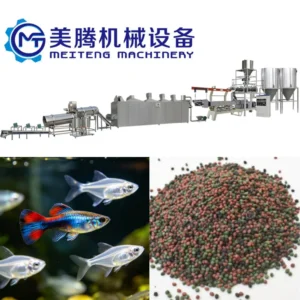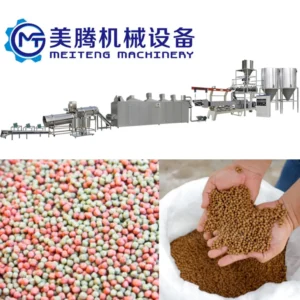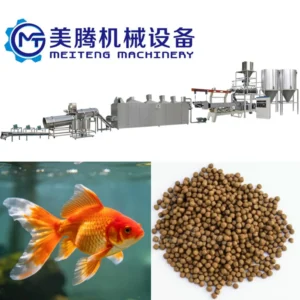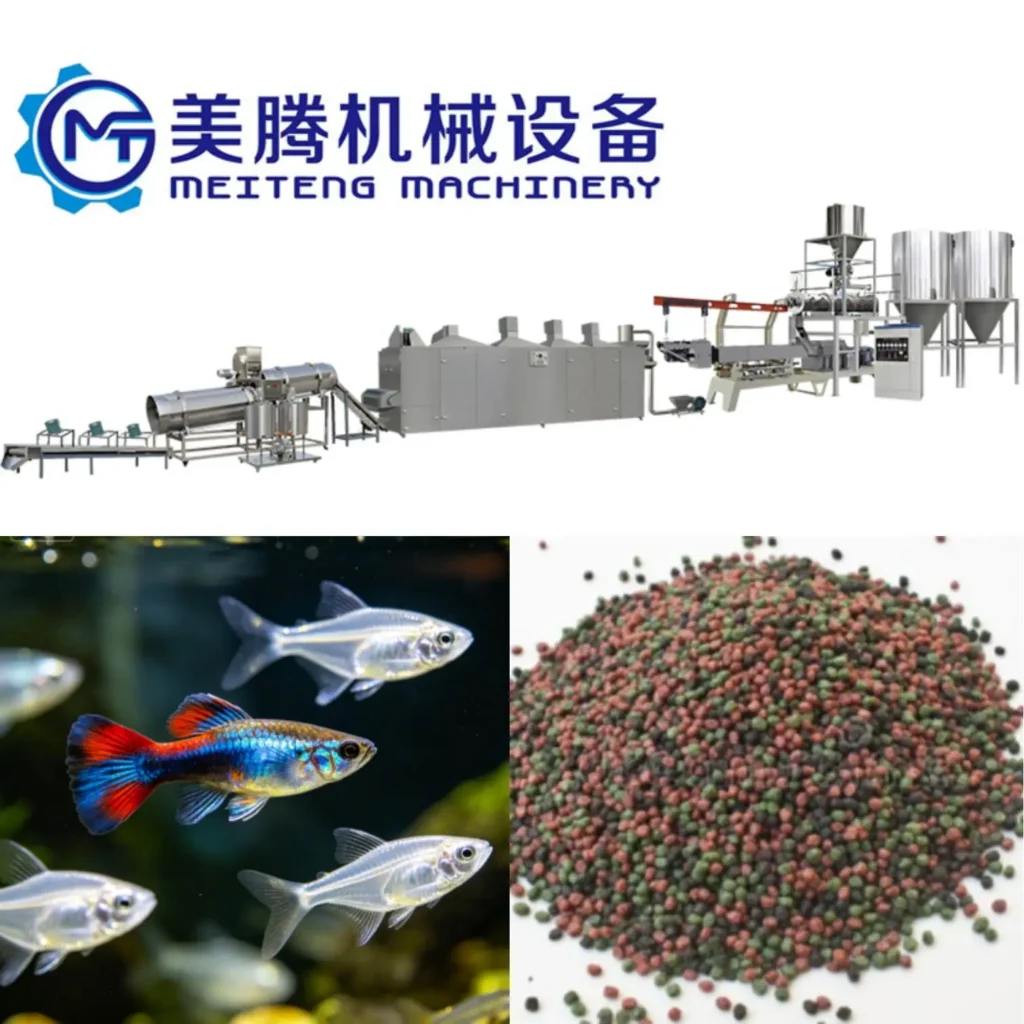
Process-Driven Engineering — Every screw element and die plate in this twin-screw fish feed extrusion line is specified against your actual raw material formulation, not copied from a generic catalog build.
Technical Specifications
| Parameter | Value |
|---|---|
| Product Type | Twin-Screw Fish Feed Extrusion Line |
| Extruder Type | Twin-screw |
| Output Capacity | 200–300 kg/h (basis not stated in source — confirm raw material formulation, moisture content and pellet size) |
| Construction Material | 304 stainless steel contact parts |
| Suitable Species | Trout, salmon, catfish, tilapia, shrimp |
| Control System | PLC and MCC (verify per quotation) |
| Line Stations | Batching, extrusion, drying, coating/seasoning, cooling, packing (confirm included stations) |
| Voltage & Frequency | Configurable per target market grid (confirm before production) |
| Screw & Die Configuration | Specified per raw material and target pellet density |
| Standards | CE (since 2014), ISO certified |
Application Suitability
| Application | Material or Output |
|---|---|
| Floating pellets for trout and salmon | High-protein fish meal and starch blends targeting low-density buoyant pellets |
| Sinking pellets for catfish and tilapia | Mixed grain and protein formulations requiring controlled density above water displacement threshold |
| Shrimp feed pellets | Fine-particle aquatic feed mixes demanding tight diameter and water stability |
| Multi-species feed mill expansion | Sequential production runs switching between floating and sinking pellet specifications |
| In-house aquaculture feed production | On-site batching through packing for farms reducing reliance on external feed suppliers |
Why "200 kg/h" Means Nothing Without the Raw Material Story
Rated capacity on a standard fish meal formula rarely holds when your formulation switches to rapeseed meal, cottonseed meal or local grain blends with different starch and fiber ratios.
I learned this the hard way years ago in our Shandong workshop. A Middle East customer ordered a line quoted on premium fish meal, but their actual production relied on a mixed plant-protein formulation with lower gelatinisation potential. The pellets looked fine coming out of the die but sank immediately in water. We spent three batches reconfiguring screw elements and adjusting die geometry before the expansion profile matched their buoyancy specification. [NEED_CITE: starch gelatinisation behaviour across different protein-to-starch ratios in aquaculture feed formulations]
That trial-run-before-shipment discipline now governs every twin-screw fish feed extrusion line we build. The rated output figure is only meaningful when tied to your specific ingredient list, moisture content and target pellet diameter.
Screw Configuration as the Starting Point, Not an Afterthought
The twin-screw fish feed extrusion line is configured from the barrel outward. Screw element sequencing — conveying sections, kneading blocks and reverse-flight zones — is matched to how your particular raw material responds to shear and thermal input. A high-starch corn-based blend requires a different compression ratio and residence time profile compared to a soy-dominant mix with lower gelatinisation capacity. This is where generic builds fail: the same screw arrangement cannot produce consistent floating pellets across formulations that differ in starch content and fiber load.
Barrel Temperature Profiling and Moisture Shear Balance
Achieving repeatable pellet buoyancy means controlling starch gelatinisation precisely across every barrel zone. The temperature profile is segmented so that moisture addition and mechanical shear work together rather than competing. Too much shear in an early zone breaks down protein structure before the starch matrix forms; too little heat in the metering section leaves ungelatinised pockets that compromise water stability. [NEED_CITE: barrel zone temperature profiling for aquaculture pellet density control] The 304 stainless steel contact surfaces throughout the wet and thermal zones maintain hygiene standards while resisting the corrosive environment created by high-moisture protein-rich formulations.
Reading the Specification Sheet Like a Process Engineer
The twin-screw configuration matters because it allows independent control of conveying and mixing intensity — a single-screw design cannot decouple these functions when switching between floating and sinking pellet targets. The die geometry determines pellet cut length and initial expansion ratio, but the actual final density depends on how the downstream dryer removes moisture without collapsing the air-cell structure formed during extrusion. PLC control with MCC integration means the operator sets barrel zone temperatures, screw speed and feeder rates from one interface, reducing batch-to-batch variation that typically plagues lines where each station runs on independent relays. The 304 stainless steel specification for all contact parts is not cosmetic — it prevents iron-catalyzed oxidation in fat-coated pellets that shortens shelf life. Voltage and frequency must be confirmed against your facility grid before the electrical cabinets are wired, because rewiring a PLC-driven line on site is a multi-day setback.
The Hidden Cost of Skipping the Trial Run
Lines that ship without a raw-material trial run push all product development onto your factory floor, where you are burning ingredients and production hours instead of running in a controlled workshop. The screw combination that works on the supplier’s test formula may produce under-expanded, sinking pellets on your local grain blend, and you discover this only after installation, commissioning and the first week of commercial output are already behind schedule. [NEED_CITE: post-installation reconfiguration costs for extrusion lines without pre-shipment trials] Mismatched dryer capacity is another common failure — the extruder runs at rated output, but the dryer cannot reduce pellet moisture fast enough, creating a bottleneck that forces you to throttle the entire line.
Why Procurement Through This Engineering Approach
The twin-screw fish feed extrusion line is designed as one integrated process, not assembled from independently sourced stations. Screw configuration and die design are documented specifically against your raw material and target pellet specification, so you receive a configuration record rather than a generic parts list. An in-house testing workshop runs your actual ingredients before the line ships, producing a trial report that confirms pellet density, expansion ratio and water stability. PLC and MCC control integration means throughput at the extruder, dryer and coating drum is calculated to match, eliminating the bottleneck that appears when these stations are sized separately. CE and ISO documentation is provided with valid certificates tied to the equipment scope, supporting regulatory compliance in your target market.
Documentation & Verification
- Screw and die configuration record matched to your raw material formulation and target pellet buoyancy
- Trial run report on customer-supplied ingredients confirming expansion ratio and water stability before dispatch
- Line layout and capacity calculation showing throughput balance across extruder, dryer and coating stations
- CE declaration of conformity and ISO certificate with scope covering extrusion processing equipment
- Electrical schematic with voltage, frequency and control language confirmed to your facility specification
- Operation and maintenance manual with wear parts list specific to your screw and die configuration
Installation, Commissioning & Support
- Foundation plan sized to the twin-screw extruder weight and vibration profile with leveling anchor points
- Dedicated electrical circuit matching confirmed voltage and frequency with surge protection for PLC cabinets
- Line arrives in modular sections with labeled connections for barrel, dryer and coating drum reassembly
- First-run parameter logging across all barrel zones to establish baseline temperature and screw speed settings
- Operator training covers formulation changeover procedures including screw element swap and die plate replacement
- Wear parts inventory list with lead times for screws, dies and barrel liners specific to your configuration
What We Need Before Quoting Your Line
Send us your raw material formulation including protein source, starch percentage and target moisture content at the extruder inlet. Specify whether your market requires floating pellets, sinking pellets or both, along with the pellet diameter range for each species you produce. Confirm your facility voltage, frequency and preferred control panel language so the electrical design is locked before fabrication begins.
Frequently Asked Questions
Q: How is output capacity verified and what raw material formulation is it based on?
A: The 200–300 kg/h range is a reference figure that must be validated against your specific ingredient blend, moisture content at the feeder and target pellet diameter. We run a trial in our testing workshop using your raw material and document the actual throughput alongside pellet density and water stability results before confirming the rated capacity for your quotation.
Q: How are screw configuration and die design selected for floating versus sinking pellets?
A: Floating pellets require higher expansion and lower density, achieved through specific kneading block placement and die orifice sizing that promotes rapid moisture flash-off at the die face. Sinking pellets need controlled compression and denser starch-protein matrix formation. Both targets are addressed by adjusting screw element sequencing and die geometry to your formulation.
Q: Is dryer and coating capacity matched to extruder throughput?
A: Every line we configure includes a throughput calculation across all stations. The dryer must remove moisture from the extruded pellets at a rate that matches extruder output without creating a bottleneck, and the coating drum must apply fat or palatant evenly at the same line speed. Undersized downstream equipment is a common cause of forced throughput reduction.
Q: Can I run a trial on my own raw material before shipment?
A: Yes. Our in-house testing workshop runs your formulation through the configured extruder and documents pellet expansion, density, water stability and surface quality. You receive a trial report before the line ships, so product development is resolved at our facility rather than on your production floor.