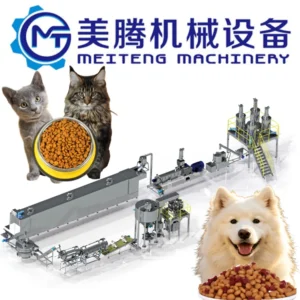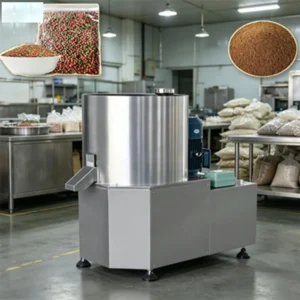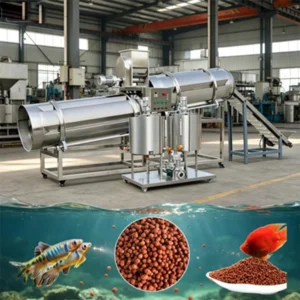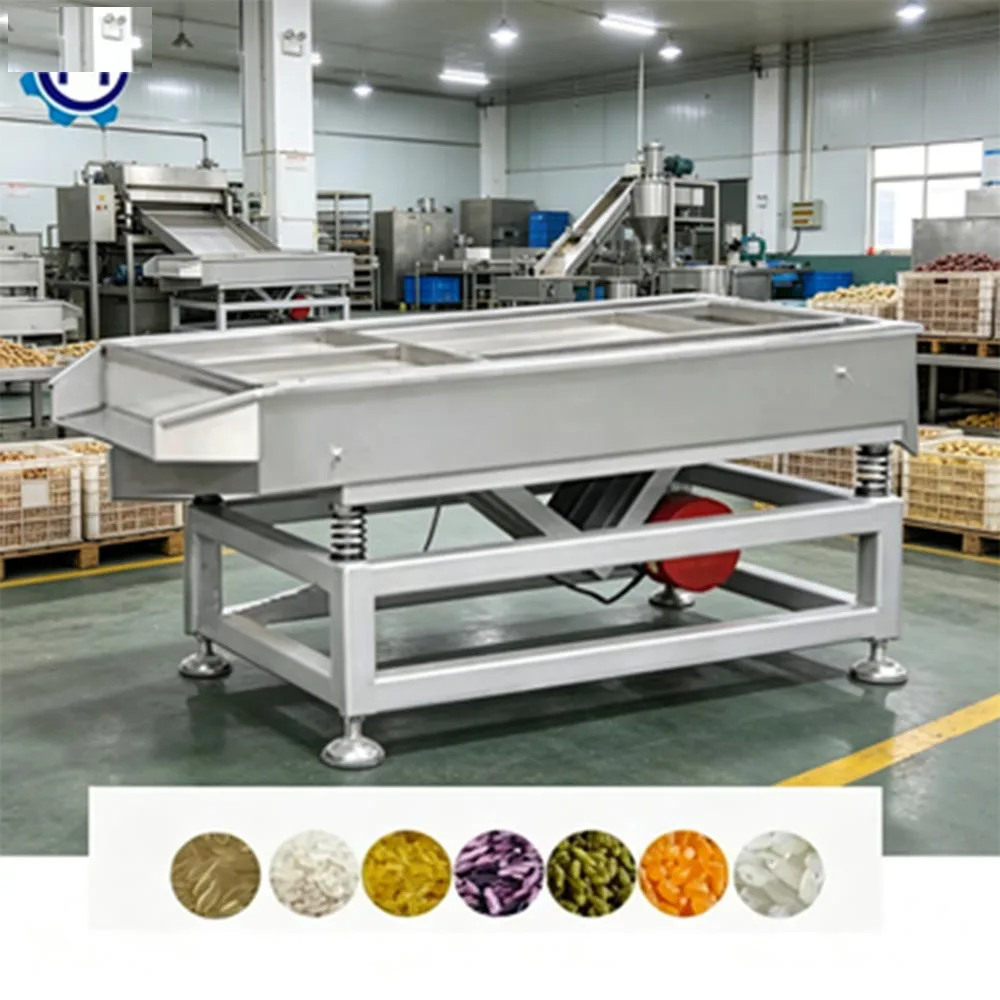
Precision Extrusion Profiling — screw configuration and die geometry are matched to your aquatic feed formulation, not copied from a generic build, so pellet buoyancy and density hold within market specification from the first production run.
Technical Specifications
| Parameter | Value |
|---|---|
| Product Type | Twin Screw Fish Feed Extruder Production Line |
| Screw Type | Twin screw |
| Control System | PLC automatic control |
| Contact Material | Food-grade 304 stainless steel |
| Pellet Characteristics | Adjustable size, hardness, buoyancy (floating and sinking) |
| Barrel / Heating | High temperature and high pressure extrusion |
| Output Capacity | (basis to be confirmed with buyer raw material and pellet size) |
| Line Stations | Raw material mixer, extruder, dryer, seasoning coating machine, vibrating sieve, conveyor equipment |
| Assembly State | Complete matched production line configuration |
| Voltage & Frequency | (configurable to buyer target market) |
| Standards | (CE and ISO certification available — verify with manufacturer) |
Application Suitability
| Application | Material or Output |
|---|---|
| Floating aquaculture pellets | Koi, tilapia, and goldfish feed from fish meal, soybean meal, and corn powder blends |
| Sinking aquatic pellets | Catfish and shrimp feed with higher density formulations and compound additives |
| Species-specific diet runs | Formulation adjustments across freshwater and tropical fish with varying protein and starch ratios |
| Medium to large scale industrial production | Continuous mass output for commercial fish feed mills expanding beyond batch processing |
What "Floating Feed" Means When the Pellets Sink on Day One
A pellet that sinks was not designed wrong — it was extruded with the wrong screw configuration and barrel profile for its actual raw material.
The twin screw fish feed extruder extrusion technology determines whether starch gelatinises fully enough to trap the gas bubbles that keep a pellet on the surface. When a line is set up with a generic screw build, the shear and residence time may suit one supplier’s corn-soy blend but fail on another’s higher-fat recipe. I have watched entire first production runs of floating feed go straight to the bottom of the test tank because the die geometry was specified for a different moisture range [NEED_CITE: starch gelatinisation threshold and expansion ratio in twin-screw extrusion]. The cost is not just the wasted raw material — it is the two weeks of reformulation and parameter tuning that should have happened before the machine left the factory.
How Screw Configuration Decides Pellet Buoyancy
The flight depth, pitch angle, and kneading block arrangement inside the barrel control how much shear the material receives and for how long. For floating pellets, the twin screw fish feed extruder extrusion technology requires a screw profile that generates sufficient shear to fully gelatinise starch at the target moisture level, creating a matrix that expands at the die face and traps air pockets. Sinking pellets need the opposite: a gentler profile that compresses the material without excessive expansion. Every configuration is recorded against the buyer’s raw material so the build is repeatable.
Barrel Temperature and the Moisture-Shear Balance
Temperature profiling across the barrel zones works together with the screw geometry to manage viscosity at each stage of extrusion. Too much heat too early causes premature gelatinisation and uneven expansion; too little heat leaves raw starch unprocessed, reducing digestibility in the finished pellet. The PLC-controlled system adjusts zone temperatures in response to the formulation, maintaining consistency across long production runs. This is where generic settings break down — a profile tuned for a 25% protein koi feed will not produce the same buoyancy result on a 40% protein trout formula [NEED_CITE: barrel zone temperature profiling for varying protein and starch ratios in aquatic feed].
Reading the Specs That Actually Matter
The twin-screw design gives this line its versatility: counter-rotating or co-rotating screws handle a wider range of particle sizes and fat contents than a single-screw unit could manage, which matters when formulations shift between species targets. Food-grade 304 stainless steel on all contact surfaces prevents corrosion from the salts and additives common in aquatic feed recipes. The PLC automatic control system stores parameter sets for different pellet formats, so operators switching from floating koi pellets to sinking catfish pellets load a saved profile rather than recalibrating from memory. High temperature and high pressure extrusion within the barrel is what makes starch gelatinisation complete enough for consistent digestibility — the spec sheet value here defines the upper boundary of what formulations the line can process.
The Cost of a Mismatched Line Configuration
When the extruder outputs at a rate the downstream dryer cannot handle, pellets arrive at the coating drum still holding excess moisture, and the seasoning layer clumps rather than adhering evenly. I have seen lines where the mixer was sized for a larger extruder, forcing the operator to run half-batches and lose the continuous flow that twin-screw extrusion depends on for consistency [NEED_CITE: throughput matching across extrusion line stations]. These are not problems you find in the brochure — they surface during the first week of production, and each one costs days of downtime while components are rebalanced.
Why This Line Holds Up in Production
Every station from the raw material mixer through the vibrating sieve and packing conveyor is specified under one supplier, so throughput is calculated across the full chain rather than assumed from individual machine ratings. Screw configuration and die design are set to the buyer’s actual raw material and target pellet density, not pulled from a standard catalogue. An in-house testing workshop runs trial production on the buyer’s formulation before shipment, confirming buoyancy and pellet density against specification. The twin-screw platform covers both floating and sinking formats on one line, reducing the need for separate extruders as product ranges expand. Pre-sales engineering through on-site commissioning and operator training means the team that built the line is the same team that starts it up.
Documentation & Verification
- Line layout drawing with capacity calculation matched to your aquatic feed formulation and pellet size targets
- Screw and die configuration record specifying flight geometry for your floating or sinking pellet density requirement
- Trial run report produced on your raw material confirming buoyancy, expansion ratio, and pellet hardness before dispatch
- Electrical schematic with voltage and frequency confirmation locked to your facility’s power supply standard
- Factory test record documenting barrel temperature profile and PLC parameter sets for each pellet format tested
Installation, Commissioning & Support
- Foundation requirements calculated from the full line footprint including extruder, dryer, and coating drum spacing
- Dedicated circuit specification based on the PLC-controlled extruder and dryer combined rated power draw
- Line arrives in modular station groups for staged assembly matching your facility’s access and overhead clearance
- First-run commissioning includes barrel temperature profiling and die adjustment against your raw material on site
- Operator training covers PLC parameter recall for switching between floating and sinking pellet production runs
- Wear parts list itemises screw segments, die plates, and mixer blades with recommended replacement intervals
Before You Request a Quote
To size the line correctly, share the specific raw material formulation you intend to run, including protein and starch percentages, along with the target pellet diameter and whether the output needs to float, sink, or cover both formats. Confirm your facility’s voltage and frequency standard so the electrical package matches from day one. If you have an existing dryer or coating system you plan to integrate, provide its throughput rating so the extruder output can be matched accordingly.
Frequently Asked Questions
Q: How is screw configuration selected for floating versus sinking fish feed formulations?
A: Floating pellets need higher shear and longer residence time to fully gelatinise starch and create an expanded matrix. Sinking pellets use a gentler screw profile that compresses without excessive expansion. The configuration is selected based on your specific raw material composition and target buoyancy, then validated in a trial run before the line ships.
Q: What moisture range and barrel temperature profile produce consistent pellet buoyancy?
A: The effective range depends on the starch-to-protein ratio in your formulation. Higher starch content generally allows a wider moisture window for expansion. Barrel zones are profiled to progressively build viscosity, with the final zone temperature set to trigger expansion at the die face. These values are locked into the PLC after your trial run.
Q: How is throughput matched between extruder, dryer, and coating drum?
A: Each station is calculated against the extruder’s output on your specific raw material, not its nominal rating. The dryer residence time and coating drum capacity are sized so pellets arrive at each stage at the correct moisture level, preventing bottlenecks that force the extruder into stop-start operation.
Q: Can a trial run be conducted on our actual formulation before shipment?
A: Yes. The testing workshop runs your raw material through the configured extruder, dryer, and coating sequence, producing sample pellets that are measured for buoyancy, density, and hardness. The trial report and final parameter settings are documented and shipped with the line.