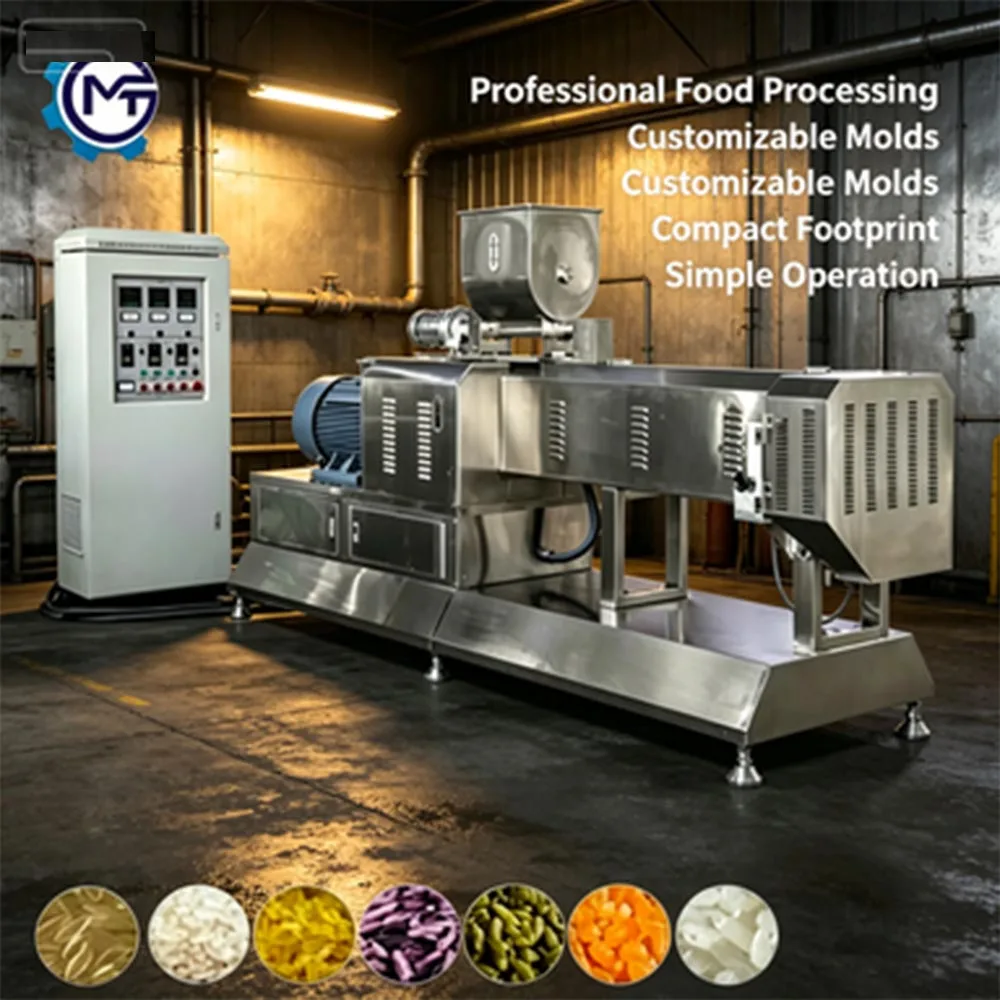
Process-Matched Tooling — Screw and die sets are configured to your specific aquatic raw material blend and target pellet buoyancy, verified through in-house trial runs before the line ships.
Technical Specifications
| Parameter | Value |
|---|---|
| Product Type | Aquatic Feed Extrusion Production Line |
| Screw Configuration | Twin-screw, geometry matched to formulation |
| Control System | Intelligent PLC automatic control |
| Contact Material | Food-grade 304 stainless steel |
| Output Capacity | Large-scale continuous production (basis to be confirmed) |
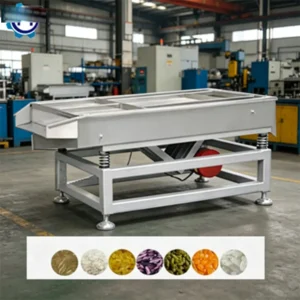
| Line Stations | Mixer, extruder, dryer, coating drum, vibrating sieve, conveyors |
| Pellet Adjustability | Size, hardness, floating and sinking buoyancy |
| Transmission & Heating | Energy-optimized drive structure and barrel heating zones |
| Operating Mode | Fully continuous from batching to discharge |
| Compliance | CE and ISO certified manufacturing |
Application Suitability
| Application | Material or Output |
|---|---|
| Floating koi and goldfish pellets | Fish meal, soybean meal, corn flour, compound additives |
| Sinking feed for bottom-feeding species | High-protein aquatic formulations with controlled density |
| Tropical fish feed in varied pellet diameters | Starch-protein blends requiring precise gelatinisation |
| Commercial aquaculture mass production | Formulations based on locally sourced protein and carbohydrate stocks |
When Floating Pellets Sink on Arrival
The buoyancy failure almost always traces back to a screw profile and die geometry that were never matched to your actual raw material.
I remember a shipment to a Middle East aquaculture operation where we validated everything on standard corn starch. The machine ran perfectly in our Jinan workshop. Then the customer loaded their own mix — heavy on meat-and-bone meal — and every pellet dropped straight to the tank floor. The screw compression ratio was wrong for that protein density. [NEED_CITE: relationship between raw material protein content and extrusion expansion rate] Generic aquatic feed extrusion technology twin screw builds copied from catalog defaults are the single largest source of field density failures we encounter during commissioning visits.
How Screw Geometry Dictates Pellet Buoyancy
The internal flight arrangement along each screw segment controls how much shear energy transfers into your dough at each barrel zone. For floating pellets, the configuration must generate enough expansion through rapid moisture flash-off at the die face. Aquatic feed extrusion technology twin screw setups targeting sinking pellets require higher compression and longer residence time to drive density upward while limiting cell structure growth.
Barrel Temperature Profiling Across Zones
Each heating zone along the barrel operates at an independent set point, creating a staged thermal curve from feed intake to die exit. Early zones focus on hydration and initial starch gelatinisation, while downstream zones manage melt viscosity and expansion potential. The PLC system logs zone temperatures continuously, allowing operators to correlate thermal history with pellet density readings taken at the die output. [NEED_CITE: barrel zone temperature profiling in twin-screw food extrusion]
Reading the Specs That Actually Matter for Pellet Quality
Twin-screw configuration is not a single number — it encompasses screw element sequence, kneading block angles, and reverse-flight sections that together define your shear history and residence time distribution. The intelligent PLC control matters because aquatic formulations shift seasonally with raw material availability; a system that stores multiple recipe profiles lets you switch between floating and sinking targets without manual screw rebuilds each time. Food-grade 304 stainless steel contact surfaces prevent iron-catalyzed lipid oxidation in fish meal formulations, which would otherwise degrade pellet palatability within weeks of bagging. The energy-optimized transmission structure reduces heat bleed into the barrel from the gearbox, giving your temperature profile cleaner authority over the actual dough condition.
The Cost of Skipping Material-Specific Configuration
When a line arrives with factory-default tooling, the first production run becomes your paid experimentation phase. We have watched aquaculture producers burn through weeks of raw material adjusting feeder ratios and barrel temperatures, trying to force a generic screw build to hit a buoyancy spec it was never designed to reach. [NEED_CITE: cost of production downtime during extruder commissioning] Coating and drying stations downstream sit idle or cycle inefficiently while the extruder chases density targets, creating throughput mismatches that persist even after the pellet spec is finally met.
Why This Line Is Built Differently
Screw configuration and die design are specified against your raw material analysis and target pellet density — not copied from a generic aquatic feed build. Our in-house testing workshop runs your actual formulation before the extruder leaves Jinan, so the trial run report ships with the machine rather than arriving as a surprise on your factory floor. Throughput is calculated across every station — mixer, extruder, dryer, coating drum, vibrating sieve — so no single unit bottlenecks the line at rated output. The PLC control platform stores recipe profiles for multiple pellet types, supporting producers who supply both floating and sinking products from one platform.
Documentation & Verification
- Screw and die configuration record documented against your specific aquatic raw material blend
- Trial run report from in-house testing workshop using your supplied formulation before dispatch
- Line layout and capacity calculation showing matched throughput at every station
- Machine specification sheet with barrel zone temperature profile and moisture range confirmed
- CE declaration of conformity and ISO certificate included with shipping documentation
Installation, Commissioning & Support
- Foundation plan accounts for twin-screw extruder mass and vibration isolation under continuous operation
- Electrical team confirms PLC panel voltage and frequency match your facility supply before wiring begins
- Extruder barrel segments arrive pre-assembled; die and screw elements ship separately for inspection on site
- Commissioning includes first-run density testing on your raw material to validate the trial run report
- Operator training covers PLC recipe storage for switching between floating and sinking pellet profiles
- Wear parts list identifies screw flights, barrel liners, and die inserts with replacement intervals
What We Need to Configure Your Line
Send us your raw material formulation with proximate analysis — protein, starch, fat, and moisture content — along with the target pellet diameter range and buoyancy type. We also need your facility voltage and frequency, plus the daily output volume you are planning against. If you can ship a sample of your actual feedstock to our Jinan workshop, we will run it on the extruder and include the trial data with your quotation.
Frequently Asked Questions
Q: How do you match screw configuration to my aquatic feed formulation?
A: We review your raw material proximate analysis — protein ratio, starch content, fat level, fiber — and design the screw element sequence to deliver the shear and residence time your specific blend requires. Kneading block angles and reverse-flight sections are adjusted to target the gelatinisation degree needed for your pellet buoyancy specification, whether floating or sinking.
Q: What barrel temperature profile produces floating versus sinking pellets?
A: Floating pellets generally require higher barrel exit temperatures to drive rapid moisture flash-off and cell expansion at the die. Sinking pellets use lower exit temperatures with higher compression to limit expansion and increase density. The PLC system stores both profiles so you can switch production targets without manual recalibration.
Q: Can I send my raw material for a trial run before the line ships?
A: Yes. Ship a representative sample to our Jinan testing workshop. We run it through the configured twin-screw extruder and document pellet density, buoyancy, surface finish, and throughput in a trial run report that accompanies your machine at delivery.
Q: How is line throughput balanced between the extruder and downstream stations?
A: We calculate dryer belt length, coating drum volume, and conveyor speed against the extruder output rate for your specific formulation. This prevents situations where the dryer cannot remove moisture fast enough or the coating drum creates a backlog that forces the extruder to idle.
Q: What does the die design process involve for my pellet size range?
A: Die hole diameter, land length, and face geometry are selected based on your target pellet size and the expansion ratio your formulation produces. We match the die to the screw configuration so that exit pressure and melt temperature combine to deliver the surface finish and dimensional tolerance your market requires.