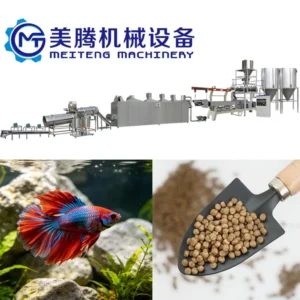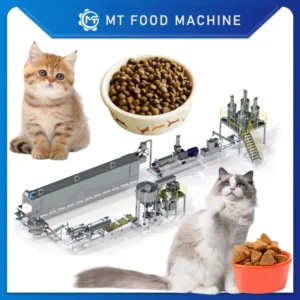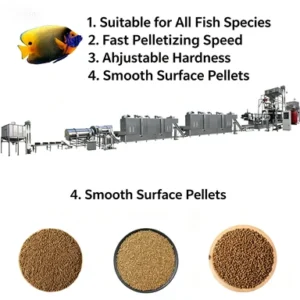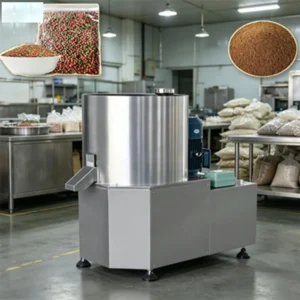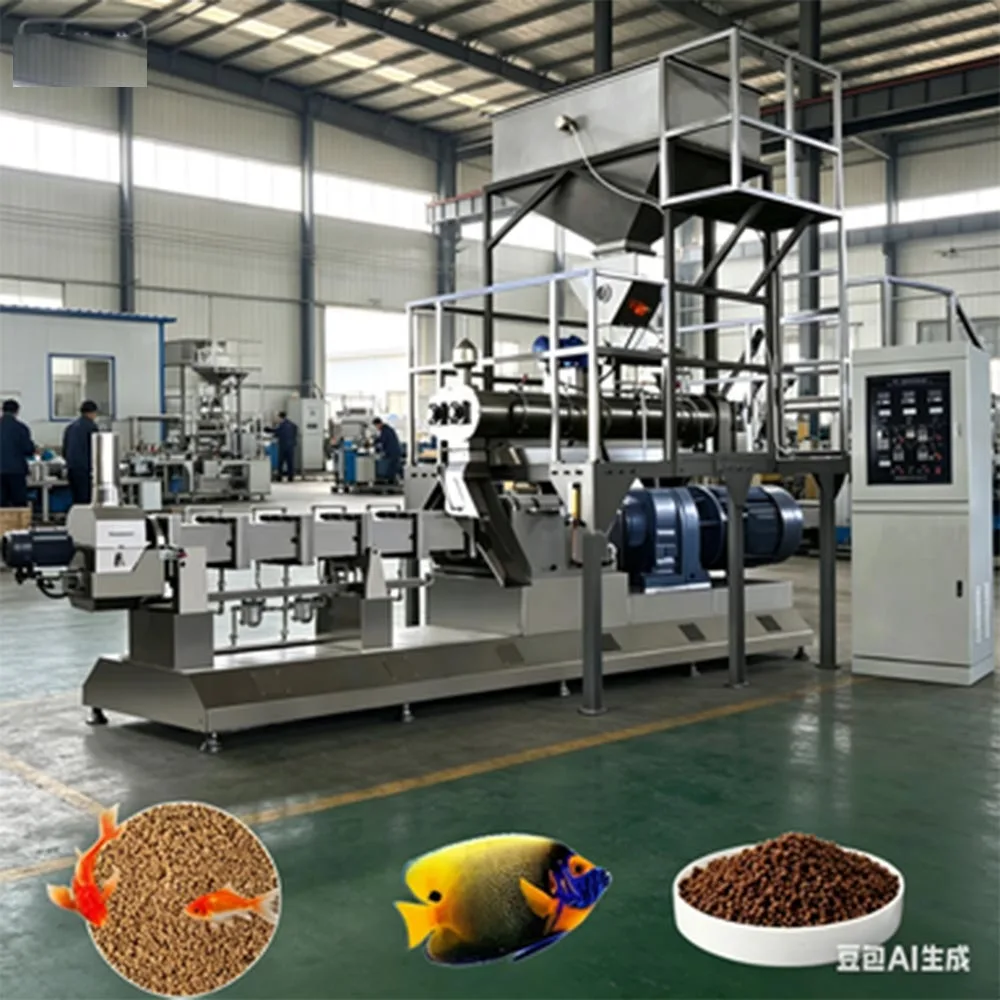
Precision Drying Integration — Every mesh belt layer, airflow zone, and PLC setpoint is calibrated to the twin-screw extruder’s output so pellet buoyancy holds spec from the first batch to the last.
Technical Specifications
| Parameter | Value |
|---|---|
| Product Type | Multi Layer Mesh Belt Dryer for Fish Feed Pellets |
| Dryer Configuration | Multi-layer continuous mesh belt |
| Construction Material | Food-grade 304 stainless steel (body and product contact parts) |
| Control System | Intelligent PLC automatic control with humanized interface |
| Heating System | Optimized energy-saving transmission and heating structure |
| Extruder Compatibility | Twin-screw extrusion line |
| Pellet Compatibility | Floating and sinking fish feed pellets |
| Production Mode | Full continuous automatic production |
| Output Capacity | Large stable processing capacity for medium to large scale production (basis to be confirmed) |
| Pellet Adjustability | Size, hardness, and buoyancy adjustable per breeding requirements |
| Raw Material Scope | Fish meal, soybean meal, corn powder, compound additives |
| Certification | CE, ISO |
Application Suitability
| Application | Material or Output |
|---|---|
| Floating fish feed pellet drying | Corn powder and fish meal blends targeting surface-feeding species |
| Sinking aquatic feed production | High-protein soybean and fish meal formulations for bottom feeders |
| Koi and goldfish feed processing | Multi-ingredient blends requiring uniform moisture reduction |
| Tropical fish feed manufacturing | Specialty formulations with compound additives and varied pellet sizes |
| Large-scale freshwater aquaculture feed | Continuous high-volume drying across multiple pellet diameters |
| Multi-species feed line expansion | Changeover between floating and sinking formats on a single line |
Why Dryer Capacity Decides Whether Floating Feed Actually Floats
A pellet that should float but sinks in the pond rarely points back to the extruder — it traces to a dryer that could not keep pace with the extrusion rate, leaving internal moisture pockets that collapse the air cells formed during expansion.
Matching dryer throughput to extruder output is the single most decisive factor in holding pellet buoyancy within specification.
When a line is quoted on nominal extruder capacity but the dryer was selected on a generic template, the mismatch shows up as inconsistent density from one production hour to the next. I watched a Southeast Asian plant lose an entire shift of floating catfish feed because the mesh belt speed was set for a lower throughput; the outer shell dried, but the core stayed above the moisture threshold that preserves the expanded cell structure. Buyers often focus negotiation energy on the extruder’s screw profile and motor power, then treat the dryer as an afterthought — yet the drying stage is where the starch gelatinisation achieved inside the barrel is either locked in or lost. [NEED_CITE: starch retrogradation and moisture content in extruded aquatic feed]
How Barrel Temperature and Multi-Layer Drying Interact
During twin-screw extrusion, barrel temperature zones drive starch gelatinisation and create the gas cells that determine whether a pellet floats or sinks. Once the pellet exits the die, those cells are still thermally unstable. The multi-layer mesh belt dryer arrests that instability by applying controlled, staged heat across successive belt levels, progressively reducing moisture without collapsing the internal structure. Each layer can be set to a different temperature and airflow rate, allowing the drying curve to follow the exact moisture gradient the pellet requires. This is where Multi Layer Fish Feed Pellet Dryer extrusion technology earns its name — the dryer is not a standalone appliance but the continuation of the thermal profile that began in the extruder barrel.
Airflow Architecture and Uniform Moisture Reduction
The 304 stainless steel mesh belt allows hot air to pass through the pellet bed rather than only across its surface. In a multi-layer configuration, pellets are redistributed as they transfer from one belt level to the next, exposing different surfaces to the airstream and preventing the channeling effect that leaves some pellets over-dried while others remain wet at the core. The PLC control system monitors temperature and belt speed continuously, adjusting dwell time in response to moisture sensor feedback. When a producer switches from a high-starch floating formula to a dense sinking formulation, the system re-maps the drying curve without manual recalibration of each heating zone — a practical advantage during multi-species production runs where changeovers happen several times per week. [NEED_CITE: airflow distribution in multi-layer belt drying of extruded pellets]
Reading the Specs That Matter for Pellet Integrity
The choice of food-grade 304 stainless steel for every product-contact surface is not merely a hygiene checkbox. During drying cycles that can sustain elevated temperatures over extended periods, lower-grade alloys develop surface oxidation that contaminates the pellet and accelerates belt wear. The intelligent PLC control goes beyond simple on-off temperature regulation; it coordinates belt speed, layer transfer timing, and heating zone output as an integrated system, so a change in extruder throughput propagates through the dryer without operator intervention. The twin-screw extruder upstream generates pellets with a specific moisture content and density envelope — the dryer’s heating system and transmission structure must absorb that envelope and deliver pellets within the narrow final-moisture band that the market expects. If the extruder produces at a rate the dryer cannot match, pellets accumulate on the belt, drying unevenly and falling outside the buoyancy tolerance.
The Cost of Treating the Dryer as a Commodity Add-On
When the dryer is sourced separately or specified on generic assumptions, the line develops a bottleneck that no amount of extruder tuning can fix. Floating pellets arrive at the packing station with core moisture still above target, and within weeks of warehousing, mold develops inside the bag. Sinking pellets that were supposed to descend slowly instead drop immediately because the internal cell structure collapsed during an overly aggressive drying cycle. I have seen plants attempt to compensate by slowing the entire line, which then pushes output below the volume that justifies the investment. The real loss is not the off-spec batch itself but the repeat orders that quietly shift to a competitor whose pellet buoyancy stays consistent. [NEED_CITE: post-production moisture migration and pellet density drift in packaged aquatic feed]
Why Procurement Through This Line Makes Sense
Screw configuration and die design are specified against the buyer’s raw material formulation before the extruder is built, which means the moisture content entering the dryer is known and repeatable — the dryer is then sized to that exact output rather than to a generic benchmark. An in-house testing workshop runs trial production on the customer’s actual fish meal, soybean meal, and corn powder blend before shipment, so the drying curve is validated before the line leaves the factory. Throughput matching across every station — mixer, extruder, dryer, seasoning drum, cooler, and packing — is calculated under one supplier’s responsibility, eliminating the blame-shifting that occurs when separate vendors supply individual machines. The PLC control language and electrical schematic are confirmed to the destination market’s voltage and frequency standards before production begins. Complete documentation — from line layout and capacity calculation through to wear parts lists — ships with the equipment, so the maintenance team is not waiting for information after installation.
Documentation & Verification
- Line layout and capacity calculation matching dryer throughput to extruder output
- Screw and die configuration record for your fish meal and corn powder blend
- Factory trial run report on your raw material before dispatch
- Electrical schematic with confirmed voltage and frequency for your market
- CE declaration of conformity and ISO certificate for customs clearance
- Operation and maintenance manual with wear parts list and replacement intervals
Installation, Commissioning & Support
- Foundation plan and floor space layout matching the multi-layer dryer footprint and belt length
- Dedicated power circuit sized to the dryer’s heating system and PLC control load
- Modular belt sections shipped disassembled for site reassembly and layer alignment
- First-run commissioning with drying curve mapped to your pellet formulation
- Operator training on PLC interface for floating and sinking pellet changeovers
- Vulnerable parts inventory including mesh belt segments and heating elements for routine replacement
Before You Send the Inquiry
Tell us the raw material blend you run — fish meal percentage, starch source, and any compound additives — along with the pellet diameter range and whether you need floating, sinking, or both formats. Confirm your local voltage, frequency, and preferred PLC language so the control system is configured before the line ships. If you have an existing extruder or upstream mixer, share its model and rated output so we can calculate dryer throughput matching and advise whether the full continuous line configuration fits your workshop layout.
Frequently Asked Questions
Q: How is dryer capacity matched to extruder output to prevent bottlenecking the line?
A: We calculate the extruder’s actual output on your raw material formulation, then size the mesh belt length, layer count, and heating capacity to handle that throughput with adequate dwell time. The line layout document shows the matched rates at every station so no single machine constrains the others.
Q: What screw configuration and barrel temperature profile produce correct pellet density?
A: Screw elements and die geometry are selected based on your starch-to-protein ratio and target buoyancy. The barrel temperature zones are mapped to achieve full gelatinisation without over-expansion, and the drying curve is set to preserve the resulting cell structure through moisture reduction.
Q: How is moisture reduction controlled across the multi-layer mesh belt?
A: Each belt layer operates at an independent temperature and airflow setting, and the PLC adjusts dwell time based on moisture sensor feedback. Pellets are redistributed between layers to expose all surfaces uniformly, preventing channeling and core-moisture pockets.
Q: Can the PLC language and voltage be configured before shipment?
A: Yes. Electrical schematics and control language are confirmed during the specification stage to match your market’s voltage, frequency, and operator preference, so commissioning begins without waiting for rewiring or software changes on site.
Q: Is a trial run on my raw material available before the line ships?
A: The in-house testing workshop runs your exact formulation through the extruder and dryer, producing a trial run report that documents moisture reduction, pellet density, and buoyancy. You review these results before authorizing shipment.