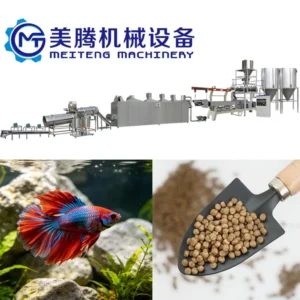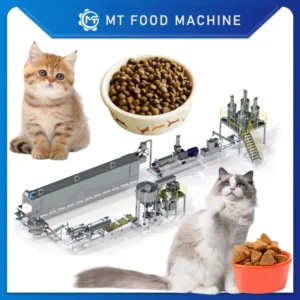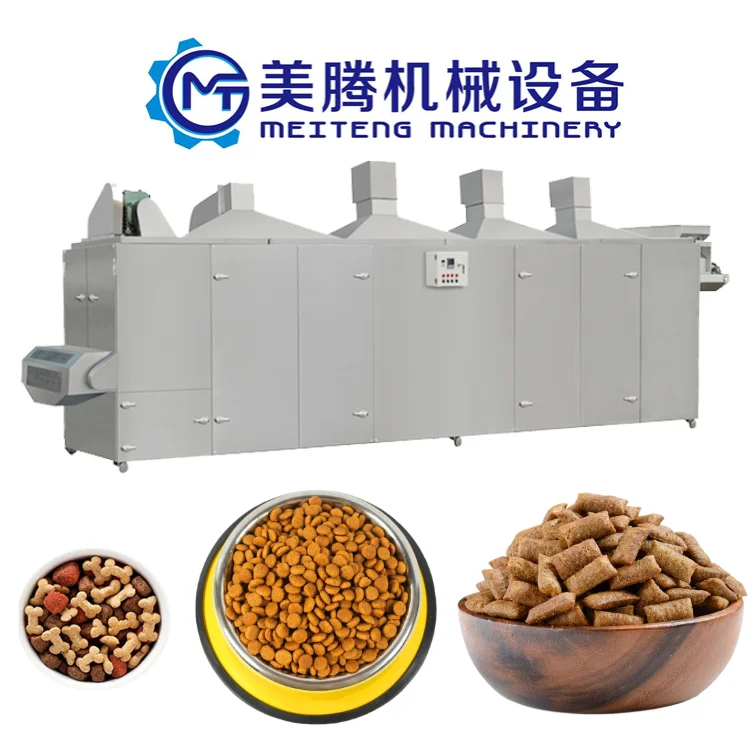
Screw configuration and die design specified to formulation — the MT85 twin-screw extrusion platform starts with the buyer’s actual raw material blend, not a generic screw build copied from a standard line.
Technical Specifications
| Parameter | Value |
|---|---|
| Model | MT85 |
| Product Type | Twin-Screw Pet Food Extrusion Line |
| Output Capacity | 500 kg/h (basis not stated in source — confirm raw material formulation, moisture content and kibble size) |
| Screw Type | Twin-screw |
| Rated Power | 45 kW |
| Voltage & Frequency | 380V 50Hz Three Phase (configurable for target market) |
| Control System | PLC / MCC (architecture to confirm per project) |
| Automation Level | Fully automated from mixing to packaging |
| Line Stations | Mixing → Extrusion → Drying → Packaging |
| Product Formats | Dry kibble, semi-moist, treats |
| Contact Materials | Food-grade throughout |
| Standards | CE, ISO |
Application Suitability
| Application | Material or Output |
|---|---|
| Dry kibble for dogs and cats | Grain blends, meat meal, starch mixtures at varying moisture levels |
| Aquatic feed for fish | Protein-rich formulations requiring controlled floating or sinking density |
| Semi-moist pet food | High-moisture formulations with humectant additives |
| Pet treats and bites | Dense or expanded formats from meat, starch or hybrid blends |
| Multi-species production | Single line adaptable across formulations with screw and die changes |
What "500 kg/h" Leaves Out About Twin-Screw Pet Food Extrusion Technology
Capacity numbers mean nothing unless you know what raw material was running through the barrel when they were measured.
I watched a line stall at barely half its quoted output because the screw profile was designed around corn flour while the buyer was running a high-chicken-meal blend that behaves completely differently under shear and heat. The extruder motor was working, the barrel was hot, but the material was not expanding or conveying the way the original configuration assumed it would. This is the gap between a nameplate rating and what actually lands in your packaging drum. [NEED_CITE: raw material moisture and protein content effects on extrusion throughput]
When twin-screw pet food extrusion technology is quoted on a single test formulation, that number travels with the machine whether it applies to your recipe or not. The MT85 process addresses this by requiring the buyer’s own raw material sample before the screw configuration and die geometry are locked in.
Barrel Temperature Zoning and Starch Gelatinisation
Starch gelatinisation is the core mechanism that determines whether kibble expands properly or collapses into a dense pellet. The MT85 barrel is divided into multiple heating zones, each independently controlled so that temperature ramps gradually from the feed section through the compression and metering zones. This zoning lets process engineers hold the material at the exact thermal window where starch granules absorb moisture and swell, which varies depending on whether the formulation is corn-heavy, rice-based or loaded with legume flour. Getting this window right is what separates a kibble that floats in the bowl from one that sinks straight to the bottom.
Screw Configuration Matched to Raw Material Blend
A generic screw profile assumes a generic raw material, and that assumption breaks down the moment protein content climbs above a certain threshold. Meat meal, fish meal and poultry by-product blends respond to shear very differently from pure starch carriers. The MT85 screw elements are arranged — kneading blocks, conveying sections, reverse elements — based on the specific formulation the buyer intends to run. This is where twin-screw pet food extrusion technology earns its flexibility: the same barrel housing can accommodate a screw build optimized for a 60% grain mix or one built for a high-protein, low-starch recipe. [NEED_CITE: twin-screw element arrangement effects on material residence time and shear]
Reading the Specs That Actually Matter
The 45 kW rated power tells you the motor can deliver enough torque to push dense, high-protein formulations through the barrel without stalling, which matters when you switch from a light corn-based puppy kibble to a salmon-and-rice adult formula mid-shift. The 380V 50Hz three-phase supply is standard for the factory build, but this must be confirmed against the target market’s electrical grid before the control cabinet is wired — running a 50Hz motor on a 60Hz supply changes screw speed and thermal input in ways that shift every downstream parameter. The PLC control architecture allows operators to store formulation-specific recipes, so screw speed, barrel zone temperatures and feed rate can be recalled for repeat batches rather than dialed in by feel every time. Food-grade contact materials throughout the barrel, screw and die assembly prevent metallic contamination that would fail a routine food safety audit.
The Hidden Cost of Skipping a Trial Run
When an extruder ships without being tested on the buyer’s actual raw material, the first production run becomes the trial run — except it happens on the factory floor with installation engineers watching the clock and raw material inventory burning through the silo. I have seen teams spend days adjusting barrel temperatures and feed rates trying to rescue a formulation that was never validated in the first place. The kibble density drifts outside what the market expects, the dryer cannot keep up because the extruder is outputting product at a different moisture level than planned, and the coating drum receives kibble that does not hold fat or flavouring the way the process was designed for. [NEED_CITE: post-installation commissioning delays caused by untested formulations]
Why Buyers Source the MT85 Through This Channel
The screw configuration and die geometry are specified to the buyer’s raw material blend rather than pulled from a standard build library. Every line passes through the in-house testing workshop where the buyer’s formulation is run on the actual machine before it is crated for shipment. The complete line — from batching through extrusion, drying and packaging — is engineered under one supplier so throughput is balanced across every station instead of bottlenecked at the dryer. Twin-screw expertise extends across pet food, aquatic feed and snack applications, meaning the same engineering team handles formulation shifts without requiring a new vendor. Pre-sales consultation through installation, commissioning and ongoing maintenance keeps one technical contact on the account from first sample to steady-state production.
Documentation & Verification
- Line layout and capacity calculation showing throughput balance from batching to packaging
- Screw and die configuration record matched to your raw material formulation
- Trial run report on your actual raw material confirming texture, density and output
- Electrical schematic with voltage and frequency confirmed for your market
- CE declaration of conformity and ISO certificate for customs clearance
Installation, Commissioning & Support
- Floor plan and utility layout provided for the MT85 line footprint and 45 kW power requirement
- Dedicated circuit and voltage confirmation completed before the control cabinet is built
- Line arrives in modular sections for staged assembly aligned to your facility schedule
- First-run parameter setting performed on your raw material by commissioning engineers
- Operator training covers PLC recipe storage, barrel zone adjustment and screw changeover
- Wear parts list with screw elements, dies and seals documented for first reorder cycle
What to Include in Your Inquiry
Send the raw material formulation you intend to run — including protein source, starch carrier and target moisture content — along with the kibble size and density your market requires. Specify your local voltage, frequency and preferred control language so the electrical cabinet matches your facility from day one. If you are running multiple SKUs on one line, list each formulation so the screw configuration can accommodate the full range rather than just the highest-volume product.
Frequently Asked Questions
Q: How is screw configuration selected for a specific raw material and kibble density target?
A: The screw element arrangement — kneading blocks, conveying flights, reverse elements — is designed around the protein-to-starch ratio and the target expansion behaviour of your blend. A high-meat-meal formulation needs different shear and residence time than a corn-dominant recipe, so the screw build is specified after reviewing your raw material data sheet and running a sample in the testing workshop.
Q: What barrel zones are configured for different pet food formats?
A: Each barrel zone is independently heated and monitored, allowing temperature ramps tailored to dry kibble, semi-moist or treat formulations. Semi-moist products require a different moisture injection strategy and thermal profile compared to expanded dry kibble, and the zone settings are recorded in the PLC recipe for batch-to-batch repeatability.
Q: How is the 500 kg/h capacity validated before the machine ships?
A: The capacity figure is measured during a trial run using the buyer’s own raw material in the testing workshop. This run confirms throughput, kibble density and texture against the buyer’s specification, so the quoted output reflects the actual formulation rather than a generic test blend.
Q: What starch gelatinisation controls are built into the MT85?
A: Multi-zone barrel heating, adjustable moisture injection points and screw speed control work together to hold the material within the thermal window where starch granules fully swell. This window varies by raw material, and the PLC stores the validated parameters so operators can recall them for every production batch.