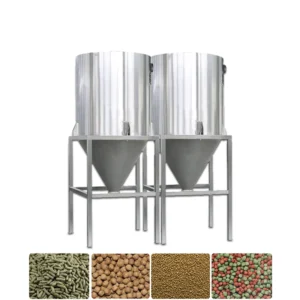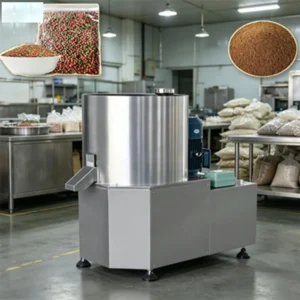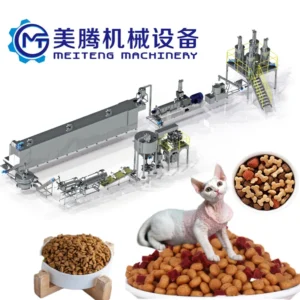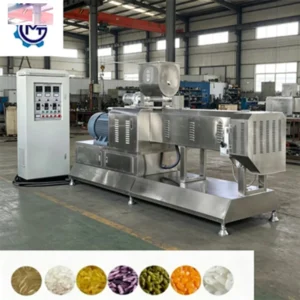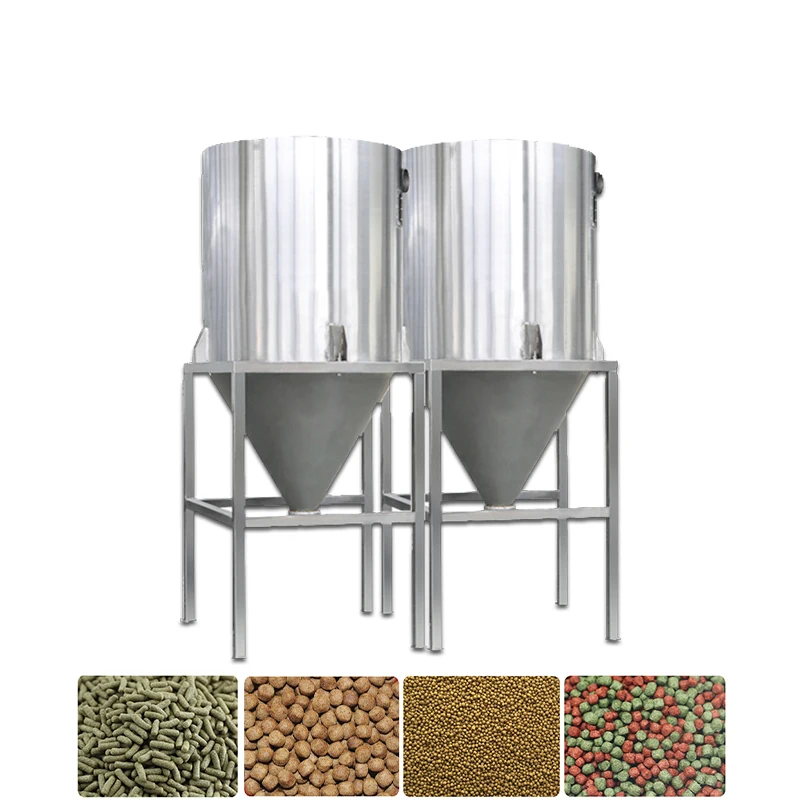
Matched Screw Geometry — every screw element and die plate is specified against your formula’s starch-protein ratio, not borrowed from a generic catalog build.
Technical Specifications
| Parameter | Value |
|---|---|
| Product Type | Pet Food Extrusion Production Line |
| Extruder Configuration | Twin-screw assembly |
| Control Architecture | PLC and MCC control |
| Output Capacity | Up to 3 tons per hour (basis not stated in source — confirm raw material type, moisture content, kibble size & density) |
| Product Range | Dry kibble for dogs and cats; floating and sinking aquatic feed for fish |
| Assembly State | Complete line from batching through extrusion to packing |
| Compliance | CE (certified since 2014), ISO certified |
| Warranty | 1-year comprehensive warranty |
| Process Documentation | Fish feed process drawing included |
Application Suitability
| Application | Material or Output |
|---|---|
| Premium dry dog kibble | Meat meal, corn flour, rice bran, and vitamin premix formulations |
| Cat food pellet production | High-protein blends with fish meal, poultry by-product, and taurine supplements |
| Floating fish feed pellets | Soybean meal, wheat gluten, and starch-based aquatic formulations |
| Sinking aquatic feed | Dense pellet formulations for bottom-feeding species such as catfish and shrimp |
| Puppy and kitten starter diets | Fine-grind, high-digestibility formulations with controlled expansion ratios |
Why Generic Screw Profiles Sabotage Your Kibble Density
The wrong screw configuration is the most expensive mistake on a pet food line because it does not announce itself until the first production run. A twin screw pet food extruder built from a template profile will push material through, but the gelatinisation window, shear intensity, and residence time will drift outside what your specific formula demands. The kibble comes out either too dense for the bag weight target or too fragile to survive the coating drum. [NEED_CITE: starch gelatinisation thresholds across common grain-to-protein ratios in extruded pet food]
Kibble density is set by the screw element sequence and die land length, not by the motor nameplate.
I spent two weeks in a Colombian facility reworking barrel temperature zones and screw pitch after the client switched from a standard corn-based test formula to their local fish meal blend. The twin-screw extrusion machine they had ordered ran the trial recipe perfectly, but the production material altered the viscosity curve enough to collapse expansion. That line eventually produced spec, but only after we reprofiled the conveying and kneading block arrangement element by element.
Shear, Moisture, and the Gelatinisation Window
Starch gelatinisation inside a twin screw pet food extruder depends on the interplay between barrel heat, mechanical shear from the screw flights, and preconditioning moisture. When the screw profile generates insufficient shear for a high-fat formula, the starch granules pass through partially uncooked, leaving a crumbly kibble with poor palatability. Conversely, excessive shear on a lean, high-starch recipe can over-gelatinise the melt, producing a dense pellet that sinks when the market expects a float. The pet food extrusion machine specifications must therefore list not just motor power and throughput, but the screw L:D ratio and kneading block stagger angle matched to your ingredient deck.
Die Geometry and Expansion Control
The die plate is where the extrudate meets atmospheric pressure, and its land length and orifice diameter determine the expansion ratio that defines kibble texture. A short die land produces rapid flash-off and a highly expanded, low-density pellet suited to floating aquatic feed. A longer land restricts expansion, yielding the harder, denser kibble required for dental-care dog food formats. [NEED_CITE: relationship between die land length and expansion ratio in twin-screw food extrusion] Switching between floating and sinking fish feed on the same line therefore requires interchangeable die plates rather than a single fixed geometry, and the twin screw pet food extruder should ship with a die set documented against your target product list.
Reading the Specs That Actually Matter
When evaluating pet food extrusion machine specifications, the numbers that predict real-world performance go beyond hourly output. The screw L:D ratio governs residence time — longer barrels give more thermal and mechanical work per gram of dough, which matters when you are running high-protein formulations that resist gelatinisation. Barrel zone count determines how many independent temperature segments you can tune; a barrel with four zones offers far less correction authority than one with six or seven when a formula change shifts the melt viscosity. The PLC and MCC control architecture centralises these variables so that operators can store and recall recipes rather than adjusting setpoints by hand every shift, directly supporting batch-to-batch consistency across kibble runs.
What a Mismatched Line Costs After Startup
When extruder capacity is quoted without matching the dryer and coating drum, the bottleneck migrates downstream and the line never reaches nameplate throughput. I have watched facilities run the extruder at partial feed rate because the dryer could not handle the moisture load, turning a nominal three-ton-per-hour line into a one-ton-per-hour reality. Undersized flavouring drums compound the problem — kibble exits the dryer faster than the drum can tumble and coat it, producing uneven palatant coverage that triggers consumer complaints. [NEED_CITE: downstream bottleneck effects on extrusion line throughput in food processing] These mismatches are invisible in a brochure but obvious on the factory floor by week two of production.
Why Procurement Here Addresses the Engineering Gaps
Screw configuration and die design are specified to your raw material and target kibble density before the machine is built, rather than adapted after installation. An in-house testing workshop runs trial extrusions on your actual ingredients before shipment, so the screw profile and barrel temperature map are validated — not guessed. Complete lines from batching to packing are sourced under one supplier, meaning throughput is balanced across the mixer, extruder, dryer, and packing station instead of assembled from mismatched vendors. Every pet food extrusion machine shipped carries a screw and die configuration record, a trial run report, and an electrical schematic confirming your site voltage. CE and ISO compliance documentation accompanies each unit, and on-site commissioning includes operator training on the PLC interface and recipe recall functions.
Documentation & Verification
- Line layout and capacity calculation matched to your ingredient deck and target kibble density
- Screw and die configuration record specifying element sequence and die land dimensions
- Trial run report on your raw material from the in-house testing workshop before dispatch
- Electrical schematic with voltage, frequency, and control language confirmed to your site
- Fish feed process drawing showing barrel zone temperatures and preconditioning moisture targets
- CE declaration of conformity and ISO certificate included with customs documentation
Installation, Commissioning & Support
- Foundation plan accounts for twin-screw extruder vibration isolation and barrel support load
- Dedicated power circuit sized to PLC and MCC control panel requirements and local voltage
- Line arrives in modular sections; extruder barrel segments and screw shafts are assembled on site
- First-run commissioning includes barrel temperature profiling and screw speed tuning on your formula
- Operator training covers PLC recipe storage, alarm response, and die changeover procedures
- Wear parts list identifies screw elements, die plates, and cutter bearings with reorder intervals
What to Prepare Before Requesting a Quote
Share your ingredient formulation including protein-to-starch ratio, fat content, and preconditioning moisture so the screw configuration can be matched before the build begins. Confirm the kibble sizes and densities your market requires — floating versus sinking aquatic feed, or dental-density dog kibble — because die geometry and barrel zone count depend on those targets. Provide your site voltage, frequency, and preferred control language so the electrical schematic is correct before the PLC panel is wired.
Frequently Asked Questions
Q: How is the screw configuration matched to my raw material and target kibble density?
A: We review your ingredient formulation — protein source, starch type, fat percentage, and moisture — and select the screw element sequence, kneading block stagger angle, and die land length accordingly. A trial run on your actual raw material in our testing workshop validates the configuration before the twin screw pet food extruder ships, so adjustments happen at the factory rather than on your floor.
Q: What barrel temperature profile should I expect for my formulation?
A: Barrel zones are set based on your formula’s gelatinisation threshold, which shifts with starch type and protein content. A high-corn recipe typically requires a different zone map than a high-fish-meal blend. The PLC stores your validated profile from the trial run, and operators recall it at startup to maintain batch-to-batch consistency without manual tuning.
Q: Can I do a trial run on my raw material before shipment?
A: Yes. Our in-house testing workshop runs your actual ingredients through the configured extruder before dispatch. You receive a trial run report documenting screw speed, barrel temperatures, moisture levels, and the resulting kibble density and expansion ratio, so product development starts from a proven baseline rather than from scratch after installation.
Q: How do I verify output capacity is based on my actual ingredient mix?
A: Nominal capacity ratings assume a reference material and kibble size that may not match your formula. We provide a line layout and capacity calculation document that states the throughput estimate alongside the raw material type, moisture content, and pellet dimensions used for the calculation, giving you a realistic expectation before you commit.
Q: What die design options are available for different expansion ratios?
A: Interchangeable die plates with varying orifice diameters and land lengths allow you to switch between high-expansion floating pellets and dense sinking kibble on the same twin-screw extruder. The die set is specified during the engineering phase to cover your target product range, and each plate is documented in the configuration record shipped with the line.