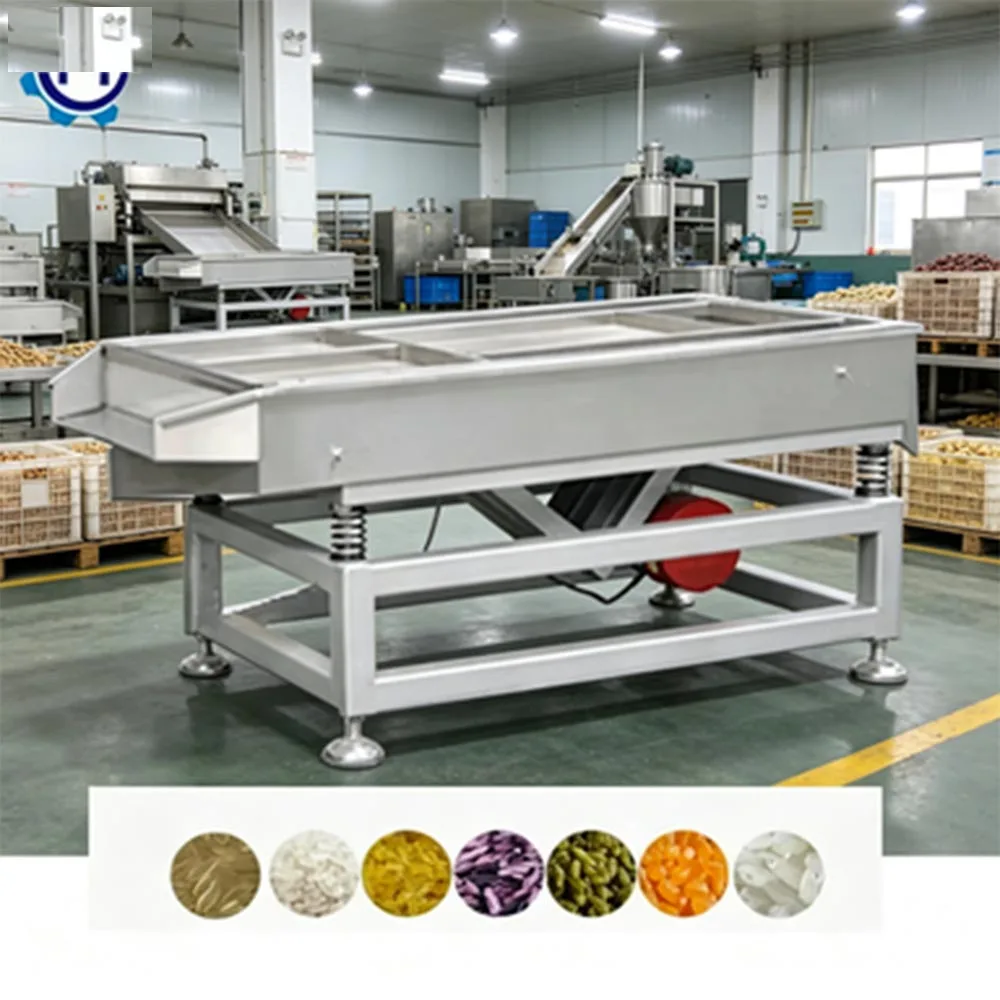
Precision Extrusion Profiling — Every screw element and barrel zone is mapped to your aquatic feed formulation before the line ships.
Technical Specifications
| Parameter | Value |
|---|---|
| Product Type | Aquatic Feed Twin-Screw Extrusion Production Line |
| Extruder Type | Twin-screw |
| Control System | PLC automatic control |
| Contact Material | Food-grade 304 stainless steel |
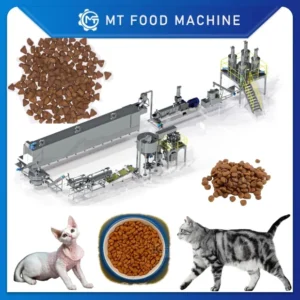
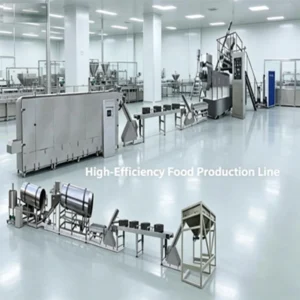
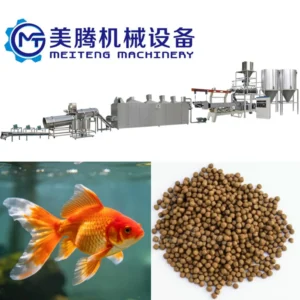
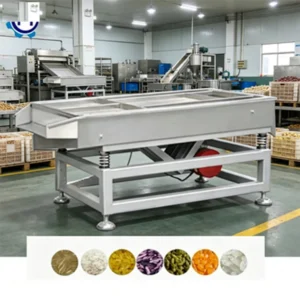
| Line Stations | Raw material mixer, extruder, dryer, seasoning/coating machine, vibrating sieve, conveyor equipment |
| Pellet Adjustability | Size, hardness, buoyancy (floating and sinking) |
| Output Capacity | Confirm capacity based on raw material formulation, moisture content, and pellet diameter (basis to be confirmed) |
| Automation Level | Full continuous automatic production from mixing to finished product discharging |
| Screw and Barrel Processing | High-temperature and high-pressure processing for raw material ripening |
| Energy Design | Optimized transmission structure and heating system for reduced power consumption and heat loss |
| Maintenance Design | Humanized operation interface, quick replacement of vulnerable parts |
| Standards | CE, ISO |
Application Suitability
| Application | Material or Output |
|---|---|
| Medium to large-scale industrial aquatic feed production | Fish meal, soybean meal, corn powder, compound additives |
| Floating pellets for surface-feeding species | Koi, goldfish, tropical fish formulations |
| Sinking pellets for bottom-feeding species | Catfish, shrimp, and specific freshwater fish formulations |
| Pet food manufacturers entering aquatic segments | Controlled pellet hardness and surface finish requirements |
| Feed processors upgrading from single-screw | Improved gelatinisation and output consistency targets |
Why Pellet Buoyancy Fails on a Generic twin-screw extrusion aquatic feed production line
Buoyancy is determined in the first sixty seconds of extrusion, not adjusted afterward.
When a twin-screw extrusion aquatic feed production line ships with a default screw build, the barrel shear profile rarely matches your actual formulation. I have stood beside a running extruder watching floating pellets slowly sink because the starch gelatinisation window was missed by a few degrees. The line looked correct on paper, but the screw elements were configured for a different raw material blend entirely [NEED_CITE: starch gelatinisation temperature thresholds in aquatic feed extrusion]. Producers then spend weeks chasing parameters that were never achievable with that hardware setup.
Barrel Zone Mapping and Shear Control
A twin-screw extrusion aquatic feed production line divides the barrel into distinct heating and shearing zones. Each zone handles a specific phase of the raw material transformation, from initial hydration through full starch gelatinisation to final expansion at the die face. The operator adjusts moisture injection and barrel temperature independently at each zone through the PLC interface. Getting the gelatinisation phase right is what separates a pellet that holds its buoyancy from one that collapses after drying.
Die Geometry and Pellet Density Targeting
The die plate determines the final expansion ratio and surface texture of every pellet leaving the extruder. For floating aquatic feed, the die orifice diameter and land length are calculated against the target bulk density and the specific starch content of your formulation. Switching from floating to sinking pellets on the same twin-screw extrusion aquatic feed production line typically involves a die changeover and screw element adjustment rather than a full hardware rebuild [NEED_CITE: die land length effect on extrudate expansion]. This flexibility matters when a single facility produces feed for both surface-feeding and bottom-feeding species.
Reading the Specs That Actually Matter
The twin-screw configuration is what allows this line to handle formulations with high fresh meat slurry or fat content without losing throughput stability. The L/D ratio of the barrel determines residence time, which directly affects how completely the starch component gelatinises before the material reaches the die. Food-grade 304 stainless steel on all contact parts prevents corrosion from the salt and mineral additives common in aquatic formulations. The PLC control system stores parameter recipes, so once your formulation is dialled in during the trial run, the operator recalls the exact screw speed, barrel temperatures, and moisture settings for repeatable production batches.
What Happens When Stations Are Mismatched
An extruder running at full output means nothing if the dryer cannot remove moisture fast enough to stabilise the pellet structure. I have seen lines where the coating drum was undersized, causing uneven fat application and pellets that broke apart during bagging. These are not parameter problems. They are throughput calculation failures that show up only after the line is installed and running [NEED_CITE: throughput balancing across extrusion line stations]. The result is a bottleneck that caps your actual output well below what the extruder alone can produce.
Why Procurement Starts with Your Raw Material
Every twin-screw extrusion aquatic feed production line we configure begins with your actual formulation, not a reference blend. The screw element arrangement and die specification are selected after reviewing your ingredient list and target pellet characteristics. In-house trial runs on your raw material happen in the testing workshop before the line ships, producing a documented report with the parameter set that achieved your required buoyancy and density. The line layout accounts for throughput matching between the mixer, extruder, dryer, and coating stations so no single station limits the others. Electrical schematics are confirmed against your facility voltage and frequency before production begins, and the PLC interface language is set to match your operators.
Documentation & Verification
- Line layout with throughput calculation across all aquatic feed stations
- Screw and die configuration record matched to your raw material blend
- Trial run report on your actual formulation before shipment
- Electrical schematic with voltage and frequency confirmation for your market
- CE declaration of conformity and ISO certificate for the complete line
- Wear parts list with recommended replacement intervals for screws and dies
Installation, Commissioning & Support
- Foundation requirements based on the extruder and dryer footprint and operating weight
- Dedicated electrical circuit sized for the PLC-controlled twin-screw main drive motor
- Modular station delivery allowing phased assembly in facilities with limited access
- On-site parameter commissioning using your raw material to replicate trial run results
- Operator training covering PLC recipe storage, screw speed adjustment, and die changeover
- Vulnerable parts inventory recommendation based on your annual production target
What to Include with Your Inquiry
Provide your raw material formulation, including the percentage of fresh meat slurry, starch sources, and fat content. Specify the target pellet diameter range and whether you need floating, sinking, or both buoyancy types from the same twin-screw extrusion aquatic feed production line. Confirm your facility voltage, frequency, and the control language your operators require. If you have existing upstream mixing or downstream packing equipment, share the throughput and interface details so the line integrates without bottlenecks.
Frequently Asked Questions
Q: How is screw configuration determined for a specific raw material blend and target pellet buoyancy?
A: We review your ingredient list, starch-to-protein ratio, and fat content, then select screw element types and sequencing to achieve the shear profile your formulation requires. The die orifice and land length are calculated against your target bulk density. This configuration is validated during a trial run on your actual raw material before the line ships.
Q: What barrel temperature zones and moisture levels are needed for full starch gelatinisation in aquatic feed?
A: The required profile depends on your starch source and its gelatinisation temperature range. The PLC system controls each barrel zone independently, and moisture is injected at specific points to maintain the hydration level needed for complete ripening. Exact parameters are established during the pre-shipment trial run on your formulation.
Q: Can the same die and screw setup produce both floating and sinking pellets, or are changeovers required?
A: Producing both buoyancy types typically requires a die changeover and adjustments to the screw element arrangement and barrel moisture profile. The PLC stores separate parameter recipes for each pellet type, so the operator recalls the correct settings after the hardware changeover is complete.
Q: Is a trial run on the buyer’s raw material performed before shipment, and what does the report include?
A: Yes, every line undergoes a trial run using your actual raw material in our testing workshop. The report documents the screw configuration, barrel temperature profile, moisture settings, and screw speed that achieved your target pellet buoyancy, density, and surface finish, giving your operators a validated starting point at commissioning.