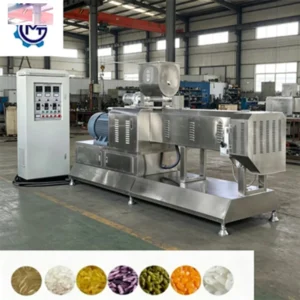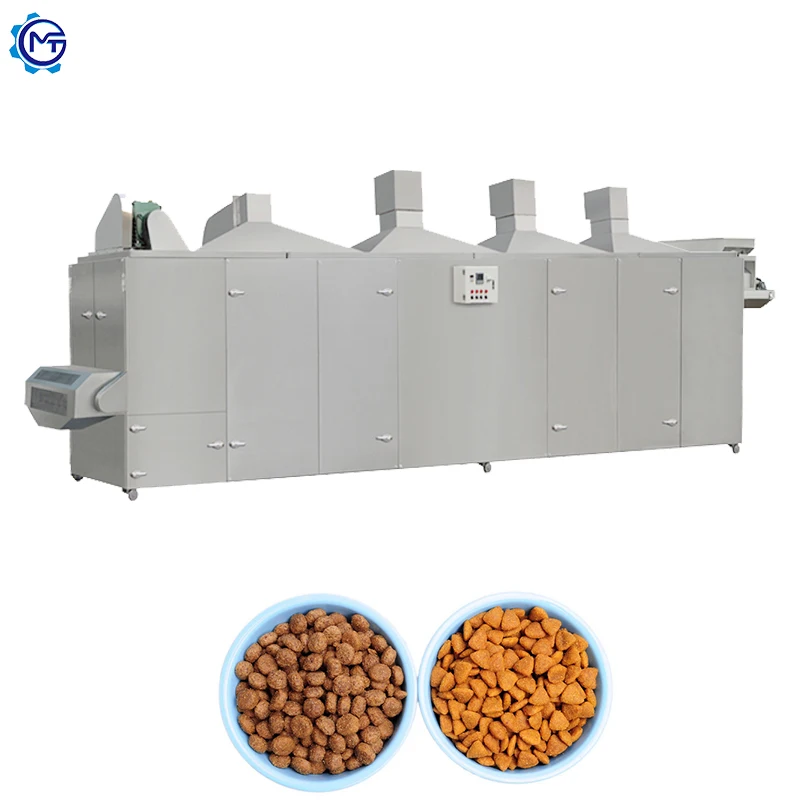
Precision screw and die engineering — every configuration logged to your specific pet food formulation before throughput is ever quoted.
Technical Specifications
| Parameter | Value |
|---|---|
| Product Type | Twin Screw Pet Food Extrusion Line |
| Output Capacity | 3 tons per hour (basis not stated in source — confirm raw material / moisture / pellet size) |
| Applications | Dry dog and cat kibble, aquatic fish feed |
| Control System | PLC and MCC automated control |
| Process Documentation | Fish feed process drawing included |
| Warranty | 1 year |
| Contact Materials | High-quality materials (verify specific food-grade alloy grades) |
| Certifications | CE and ISO compliant |
Application Suitability
| Application | Material or Output |
|---|---|
| Dry kibble for dogs and cats | Corn, meat meal, poultry by-products, grain blends |
| Premium high-protein kibble | Fresh meat slurries, legume flours, alternative proteins |
| Aquatic feed for fish | Fish meal, soy protein, wheat flour, vitamin premixes |
| Floating or sinking feed pellets | Starch-based binders with controlled expansion ratios |
Why Nominal Capacity Means Nothing Without Your Recipe
Throughput only matters when measured against your actual ingredient profile.
I once watched a pet food line stall at barely half its quoted rate because the screw profile was spec’d for corn-heavy formulas while the client ran a 40% bone-meal recipe. The barrel couldn’t generate enough shear, material backed up at the die plate, and operators spent half their shifts clearing blockages. This happens more often than buyers expect [NEED_CITE: common causes of extruder throughput loss in high-protein formulations]. When twin screw pet food extrusion technology is applied without matching screw elements to your specific formulation, the machine simply cannot deliver what the quotation promised.
Screw Geometry Dictates What Your Formula Becomes
The arrangement of conveying, kneading, and shearing elements inside the barrel determines how completely starches gelatinise and how uniformly proteins denature. A configuration built for grain-dominant recipes will under-process high-meat formulations, leaving pockets of raw material that compromise shelf stability. Our approach starts with your ingredient list and moisture targets, then maps each screw element position to achieve the residence time and shear intensity your recipe demands.
Barrel Temperature Zones and Moisture Management
Each barrel section operates under independent thermal control, allowing operators to build a temperature gradient that matches the gelatinisation curve of the starch source in use. Preconditioning moisture levels must be coordinated with barrel injection points so that the dough reaches the die at the exact water activity needed for consistent expansion. Getting this balance wrong produces kibble that either fractures during coating or collapses after exiting the die plate [NEED_CITE: starch gelatinisation temperature ranges in pet food extrusion].
Reading the Specs That Actually Matter
The barrel zone count tells you how many independent temperature and steam injection points are available — more zones give finer control over the cooking gradient, which is critical when switching between grain-based and grain-free recipes. Die plate orifice diameter and length-to-diameter ratio govern the pressure drop at exit, directly shaping expansion ratio and final kibble density. PLC control with recipe memory means that once a formulation is dialled in, the exact screw speed, barrel temperatures, and feed rate can be recalled for repeat runs, removing operator guesswork from batch consistency. These parameters matter far more than a headline capacity figure when you are evaluating twin screw pet food extrusion technology for production reliability.
What Happens When Configuration Is Skipped
A generic screw build copied from a catalogue might produce acceptable kibble on the test recipe, but the moment your production recipe enters the barrel, density drifts outside specification. Floating feed sinks, kibble crumbles in the coating drum, or the dryer cannot keep pace because moisture content varies pellet to pellet. These problems surface after installation, when the supplier is already paid and your production schedule is burning cash [NEED_CITE: financial impact of post-installation extruder troubleshooting].
Why Sourcing the Extrusion Section Here Makes Sense
Every twin screw pet food extrusion technology project begins with your raw material samples tested in the workshop before a quotation is issued. Screw configurations and die designs are recorded against your formulation, not pulled from a standard library. Throughput is matched across mixing, extrusion, drying, coating, and packing stations so no single section bottlenecks the line. Electrical schematics arrive with voltage and frequency confirmed for your facility, and control language is set before the panel is wired. The in-house testing workshop runs your actual ingredients, generating a trial report that shows real output, real density, and real kibble geometry before the machine ships.
Documentation & Verification
- Screw and die configuration record matched to your ingredient profile
- Trial run report using your raw material with measured output and density
- Electrical schematic with confirmed voltage, frequency, and control language
- Machine specification sheet listing barrel zone count and motor rating
- CE declaration of conformity and ISO certificate for customs and compliance
- Line layout drawing showing throughput matching across every station
Installation, Commissioning & Support
- Foundation plan accounts for extruder vibration isolation and barrel access clearance
- Dedicated power circuit sized to PLC and main drive motor load requirements
- Barrel sections and screw shafts ship separated for safe handling and on-site assembly
- First-run commissioning includes die pressure adjustment and temperature ramp calibration
- Operator training covers recipe recall, screw speed adjustment, and emergency stop sequences
- Wear parts list identifies screw elements, die plates, and cutter bearings with replacement intervals
- Maintenance schedule specifies barrel liner inspection and gearbox oil change intervals
What We Need From You Before Quoting
Send us your target kibble shape, approximate ingredient breakdown, and the daily output you need to hit. Include your facility voltage and frequency so we can confirm motor and heater ratings before building the panel. If you have existing upstream mixers or downstream dryers, share their throughput so we can size the extrusion section to match.
Frequently Asked Questions
Q: How is screw configuration selected for different pet food formulations?
A: We review your ingredient list, protein-to-starch ratio, and target moisture content, then arrange kneading blocks, conveying elements, and shear zones to match. High-meat recipes need longer residence and gentler shear, while grain-heavy blends require more aggressive kneading for full gelatinisation. The configuration is documented and tested on your material before the barrel ships.
Q: What barrel temperature profile suits high-meat versus grain-based kibble?
A: Grain-based formulas typically need a steep temperature ramp to drive starch gelatinisation quickly, while high-meat recipes use a flatter, lower-peak profile to prevent protein scorching. Independent barrel zone control lets operators adjust each section so the dough reaches the die at the correct viscosity and moisture level for your specific recipe.
Q: How do you control kibble density and buoyancy through die design?
A: Die orifice diameter, land length, and face geometry set the pressure drop as dough exits the barrel. A larger pressure drop produces greater expansion and lower density, suitable for floating aquatic feed or lighter kibble. We machine and test die plates against your target density specification during the pre-shipment trial run.
Q: Can a trial run be done on our raw material before shipment?
A: Yes. We ask you to ship a representative sample of your actual formulation to our testing workshop. The extruder runs your material through the configured screw and die setup, and we document output rate, kibble density, expansion ratio, and surface texture in a trial report you receive before approving dispatch.