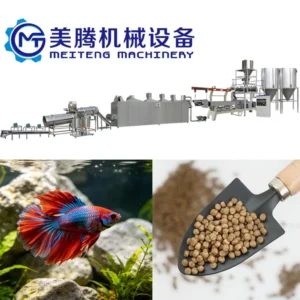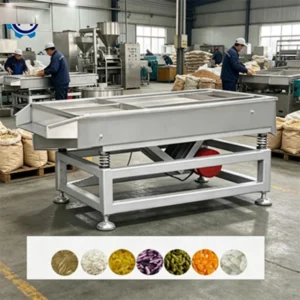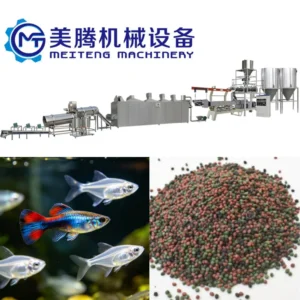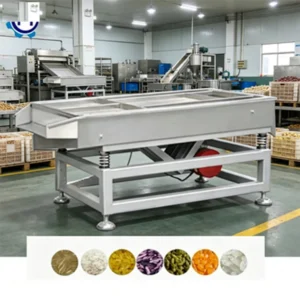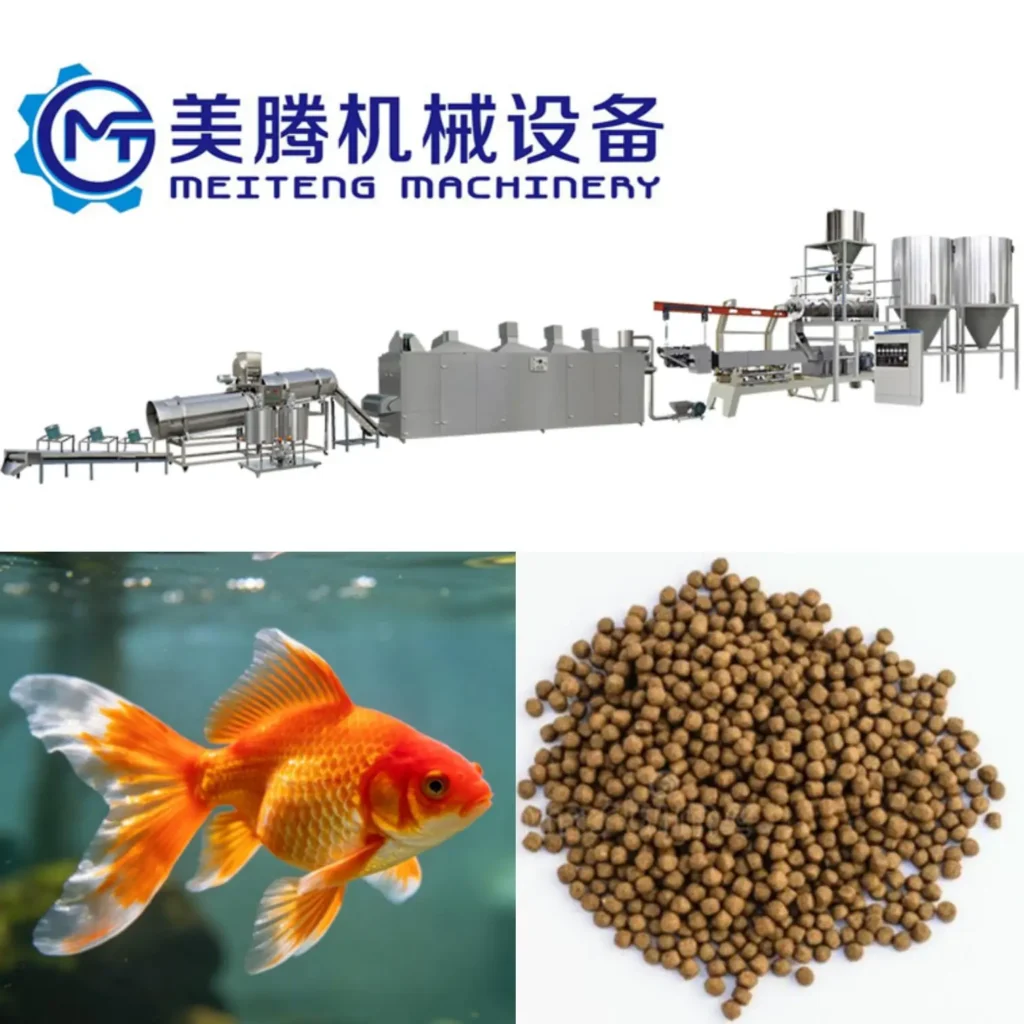
Custom Screw Profiling — every die plate and screw element is matched to your aquatic feed formulation before the line ships, eliminating density surprises at commissioning.
Technical Specifications
| Parameter | Value |
|---|---|
| Product Type | Fish Feed Production Line |
| Extruder Type | Twin-screw |
| Output Capacity | 300–600 kg/h (basis not stated in source — confirm raw material formulation and moisture content) |
| Construction Material | 304 Stainless Steel (food-grade contact parts) |
| Control System | PLC and MCC |
| Target Species | Trout, salmon, catfish |
| Assembly State | Complete processing line (extrusion-based) |
| Line Stations | Twin-screw extruder with supporting mixing, conveying, drying, flavouring, cooling, and packing stations |
| Certification | CE, ISO |
Application Suitability
| Application | Material or Output |
|---|---|
| Floating trout and salmon pellets | High-protein fish meal and marine oil formulations |
| Sinking catfish pellets | Plant-protein-dominant blends with moderate starch content |
| Multi-species aquaculture feed operations | Formulations switching between fish meal, soy, and cereal bases |
| Starter and grower feed grades | Variable pellet diameters from the same extrusion platform |
Why Extrusion Density Fails Where Capacity Claims Succeed
A fish feed processing line extrusion technology setup that hits rated throughput on a standard starch blend can still produce pellets that sink when they should float, or scatter on the water surface when they should hold intact. The failure is almost always in screw configuration and barrel temperature profiling, not in motor power or line speed. I have watched a 300–600 kg/h line perform perfectly on a conventional grain formula, then deliver nothing but sinking pellets once the customer switched to a high-protein fish meal recipe. The extruder was pushing volume, but the shear profile inside the barrel was wrong for that formulation [NEED_CITE: twin-screw extrusion shear and starch gelatinisation relationship]. When the screw elements do not generate enough mechanical shear to fully gelatinise the starch matrix, the pellet structure collapses during drying and the air cells that provide buoyancy never form. Buyers often spend months adjusting dryer temperatures and feed rates, chasing a problem that was locked in at the screw configuration stage.
Barrel Temperature Zoning and Starch Gelatinisation Control
The barrel is divided into multiple heating and cooling zones, each independently managed through the PLC. Precise zone-by-zone temperature control determines how completely starch granules rupture and absorb moisture during extrusion. For high-protein trout formulations, lower barrel temperatures in the feeding zone prevent premature protein denaturation, while elevated temperatures in the metering zone ensure the remaining starch fraction reaches full gelatinisation. Getting this gradient wrong means pellets that look right at the die face but lose structural integrity inside the dryer.
Shear Energy and Pellet Microstructure for Floatability
Twin-screw extrusion generates shear through the intermeshing screw elements and the gap between screw flights and barrel wall. The configuration of kneading blocks, reverse elements, and conveying sections directly controls how much mechanical energy the material receives. A fish feed processing line extrusion technology setup configured for sinking catfish feed uses a gentler shear profile to produce a denser pellet with fewer internal voids [NEED_CITE: pellet density and void structure in extruded aquatic feed]. Switching to floating salmon feed on the same hardware requires rearranging screw elements to increase shear intensity, which expands the starch-protein matrix and traps the air cells needed for buoyancy.
Reading the Specifications Against Your Actual Formulation
The twin-screw design gives operators a wider processing window than single-screw extruders, particularly when handling high-fat or high-moisture aquatic formulations. The 304 stainless steel contact parts resist corrosion from fish meal oils and marine-based additives that degrade carbon steel surfaces over time. PLC and MCC control allows repeatable recipe storage, so once the correct barrel profile and screw speed are established for a given formulation, the parameters can be recalled for subsequent production runs. Output capacity of 300–600 kg/h applies to the extruder station; the dryer, coating drum, and cooler downstream must be throughput-matched to prevent bottlenecks that force the extruder to run below its stable operating range.
The Cost of Skipping a Pre-Shipment Trial Run
Lines that ship without a trial on the buyer’s actual raw material create a cascade of hidden expenses. Commissioning stretches from days into weeks while technicians swap screw elements and re-profile barrel zones on-site [NEED_CITE: extrusion line commissioning delays due to untested configurations]. Each failed test batch consumes raw material, delays market delivery, and erodes confidence with downstream distributors. In the worst cases I have encountered, the dryer and coating drum were already sized for a throughput that the extruder could not sustain on the customer’s formulation, requiring station-level modifications months after installation.
What This Line Delivers Beyond the Nameplate
Screw configuration and die design are specified against your raw material formulation and target pellet density, not copied from a generic build. The in-house testing workshop runs your actual ingredients through the extruder before shipment, generating a trial report that documents screw speed, barrel temperatures, moisture content, and pellet floatability results. Every station — mixing, extrusion, drying, coating, cooling, packing — is throughput-matched within a single supplier scope, removing the integration gaps that appear when equipment is assembled from separate vendors. Electrical schematics confirm voltage and frequency for your facility before production begins. Operator training covers recipe recall, screw element replacement, and die plate maintenance specific to the aquatic feed formats you will produce.
Documentation & Verification
- Screw and die configuration record matched to your aquatic feed formulation
- Trial run report on your raw material documenting pellet density and floatability
- Electrical schematic with voltage and frequency confirmed for your market
- Line layout with station-by-station throughput matching calculation
- Operation and maintenance manual covering screw element replacement procedures
- CE declaration of conformity and ISO certificate for export documentation
Installation, Commissioning & Support
- Foundation plan sized to the twin-screw extruder and supporting station footprint
- Dedicated electrical circuit sized for PLC and MCC control panel load requirements
- Station-by-station alignment and throughput balancing during on-site commissioning
- Recipe parameter setup for each target species formulation during initial production runs
- Operator training on screw element inspection and die plate changeover procedures
- Wear parts list covering screws, dies, and barrel liners with recommended stock quantities
Before You Request a Quote
Send your target species, raw material formulation with protein and starch percentages, and whether you need floating or sinking pellets. Specify your local voltage, frequency, and preferred control language for the PLC interface. If you are transitioning an existing line or adding capacity alongside current equipment, note the upstream and downstream stations already in place so the proposal accounts for integration points.
Frequently Asked Questions
Q: How is screw configuration selected for different fish species and raw material formulations?
A: Each formulation is reviewed for protein, starch, fat, and fibre content. The screw element sequence — conveying, kneading, and reverse sections — is arranged to deliver the shear energy that specific matrix requires. High-protein trout feeds typically need more intensive kneading blocks than starch-heavy catfish blends. The configuration is documented and tested on your raw material before the extruder ships.
Q: How is pellet density and floatability controlled through barrel temperature and die design?
A: Barrel zones are set to manage starch gelatinisation progression, while the die plate hole diameter and length-to-diameter ratio govern expansion at the exit. Higher expansion creates more internal voids and a floating pellet. Tighter die geometry with lower barrel temperatures in the final zones produces the dense, sinking pellet that bottom-feeding species require.
Q: Can the same line produce both floating and sinking feed, and what changes are required?
A: Yes. The changeover involves rearranging screw elements to adjust the shear profile, modifying barrel zone temperatures, and potentially swapping the die plate. The PLC stores separate recipes for each format so operators can recall the correct parameters. Changeover time depends on crew familiarity and is reduced after the first few transitions.
Q: How is starch gelatinisation degree verified during the trial run?
A: Pellets produced during the trial are tested for water stability, bulk density, and degree of cook using standard aquaculture feed methods. The trial report records the barrel temperature profile, screw speed, moisture content, and residence time that produced the passing result, giving you a documented baseline for production.