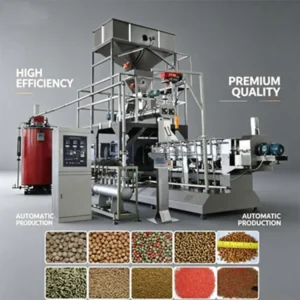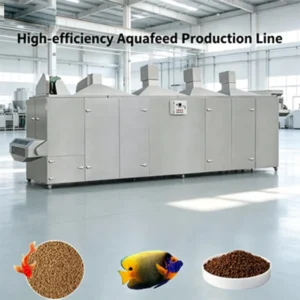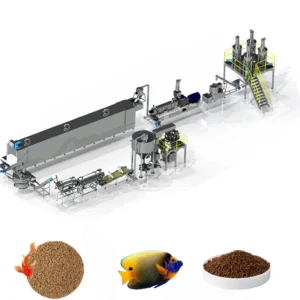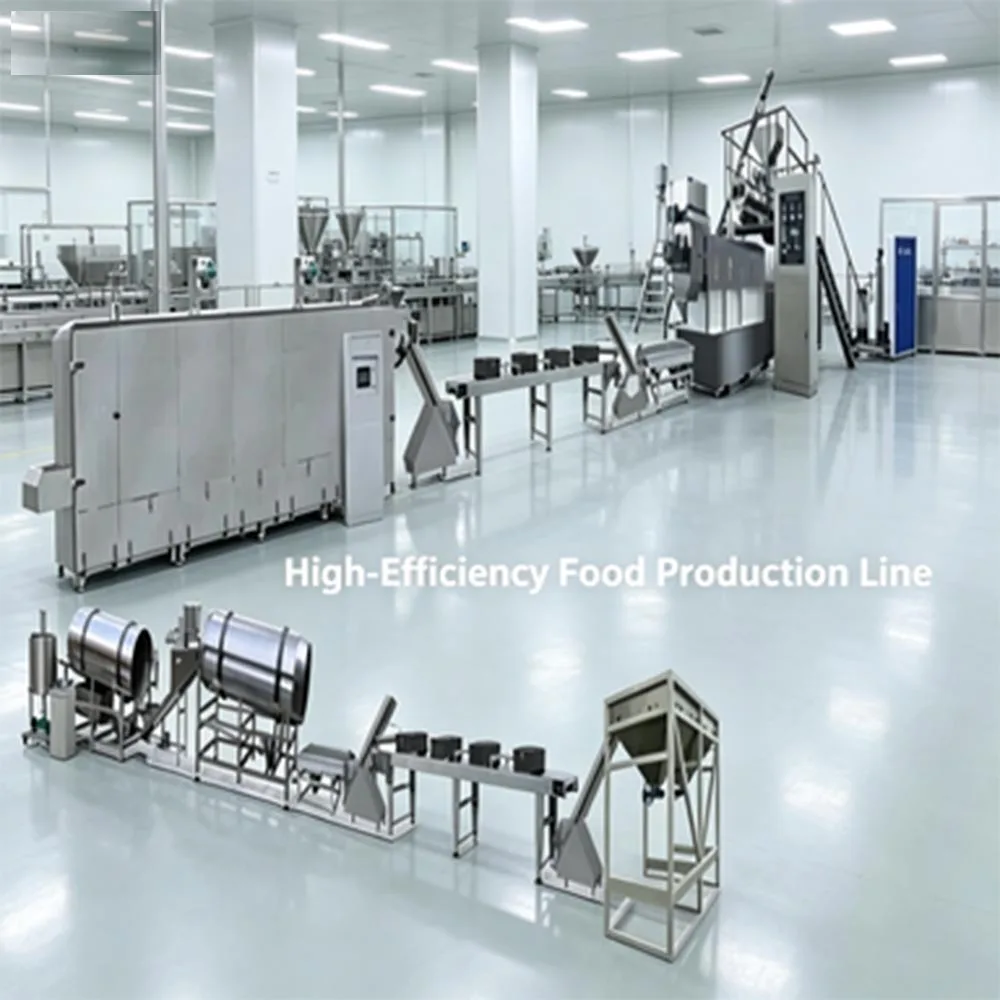
Screw geometry matched to formulation — every barrel zone and die land is specified against your actual high-protein or high-starch aquatic mix before the line is built.
Technical Specifications
| Parameter | Value |
|---|---|
| Product Type | Twin-Screw Floating Fish Feed Extrusion Line |
| Screw Type | Twin-screw |
| Pellet Size Range | 0.5 mm – 12 mm |
| Output Capacity | 500 kg/h floating fish feed pellets (basis not stated in source — confirm raw material formulation, moisture content and pellet diameter) |
| Control System | Simple control panel (PLC / MCC availability to be confirmed) |
| Structure Material | Stainless steel (main contact parts) |
| Automation Level | Fully automatic continuous operation |
| Line Stations | Feeding, mixing, extruding, pelletizing (dryer, cooler, coating and packing stations to be verified against project scope) |
| Power / Voltage / Frequency | To be confirmed per site utility |
| L:D Ratio / Barrel Zones | To be confirmed per formulation |
Application Suitability
| Application | Material or Output |
|---|---|
| Ornamental goldfish and koi floating pellets | High-starch formulations requiring precise buoyancy control and vivid pellet appearance |
| Multi-stage aquaculture grow-out feed | Protein-rich formulations across fry, juvenile and adult pellet sizes within the 0.5 mm – 12 mm range |
| Specialty aquatic feed development runs | Formulation trials involving varied lipid, protein and carbohydrate ratios for floatability testing |
What Keeps Floating Pellets From Sinking on Your Line
A twin-screw floating fish feed extrusion line only holds buoyancy within tolerance when screw configuration and barrel temperature profile are matched to the exact formulation you run — not a generic test mix.
I once watched a feed producer lose an entire production batch because the trial was done on standard corn flour while the real recipe carried a heavy fish-meal and lipid load. The pellets left the die looking correct, but within seconds of hitting water they dropped straight to the bottom. The extruder had been configured for starch gelatinisation levels that simply could not hold under high-fat shear conditions. [NEED_CITE: starch gelatinisation behaviour under high-lipid extrusion conditions] When buoyancy fails, the entire downstream investment — dryer, cooler, coating drum — becomes irrelevant because the product itself does not meet market expectation.
Barrel Temperature Zones and Starch Gelatinisation Control
Each barrel zone on this twin-screw floating fish feed extrusion line influences how moisture and thermal energy interact with the starch fraction of your aquatic feed formulation. Too little heat in the conditioning zones and gelatinisation remains incomplete, leaving dense pellets that cannot expand at the die face. Excessive heat in the metering section can scorch protein-heavy mixes, degrading nutritional value and creating inconsistent pellet structure. The zone profile must be tuned to the specific ratio of starch to protein to lipid in the formulation you actually intend to run.
Die Geometry and Pellet Expansion at Cut-Off
The die plate determines not only pellet diameter but also the pressure drop that governs expansion ratio at the moment of extrusion. For floating feed, the die land length and orifice diameter must generate enough internal steam expansion to produce the low-density cellular structure that maintains buoyancy. Switching between 0.5 mm fry feed and 12 mm adult koi pellets requires more than a die swap — screw speed, moisture injection and barrel profile all shift to maintain the correct expansion across the full size spectrum. [NEED_CITE: die land length effects on extrudate expansion ratio]
Reading the Specs That Actually Matter
The screw L:D ratio determines residence time inside the barrel, which directly affects how completely starch granules rupture and gelatinise. A longer ratio gives more mechanical and thermal work per gram of material, which is critical when processing high-protein aquatic formulations that resist expansion. Stainless steel contact materials resist the corrosive effect of salt-laden fish meal and mineral premixes, extending the working life of screws and barrel liners. The twin-screw configuration provides self-wiping action that prevents material hang-up and degradation between batches, a practical necessity when switching between ornamental and aquaculture formulations on the same line.
When the Wrong Screw Profile Costs You a Contract
A generic screw build copied from a standard snack or pet-food configuration will produce floating pellets that look acceptable on the conveyor but fail the sink-test at the customer’s pond. The density drifts outside specification, the buyer rejects the shipment, and the feed manufacturer is left troubleshooting a problem that was baked into the hardware from day one. I have seen producers spend weeks adjusting moisture and temperature trying to compensate for a screw geometry that was never designed for their formulation in the first place. [NEED_CITE: impact of screw element arrangement on extrudate density in aquatic feed]
Why This Line Is Built Around Your Material
Screw configuration and die design are specified to your raw material and target pellet size rather than pulled from a catalogue default. The in-house testing workshop runs your actual formulation before shipment, generating a trial report that documents the exact screw profile, barrel temperatures and die geometry used. Complete line throughput is balanced from feeder through pelletizer so that no single station bottlenecks the others. Pre-sales consultation includes line layout and capacity calculation matched to your workshop footprint and utility supply. Twin-screw expertise spans ornamental, aquaculture and specialty aquatic applications, meaning the engineering team has seen formulations similar to yours before.
Documentation & Verification
- Trial run report on your actual aquatic feed formulation covering screw settings and pellet buoyancy results
- Screw and die configuration record specifying geometry matched to your target pellet diameter and density
- Electrical schematic with voltage and frequency confirmed against your plant utility supply
- Machine specification sheet detailing barrel zones, L:D ratio and motor rating
- Line layout drawing showing station spacing and utility connection points
- Operation and maintenance manual with wear parts replacement intervals
Installation, Commissioning & Support
- Foundation and floor-space planning based on the integrated feeding-to-pelletizing line footprint
- Dedicated circuit specification matching the main extruder drive and all auxiliary station motors
- Assembled-line alignment verification ensuring conveyor transfer points match extruder discharge height
- First-run parameter setting on your formulation with barrel zone temperatures and screw speed logged
- Operator training covering die changeover procedure across the 0.5 mm – 12 mm pellet range
- Wear parts list identifying screws, barrel liners and die plates with recommended replacement stock levels
- Stainless steel contact surface cleaning protocol to prevent cross-contamination between feed formulations
What to Prepare Before Your Inquiry
To size a twin-screw floating fish feed extrusion line correctly, the engineering conversation needs to start with your actual formulation sheet — protein, starch, lipid and moisture percentages for each product variant you plan to run. Provide the target pellet diameters and the daily output volume so that barrel capacity, dryer residence time and cooling conveyor length can be balanced. Share your site voltage and frequency, and whether your control room requires a specific language on the HMI. If you have upstream milling or downstream coating equipment already in place, include those specifications so the line integrates without throughput gaps.
Frequently Asked Questions
Q: How is screw configuration selected for different aquatic feed raw materials and target pellet densities?
A: The screw profile — including element stagger angle, kneading block arrangement and conveying section length — is chosen based on the starch-to-protein ratio and the target expansion level needed for buoyancy. High-protein formulations require more shear-intensive kneading zones to achieve adequate gelatinisation, while high-starch mixes need gentler profiles to prevent over-expansion. Each configuration is documented in the build record for repeatability.
Q: What barrel temperature profile and die geometry keep floating feed buoyant within specification?
A: Buoyancy depends on achieving the right internal cellular structure, which requires precise thermal input across barrel zones and a die land length that allows controlled pressure drop at extrusion. The temperature profile is adjusted zone by zone during the trial run on your formulation, and the resulting settings are recorded in the trial report so you can reproduce them on your production floor.
Q: How are pellet size changes between 0.5 mm and 12 mm achieved — die swap, screw speed adjustment or both?
A: Moving across the pellet size range involves a coordinated change: the die plate is swapped to the target orifice diameter, screw speed is adjusted to match the new flow rate, and barrel moisture and temperature settings are revised to maintain correct expansion. The trial run maps these parameters for each pellet size you need to produce.
Q: Is an in-house trial run performed on the buyer’s raw material before shipment, and what does the trial report cover?
A: Yes, the testing workshop runs your actual formulation before the line ships. The trial report documents screw configuration, barrel temperature profile, die selection, moisture content, pellet expansion ratio and buoyancy test results. This report becomes the baseline reference for commissioning at your site.