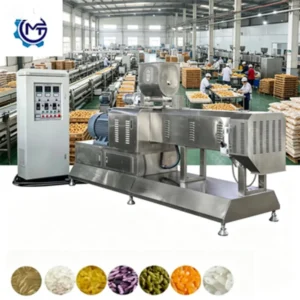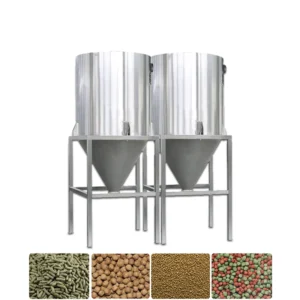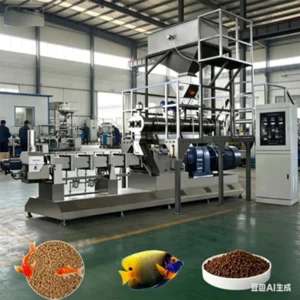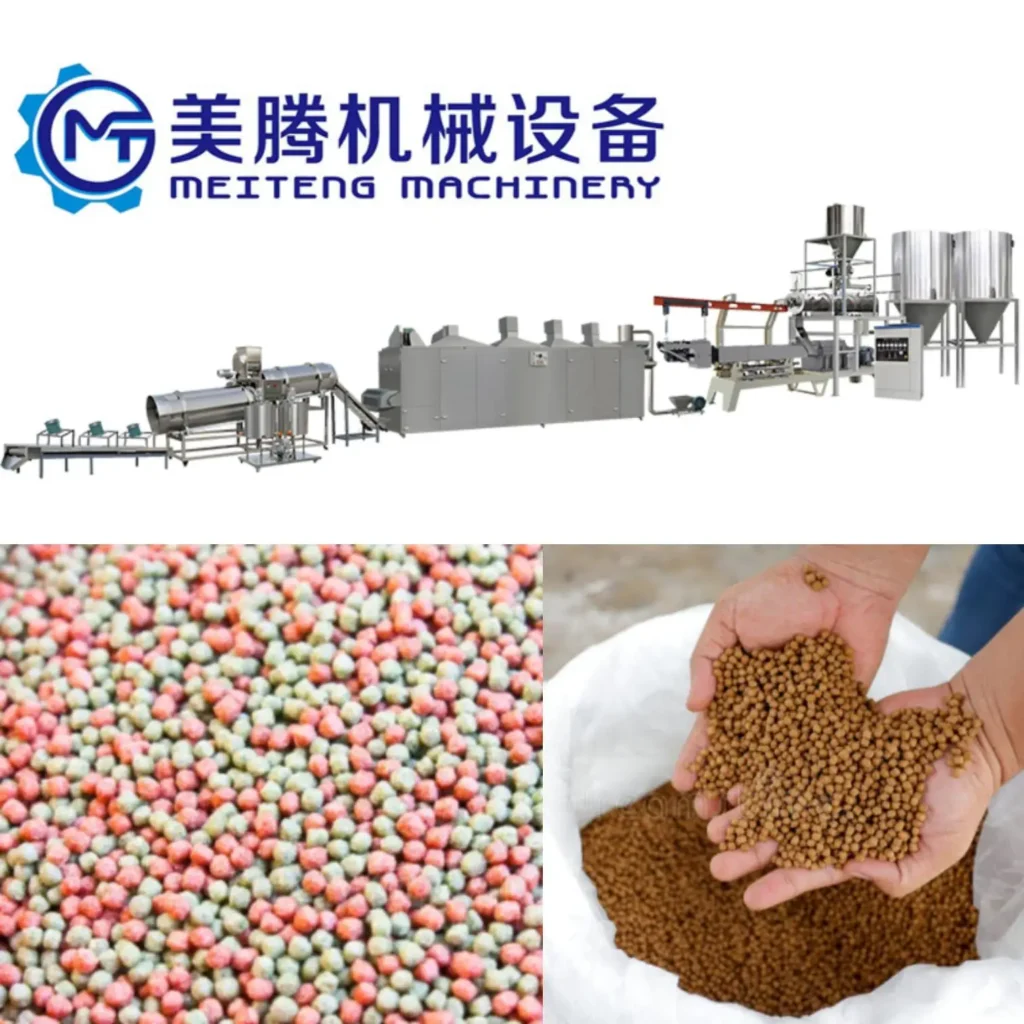
Screw Configuration Matched to Formulation — Every barrel zone, flight depth, and die orifice is selected against your specific raw material blend and target pellet density, verified in our testing workshop before the line ships.
Technical Specifications
| Parameter | Value |
|---|---|
| Product Type | Fish Feed Processing Line |
| Extruder Type | Twin-screw extruder |
| Output Capacity | 2–3 t/h (basis not stated in source — confirm raw material formulation, moisture content, and pellet size) |
| Contact Material | 304 stainless steel (food-contact parts) |
| Suitable Species | Trout, salmon, catfish, and other fish species |
| Control System | Configurable with PLC, MCC, or manual control |
| Voltage & Frequency | Configurable to buyer’s site utility (confirm before order) |
| Certifications | CE, ISO |
Application Suitability
| Application | Material or Output |
|---|---|
| Floating pellets for surface-feeding species | Trout and salmon formulations with high lipid and protein content |
| Sinking pellets for bottom-feeding species | Catfish feed based on soybean meal, fish meal, and starch binders |
| Multi-species production on one line | Switching between floating and sinking grades by adjusting screw profile and die geometry |
| High-volume aquaculture feed manufacturing | Continuous runs at confirmed throughput across species-specific recipes |
Why Generic Screw Builds Sink Your Floating Pellets
A fish feed extrusion line screw configuration die design that ignores your actual raw material will produce pellets that either crumble in water or sink when the market demands a float — because generic builds assume standard starch ratios that your formulation may not contain.
I spent four days in a Thai plant adjusting barrel temperatures and rearranging screw elements on a twin-screw line that had been delivered with a default configuration. The buyer’s recipe was heavy on fish meal and poultry by-product, and the standard screw profile could not develop enough shear to gelatinise the limited starch fraction. Pellets kept sinking during the water stability test, and the buyer was two weeks behind on their first commercial order [NEED_CITE: typical aquaculture feed pellet water stability requirements].
The root cause was not the extruder itself. It was the assumption that one screw configuration fits every recipe.
How Shear and Moisture Interact Inside the Barrel
In a twin-screw extruder, the intermeshing flights generate shear that breaks down starch granules and distributes moisture evenly through the dough. The length-to-diameter ratio, flight pitch, and kneading block arrangement all determine how much mechanical energy transfers into the material before it reaches the die. When protein-heavy formulations enter the barrel, they resist gelatinisation differently than pure cereal blends, so the screw configuration must compensate with altered kneading zones and residence time.
Barrel Temperature Zones and Density Control
Each barrel zone carries independent heating and cooling circuits, letting operators build a temperature profile that rises gradually toward the die. For floating pellets, the final zones are held at higher temperatures to flash-expel moisture at the die face, creating internal voids that reduce bulk density. For sinking feed, the profile is flattened so the pellet exits denser and more compact. Getting this wrong means the fish feed extrusion line screw configuration die design produces pellets that behave unpredictably in the water column, frustrating farmers who rely on consistent feeding behaviour [NEED_CITE: relationship between extrusion temperature profile and pellet buoyancy].
Reading the Specs That Matter for Your Formulation
The twin-screw design gives this line a wider processing window than single-screw alternatives, handling formulations from high-starch cereal bases to protein-dense blends containing over half fish meal by weight. The 304 stainless steel contact surfaces resist the corrosive salts and amino acids present in aquatic feed ingredients, extending intervals between barrel relines. Output is rated at 2–3 t/h, though the actual figure depends on your specific raw material blend, target moisture at the die, and pellet diameter — all of which must be confirmed during a trial run rather than assumed from a catalogue number. The configurable control system lets you choose between PLC automation with recipe memory, MCC-based sequential logic, or manual panel operation depending on your plant’s existing infrastructure and operator skill level.
The Hidden Cost of Skipping the Trial Run
Buyers who approve shipment without a trial run on their own raw material often discover formulation problems only after the line is bolted to their factory floor. A recipe that extrudes cleanly on standard corn starch may stall inside the barrel when fish meal replaces half the dry weight, generating surging pressure and uneven pellet density. Correcting this on site means flying in a process engineer, sourcing replacement screw elements locally, and losing weeks of production while the right configuration is found through trial and error [NEED_CITE: cost of post-installation line reconfiguration in food extrusion].
Why Sourcing This Line From Meiteng Works
The twin-screw extrusion expertise behind this line covers pet food, aquatic feed, snacks, and cereals — meaning the process engineers have seen how protein, fat, and starch behave across dozens of formulation families. The in-house testing workshop runs your actual raw material before the extruder is crated, so screw elements and die plates are adjusted to your recipe rather than left generic. Throughput is matched across mixing, extrusion, drying, coating, and packing stations so no single bottleneck limits your line output. Every electrical schematic is confirmed against your site voltage and frequency before production begins, eliminating commissioning delays. Wear parts lists ship with the line, so replacement screws and dies are available when the first changeover is due.
Documentation & Verification
- Line layout and capacity calculation matched to your target species and pellet diameter
- Screw and die configuration record specifying every element position for your formulation
- Trial run report on your raw material confirming pellet density and water stability
- Electrical schematic with voltage and frequency locked to your site utility supply
- CE declaration of conformity and ISO certificate included in shipping documents
- Operation and maintenance manual with wear parts list and replacement intervals
Installation, Commissioning & Support
- Foundation plan provided based on extruder weight and dryer footprint for your layout
- Dedicated power circuit specified for twin-screw motor draw and heating zone loads
- Line arrives in modular sections for assembly inside facilities with restricted access
- On-site commissioning includes barrel temperature profiling and die pressure calibration
- Operator training covers screw element changes between floating and sinking pellet runs
- Spare screw elements and die plates shipped with initial order to cover first replacements
What We Need Before Quoting
Send your raw material formulation by ingredient and percentage, the pellet diameter and whether you need floating or sinking grades, and the daily output target so we can size each station. Include your site voltage, frequency, and preferred control language so the electrical package matches your plant from day one.
Frequently Asked Questions
Q: How is screw configuration matched to my raw material and target pellet density?
A: We map your formulation’s protein, starch, fat, and fibre fractions, then select kneading block angles, flight pitches, and die orifice diameters that generate the correct shear and expansion. A trial run on your actual raw material in our testing workshop confirms the configuration before the line ships.
Q: What determines whether the feed floats or sinks, and how is this controlled?
A: Buoyancy depends on internal void structure created at the die face. Higher barrel-end temperatures and specific die geometries produce rapid moisture flash-off, leaving air pockets that make pellets float. Lower temperatures and tighter die land lengths yield denser, sinking pellets.
Q: Can the line produce feed for multiple fish species without reconfiguration downtime?
A: The twin-screw extruder accepts different screw element arrangements and die plates. Changeovers involve swapping screw sections and dies, which trained operators complete within a standard shift break. The PLC stores separate recipes for each species if configured with automated control.
Q: Is a trial run on my raw material performed before shipment?
A: Yes. Our in-house testing workshop processes your actual raw material through the extruder, measuring pellet density, water stability, and expansion ratio. The trial run report ships with the line and documents the exact screw and die configuration that achieved your target specifications.
Q: How are barrel temperature zones and moisture profiles set for different formulations?
A: Each barrel zone has independent heating and cooling circuits. For high-protein recipes, we adjust preconditioner moisture injection and zone-by-zone temperatures to ensure adequate starch gelatinisation without over-drying the pellet before it reaches the die.