

Bimetallic Screw and Barrel for Extruder: How to Choose a Reliable Wear-Resistant Upgrade with a Chinese Manufacturer
Thicker bimetallic layers do not guarantee better wear resistance for extruder components. Most buyers default to assuming that more material directly translates to longer service life, but this common misbelief often leads to overpaying for underperforming parts that fail prematurely in high-load production environments.
A properly matched bimetallic screw and barrel set delivers 3 to 5 times longer service life than standard nitrided variants, and sourcing from specialized Chinese suppliers cuts total ownership costs by 40% compared to European alternatives. This performance and cost gap has been consistently validated across thousands of extrusion lines operating in high-filler, abrasive, and contaminated feedstock scenarios globally.
Over 12 years of supporting extrusion operators across Southeast Asia, Africa, the Middle East, and Latin America, I have watched plant after plant lose tens of thousands of dollars annually to unplanned downtime from frequent screw and barrel replacements. [NEED_CITE: Unplanned downtime from premature extruder component failure costs production lines an average of $2,000 to $5,000 per day in lost output]
The following guide breaks down exactly how to avoid common sourcing pitfalls and select a reliable upgrade that aligns with your specific production needs.
Why Do Standard Extruder Components Fail Prematurely in High-Load Operations?
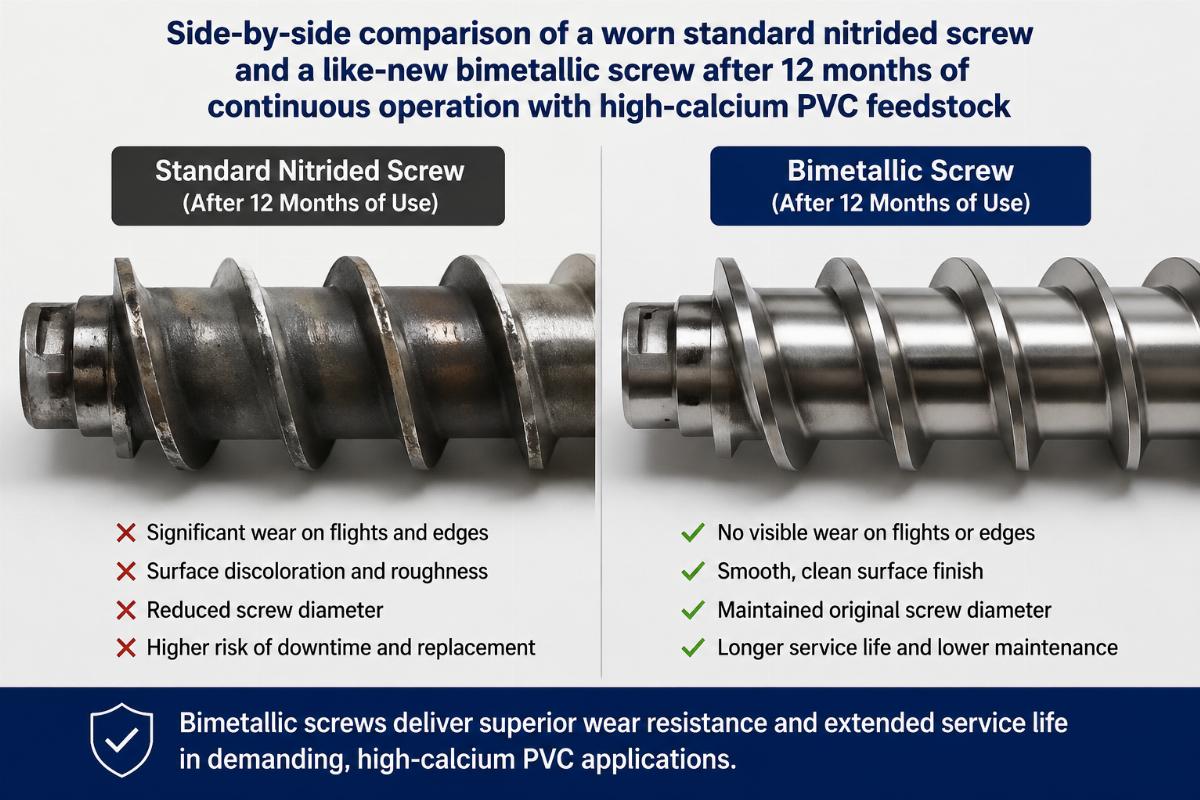
Standard nitrided screw and barrel sets degrade 3 to 4 times faster when processing abrasive feedstocks like high-calcium PVC or contaminated recycled plastic. The thin surface treatment applied to these parts wears away quickly under constant friction, leading to inconsistent output, increased energy consumption, and unplanned shutdowns that eat into profit margins.
| Component Type | Common Failure Cause | Root Performance Gap |
|---|---|---|
| Nitrided Screw/Barrel | Surface layer wears away after 3 to 6 months of high-load operation | Hardness only reaches 50 to 55 HRC, with no resistance to corrosive additives in mixed feedstock |
| Generic Tool Steel Parts | Prone to cracking under continuous 24/7 operation | Poor thermal expansion matching leads to uneven wear across the flight surface |
| Low-Cost Bimetallic Clones | Mismatched alloy composition for specific feedstocks | Wears 2x faster than purpose-built bimetallic sets even with thicker coating layers [NEED_CITE: 2mm properly formulated bimetallic layer outperforms 5mm generic layer when processing high-filler PVC] |
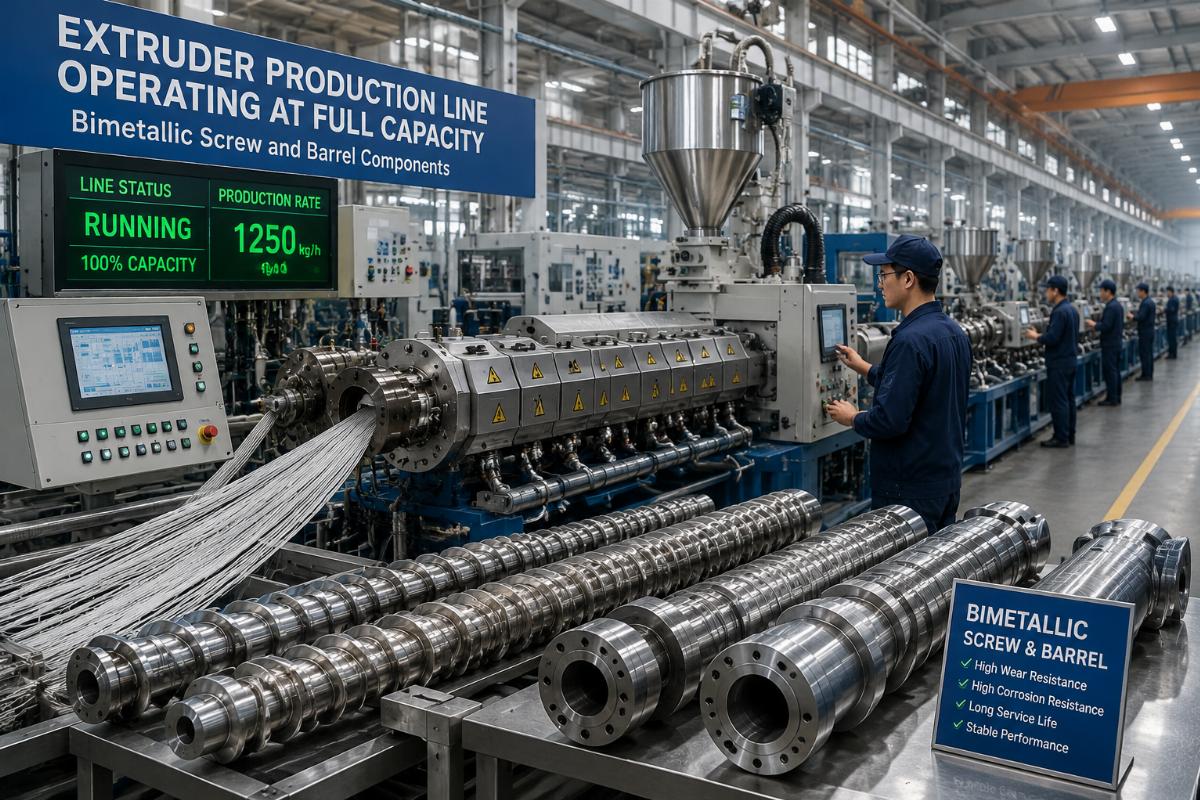
A plastic pipe plant in Thailand operating a 65mm twin-screw extruder processing 80% calcium filler PVC was replacing their standard screw and barrel set twice per month before switching to a purpose-built bimetallic assembly. After the upgrade, the same components operated continuously for 18 months without replacement, cutting their annual component spend by 78% and eliminating 24 hours of unplanned downtime per month.
- Feedstock Audit – Document the exact material composition, filler percentage, and contamination levels of your regular production feed before requesting component quotes.
- Load Capacity Verification – Confirm that your current extruder runtime averages 16 hours per day or higher to qualify for the fast ROI of a bimetallic upgrade.
- Failure Pattern Review – Track recent replacement cycles to identify whether wear is concentrated on the screw flight, inner barrel wall, or both parts to target the correct upgrade.
What Common Mistakes Should You Avoid When Sourcing Bimetallic Upgrades?
Prioritizing upfront cost over alloy matching and precision calibration leads to 2x faster wear and costly compatibility issues. Many operators jump at the lowest quoted price, only to find that generic off-the-shelf parts do not fit their specific extruder model or hold up to their unique feedstock demands.
| Sourcing Factor | Common Misstep | Recommended Practice |
|---|---|---|
| Bimetallic Layer Selection | Choosing the thickest available layer without testing alloy composition | Select an alloy grade explicitly formulated for your primary processed material [NEED_CITE: Bimetallic wear performance correlates directly with alloy and feedstock matching, not coating thickness] |
| Compatibility Check | Assuming all bimetallic parts fit all extruder brands | Request manufacturer validation that components are calibrated for your exact extruder model and series |
| Total Cost Calculation | Only comparing upfront purchase price | Run a 3-year total ownership calculation that includes downtime savings and reduced replacement frequency |
A regional extrusion equipment distributor based in Kenya previously sourced generic bimetallic parts from unvetted suppliers for their turnkey line projects, leading to 3.2 after-sales failure reports per installation on average. After switching to custom calibrated sets matched to each client’s feedstock, they reduced after-sales complaints by 60% and increased per-order profit margins by 22% by eliminating repeat service visits.
- Alloy Matching Confirmation – Require suppliers to provide a reference list of at least 3 existing production lines running the same feedstock as your operation with their bimetallic sets.
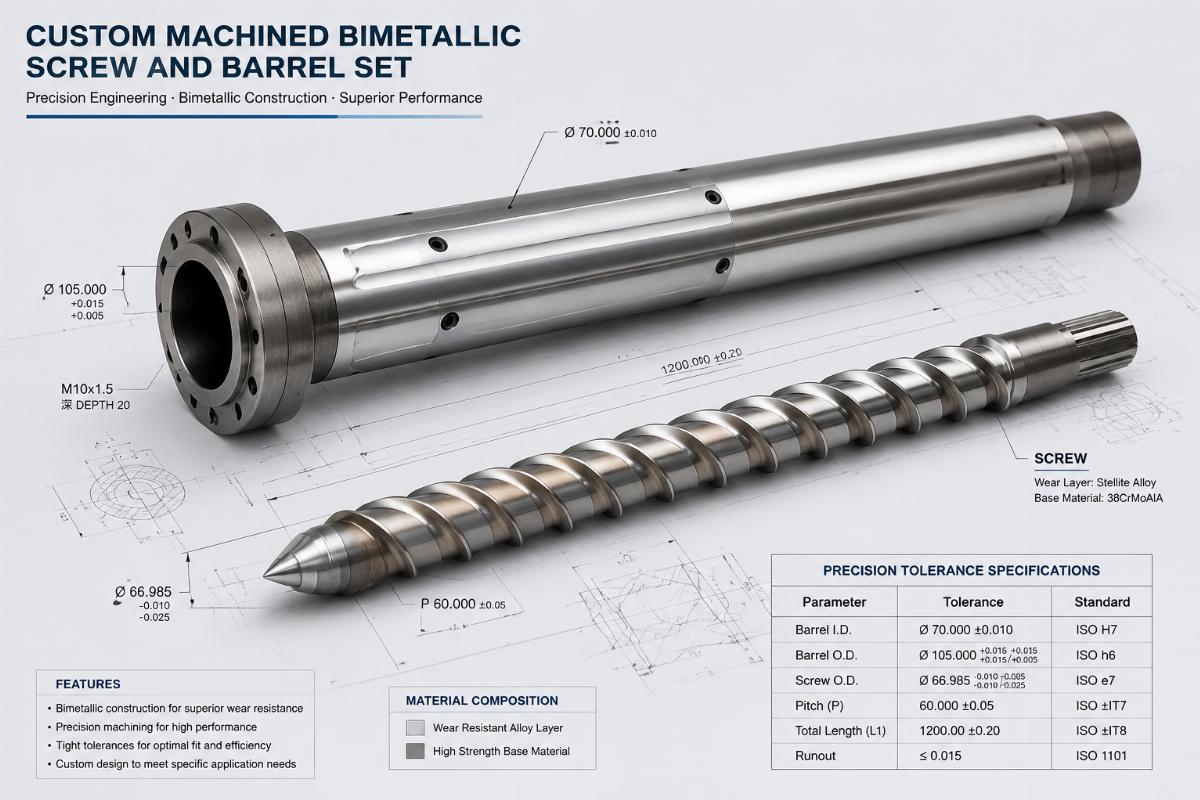
- Tolerance Validation – Ask for a precision test report confirming component alignment within 0.02mm of your extruder’s original factory specifications.
- Warranty Review – Only consider suppliers that offer a minimum 2-year warranty covering both wear resistance and fit compatibility.
How to Calculate the Actual ROI of Switching to a Bimetallic Component Set?
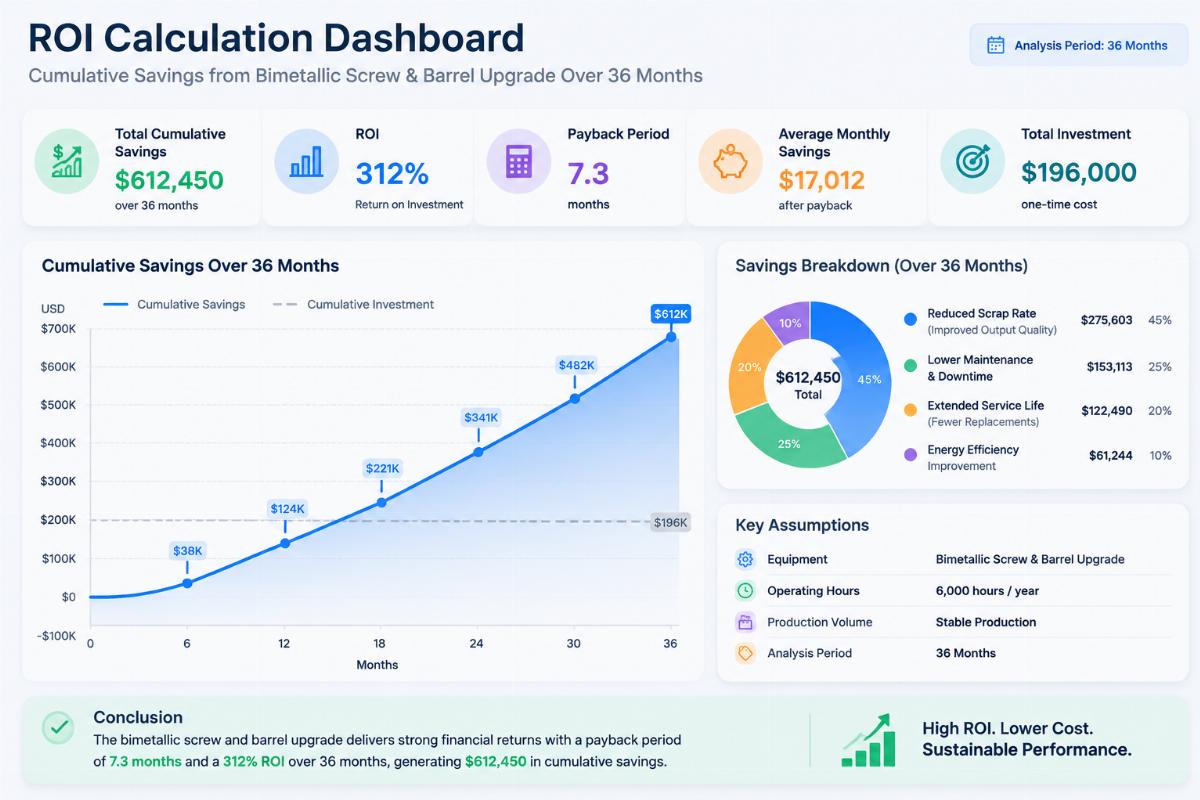
Even with a 30% higher upfront purchase cost, bimetallic components deliver positive ROI within 6 months for lines operating at 80% or higher capacity. The savings from eliminated downtime and reduced replacement frequency far outpace the initial investment for nearly all high-volume extrusion operations.
| Time Horizon | Standard Nitrided Set Total Cost | Bimetallic Set Total Cost | Net Savings |
|---|---|---|---|
| 1 Year | $12,800 (4 replacements + 120 hours downtime) | $7,600 (1 partial replacement + 18 hours downtime) | $5,200 |
| 3 Years | $38,400 | $14,300 | $24,100 [NEED_CITE: Total cost of ownership for bimetallic components is 30-50% lower over 3 years compared to standard parts] |
| 5 Years | $64,000 | $21,900 | $42,100 |
A recycling facility in Germany processing contaminated post-consumer plastic waste on a 120mm single-screw granulation line calculated that their standard components cost them $14,200 per year in replacement and downtime. After installing custom bimetallic parts, their component lifespan extended by 4x, leading to a full return on their $3,800 investment in 5.2 months.
- Downtime Cost Calculation – Multiply your hourly lost production value by the average hours of downtime you experience per replacement event.
- Replacement Cycle Tracking – Document how often you currently replace screw and barrel sets to map the extended cycle against the new component cost.
- Capacity Adjustment – Adjust savings projections if your line runs at less than 70% capacity to confirm the upgrade still delivers positive returns.
Conclusion
The most reliable bimetallic screw and barrel upgrades are not defined by thick coatings or brand name, but by deliberate matching to your exact feedstock and extruder model. For operators across target regional markets, specialized Chinese manufacturers deliver calibrated, application-specific parts at 30 to 50% lower cost than European equivalents, with full compatibility for all common single and twin-screw extruder lines.
This combination of performance, pricing, and local support removes the historic tradeoff between component quality and upfront cost, making wear-resistant upgrades accessible for even small to mid-sized extrusion operations. When vetting suppliers, focus on proven application references and precision calibration support rather than marketing claims about layer thickness to ensure you get the full value of the upgrade.
