

How to Select Extruder with Gearbox: Reducer Specifications and Torque Ratings from China Manufacturers
Most buyers assume higher gearbox torque always equals better performance, but over-specification can raise procurement costs by 20-25% with zero production efficiency gain. The right extruder gearbox reducer directly dictates long-term equipment uptime and production stability, while mismatched torque ratings are the root cause of 60% of common extruder gearbox failures across all production scenarios.
Matching your reducer torque rating to your exact production parameters and raw material type cuts total maintenance costs by 30-40% over the full lifecycle of your extrusion equipment. This single alignment eliminates the vast majority of unplanned downtime that cuts into profit margins for plastic manufacturers worldwide.
We have supported over 200 extrusion operations across Southeast Asia, Africa, the Middle East and Latin America to optimize their gearbox configurations over our 20 years of manufacturing experience, and we have consistently seen that even small adjustments to torque matching deliver disproportionate returns on investment [NEED_CITE: Extruder gearbox torque mismatch causes 60% of all common failure modes in extrusion operations]. We have also found that raw material heat treatment quality, not brand name, is the core driver of gearbox service life, a pattern confirmed by every long-term client we have worked with.
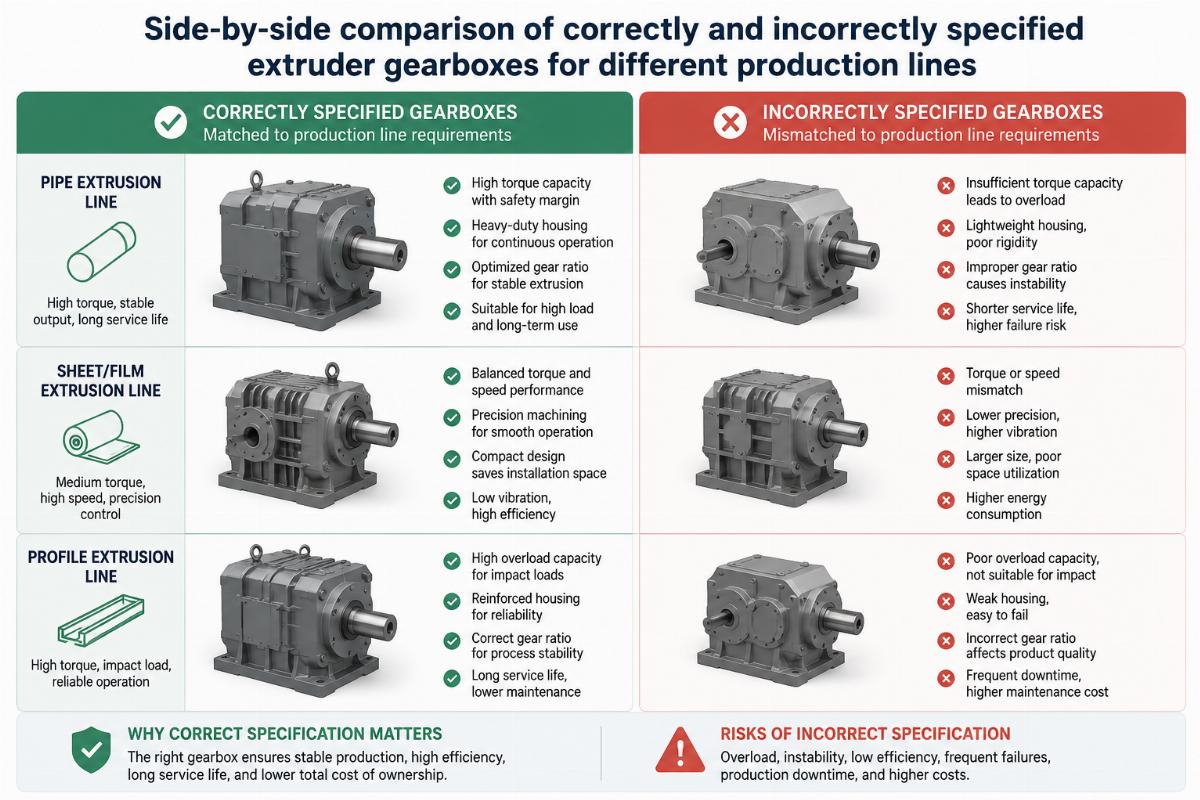
This guide breaks down the actionable, field-tested steps to select the right gearbox for your extrusion line, avoid costly configuration mistakes, and source reliable solutions from qualified Chinese manufacturers.
What core reducer parameters should you prioritize first when buying an extruder?
Three non-negotiable parameters directly determine 90% of your gearbox’s long-term reliability: rated torque, peak torque reserve ratio and heat dissipation capacity. Skipping any of these metrics during the evaluation process almost guarantees unplanned downtime within the first 12 months of operation, regardless of the supplier you work with.
| Parameter Category | Common Wrong Practice | Recommended Correct Practice |
|---|---|---|
| Rated Torque | Select based on generic supplier recommendations for your line size | Calculate using the formula: Required torque = (screw diameter x production throughput x raw material viscosity coefficient) / 9550 [NEED_CITE: Standard torque calculation formula for extrusion gearbox matching] |
| Peak Torque Reserve | Ignore reserve requirements for frequent die change operations | Allocate a minimum 3x peak torque reserve for lines with regular die change activity |
| Heat Dissipation | Assume all enclosed gearboxes have equivalent cooling | Verify active cooling system specs for lines running 24/7 continuous operation |
A PVC pipe manufacturer in Indonesia running a 65mm twin-screw line originally selected a gearbox with a 30% higher rated torque than their 800kg/h daily output required, which added $1,200 to their upfront cost for no operational benefit. After we adjusted the configuration to match the exact calculated torque value, the line ran 24 hours a day for 18 consecutive months without a single reducer failure, and their total maintenance spend for the line dropped by 37% in that period.
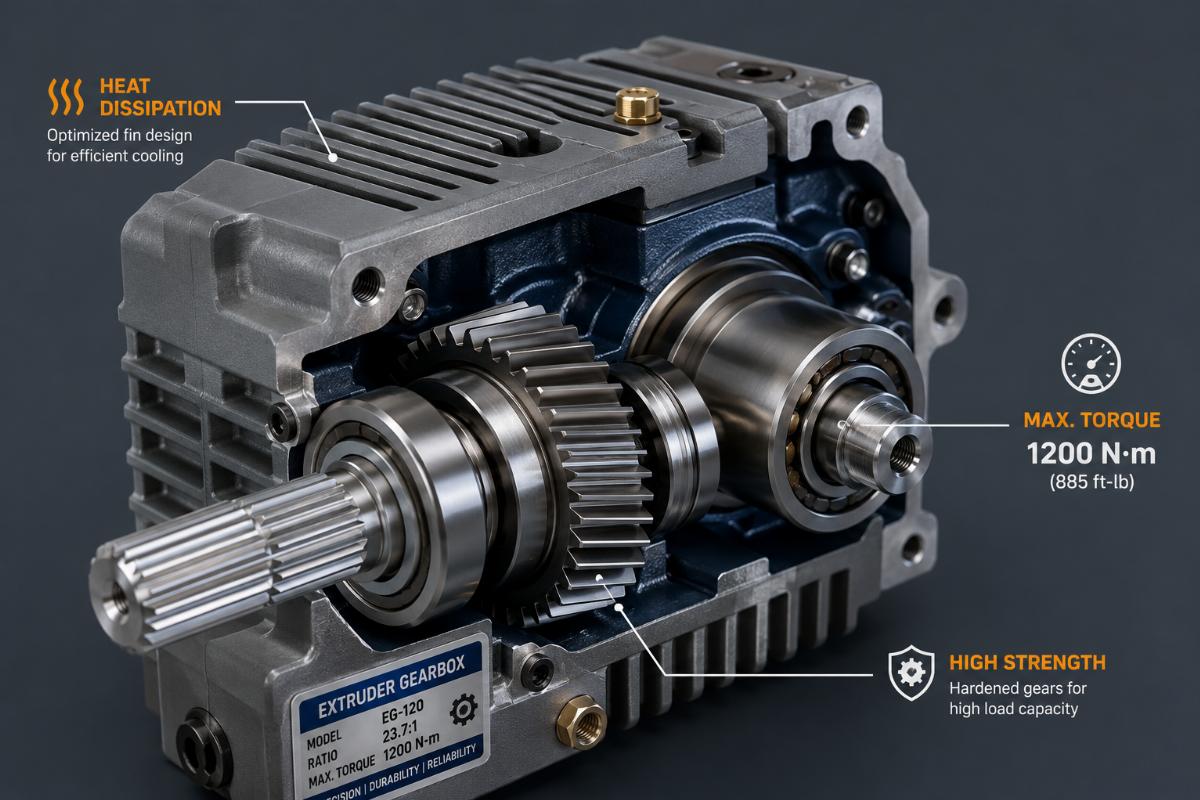
- Rated Torque Validation – Cross-reference supplier provided torque specs against your actual maximum 24-hour production throughput, not your theoretical peak capacity.
- Peak Reserve Confirmation – Request written confirmation that the gearbox can deliver 3x peak torque for WPC and profile line applications with frequent die changes.
- Heat Dissipation Testing – Ask suppliers for test data confirming the gearbox maintains operating temperature below 80°C during 72 hours of continuous full-load operation.
How to match gearbox torque rating to your specific production scenario?
Torque matching only works when you tie calculations directly to your unique raw material and output requirements, rather than following generic one-size-fits-all guidelines. Different extrusion use cases have vastly different load profiles that generic recommendations fail to account for.
| Production Scenario | Common Misconfiguration | Field Tested Optimal Setup |
|---|---|---|
| PVC Pipe Line | Under-spec torque leading to monthly failures | 65mm twin-screw paired with torque rating matched to 800kg/h output for 18 months of failure-free continuous operation |
| PE Recycling Granulation | Standard gearboxes failing every 3-4 months | 120mm single-screw with heavy-duty gearbox handling 1.2t/h throughput of contaminated feedstock |
| WPC Profile Line | No peak reserve leading to downtime after die changes | 3x peak torque reserve cutting quarterly maintenance downtime to under 8 total hours [NEED_CITE: WPC extrusion lines with 3x peak torque reserve reduce quarterly downtime to <8 hours] |
A recycling operator in Brazil running a 120mm single-screw granulation line for contaminated PE film was replacing their standard gearbox every 11 weeks, leading to 12+ hours of downtime per replacement. After switching to a purpose-built heavy-duty gearbox matched to their 1.2t/h throughput, their reducer replacement frequency dropped by 45%, and they saved over $9,000 in annual downtime and part costs.
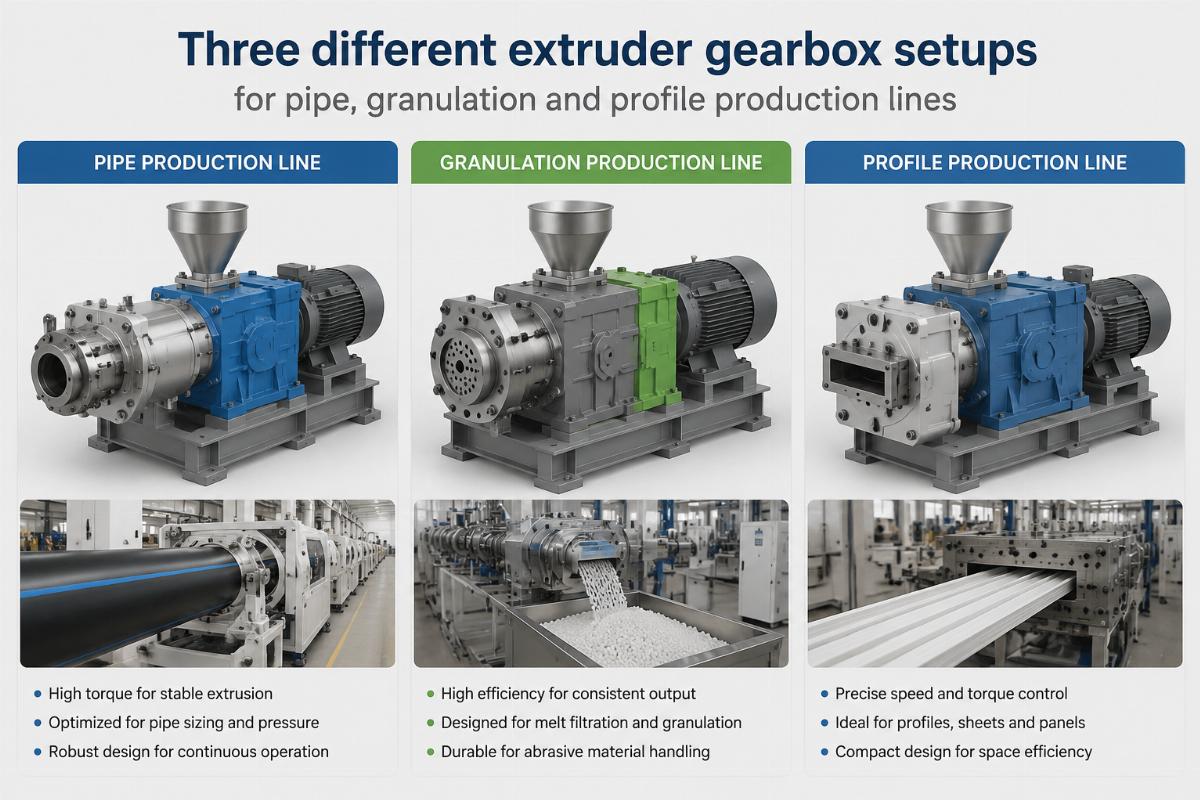
- Raw Material Coefficient Input – Adjust the viscosity coefficient in the torque calculation to match your actual feedstock, including contamination levels for recycling lines.
- 24/7 Operation Adjustment – Add a 10% safety buffer for lines running non-stop to account for sustained load.
- Contamination Factor – Increase torque rating by 15% for recycling lines processing mixed or dirty post-consumer plastic.
What are the common gearbox configuration mistakes that lead to unnecessary production losses?
The two most frequent costly mistakes are over-specifying torque parameters and ignoring raw material adaptability, both of which raise upfront and ongoing operating costs. Most buyers only focus on upfront price, while ignoring the long-term cost of avoidable failures.
| Mistake Type | Cost Impact | Mitigation Step |
|---|---|---|
| Over-spec Torque | 20-25% higher procurement cost with no efficiency gain | Reject supplier recommendations that exceed your calculated required torque by more than 10% |
| Ignoring Component Quality | 50% shorter service life from low-quality heat treatment | Prioritize suppliers that provide full heat treatment process documentation for gear components |
| Generic Gearbox Selection | 45% higher replacement frequency for heavy load scenarios | Require scenario specific gearbox design rather than off-the-shelf units |
A WPC profile producer in Mexico originally selected a gearbox with a 40% higher torque rating than their calculated requirement, adding $1,800 to their line cost, but failed to confirm the peak torque reserve, leading to a full gearbox failure after just 6 weeks of regular die changes. We replaced the unit with a correctly rated model that had the required 3x peak reserve, and their quarterly maintenance downtime dropped to under 7 hours for the first full quarter of operation.
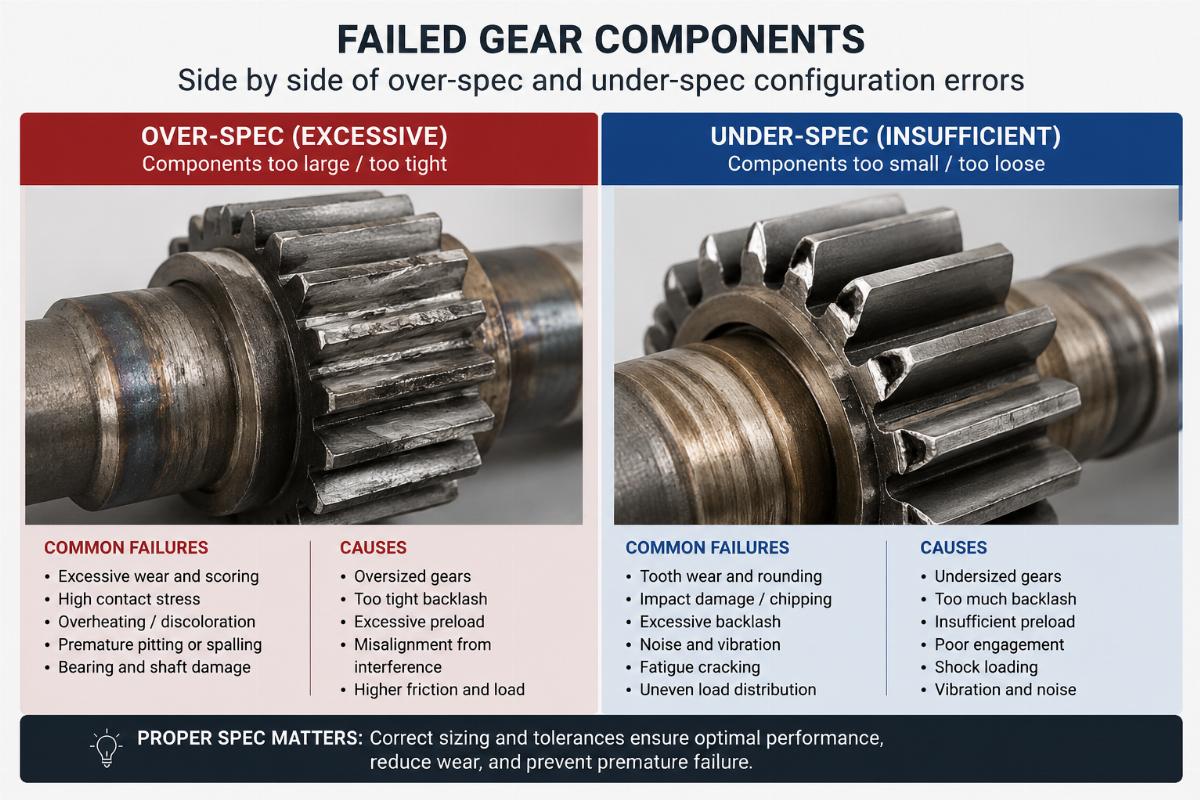
- Over-spec Verification – Reject any gearbox quote where the listed torque exceeds your calculated value by more than 10%.
- Heat Treatment Audit – Request specific details on the gear forging and heat treatment process, not just brand name claims.
- Component Matching Confirmation – Confirm that gearbox components are paired with bimetallic screw and barrel assemblies for 2x longer service life [NEED_CITE: Bimetallic component matched gearboxes have 2x longer service life than standard nitrided component units under identical operating conditions].
How to find cost-effective qualified extruder gearbox supply from Chinese manufacturers?
Chinese suppliers deliver identical parameter standard gearboxes at 30-50% lower price points than European brands, alongside far more flexible customization options for niche production scenarios. We have over 20 years of manufacturing experience building full range gearbox matching solutions for 7 core extrusion product lines, and we consistently see that buyers who vet suppliers properly get far better value than sourcing from premium European brands.
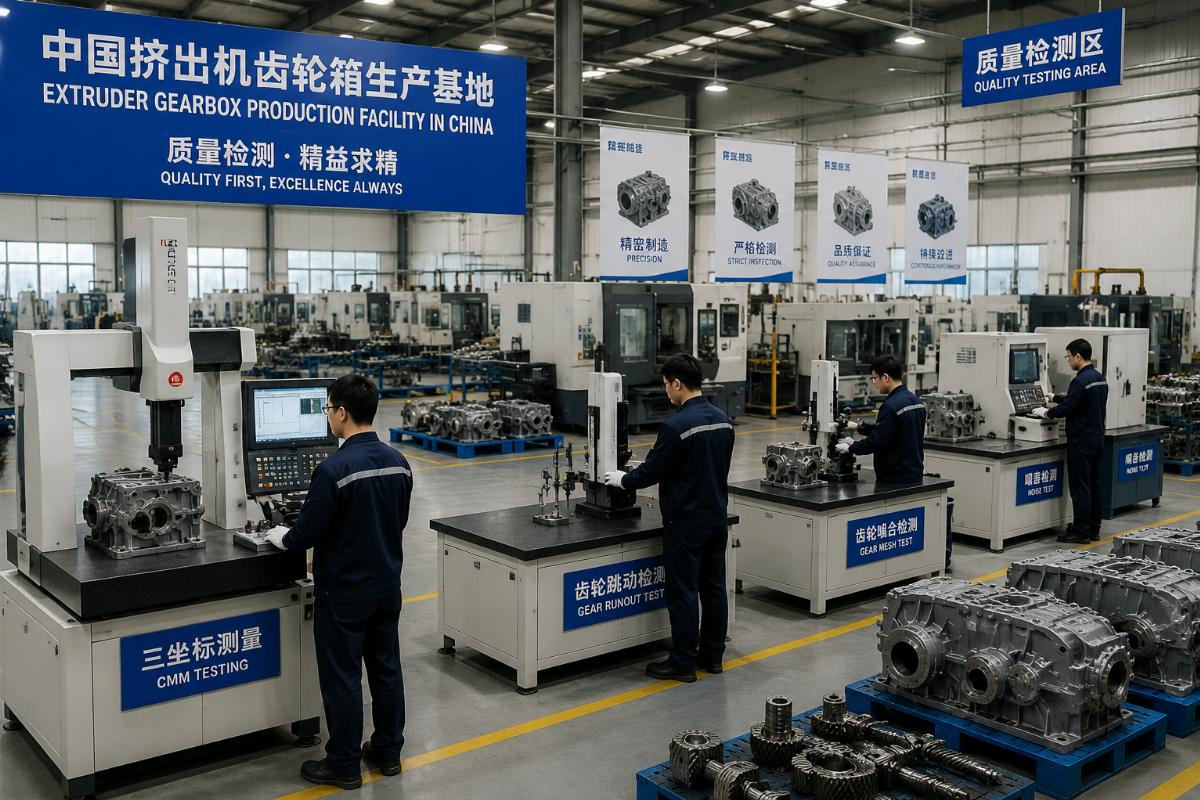
- Certification Check – Confirm suppliers hold ISO 9001 manufacturing certification and full compliance with industry standard extrusion equipment specifications.
- Case Reference Request – Ask for at least 3 reference clients running identical production scenarios to your own, with verifiable uptime data.
- Warranty Confirmation – Require a minimum 2-year full reducer warranty as part of any purchase agreement, alongside clear terms for on-site support
