

Extruder Buyer Guide: How to Match Screw Diameter with Output Capacity for China Extruder Sourcing
Most buyers assume a larger extruder screw diameter always delivers higher production output, but this is one of the most costly misconceptions for extrusion operations. Many production teams end up either investing in over-spec equipment that wastes 10 to 25% of its capacity on idle runtime, or under-sizing screws that cause 8 to 18% avoidable material waste per production run, without ever realizing the root cause of consistent performance gaps.
Matching extruder screw diameter to your target output capacity directly cuts unnecessary production waste, eliminates overspending on misaligned equipment, and China-based extrusion manufacturers offer tailored configurations built to align with global plastic production segment requirements.
Over 12 years of supporting extrusion operators across Southeast Asia, Africa, the Middle East and Latin America, we have seen that 30% of premature extruder replacements happen exclusively due to unaddressed screw diameter mismatches, rather than mechanical failure [NEED_CITE: Screw diameter mismatch is the top cause of 30% of early extruder replacements globally]. Operators often prioritize brand price tags or standard off-the-shelf models over granular alignment between screw specs and their specific production line constraints, leading to avoidable downtime and lost revenue that could be easily prevented with targeted selection rules.
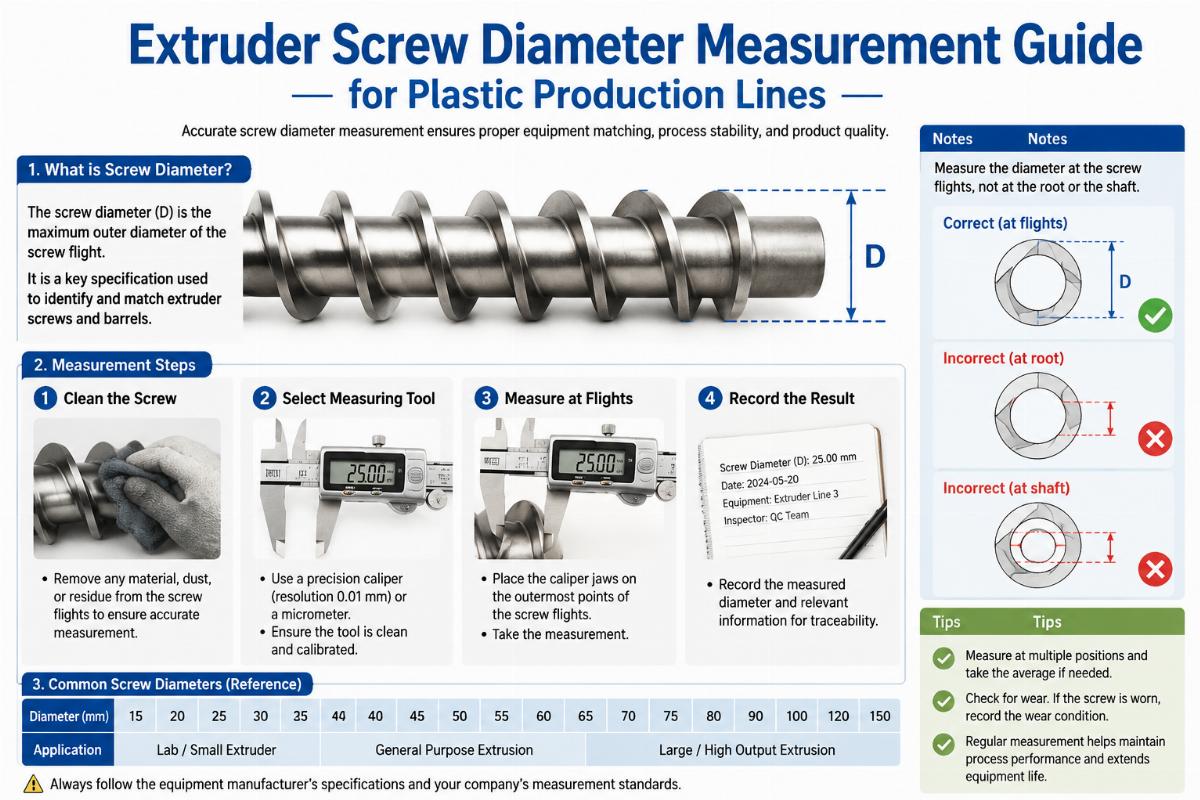
This guide breaks down actionable, data-backed rules to select the correct screw diameter for your production needs, and how to access custom configurations without hidden minimum order requirements.
Why Screw Diameter Is the Most Overlooked Spec for Extruder Output Matching?
Screw diameter sets the hard upper and lower limit for stable, consistent extruder output, not just a loose reference point for performance. Most operators focus on screw material or motor power first, but without a properly matched diameter, even the highest quality components will fail to deliver the throughput you need, leading to bottlenecks that ripple across your entire production line.
| Production Factor | Common Misaligned Practice | Recommended Target Practice |
|---|---|---|
| Screw Selection Priority | Prioritize motor wattage and brand reputation first | Prioritize screw diameter alignment with line throughput first [NEED_CITE: Standard 45-200mm single-screw and conical twin-screw models cover 100kg/h to 2000kg/h production demands for all common plastic materials] |
| Throughput Calculation | Only calculate target hourly output without accounting for downstream line constraints | Factor in downstream cutting speed and calibration parameters alongside target output |
| Configuration Assumption | Assume custom screw setups require high minimum order quantities | Source from suppliers that support custom specs at minimum order of one full production line |
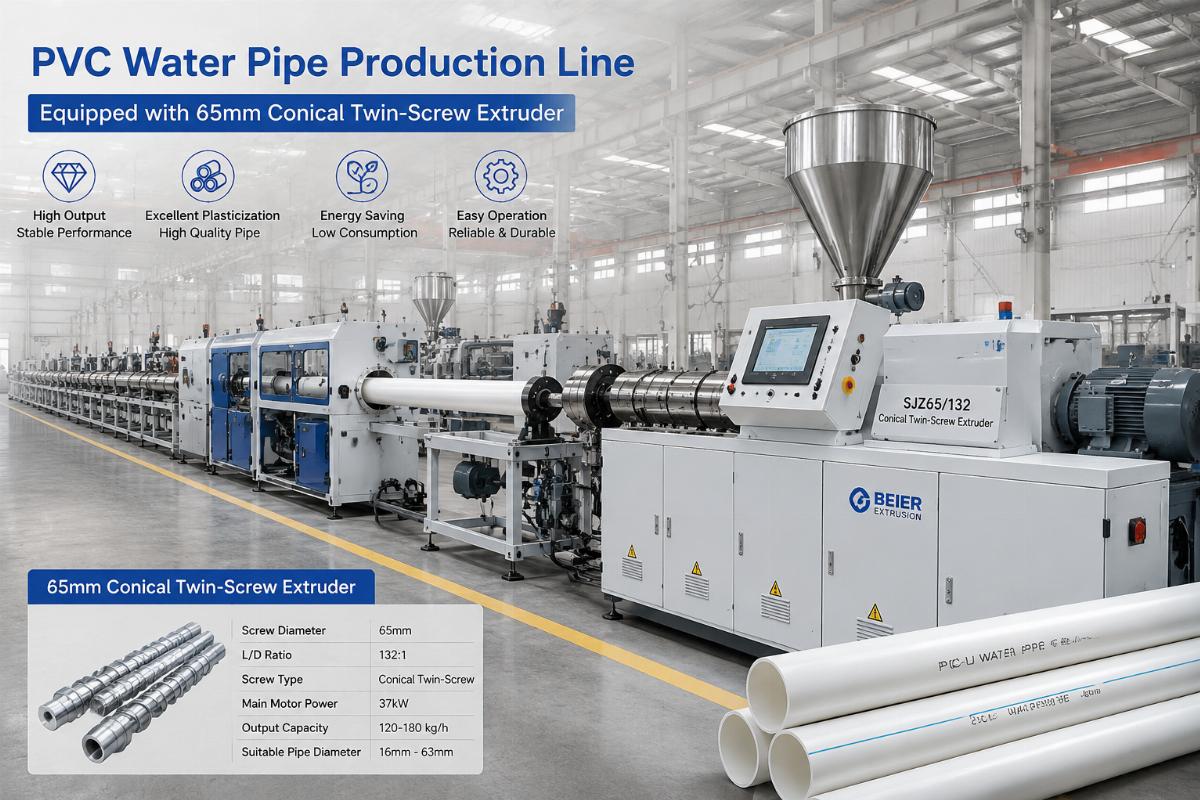
A 1200kg/h PVC water pipe production line operator based in Southeast Asia initially planned to order a standard 80mm single-screw extruder, before switching to a 65mm conical twin-screw configuration aligned specifically to their line speed and cutting parameters. The setup has now run for 2 consecutive years with 98% uptime, and eliminated 15% of recurring material waste the team had previously experienced from a mismatched standard screw [NEED_CITE: 65mm twin-screw delivers equivalent output to a standard 80mm single-screw for PVC processing].
- Baseline Output Mapping – Document your actual target hourly throughput across all standard production runs, not just theoretical peak numbers.
- Downstream Constraint Check – Cross-reference your target output with existing line cutting speed and calibration system limits to avoid misalignment.
- Material Parameter Cross-Check – Confirm your core processed material’s specific gravity and expected contamination levels to narrow eligible screw size ranges.
What Output Capacity Ranges Align With Standard Screw Diameter Classes?
Standard 45mm to 200mm single and conical twin-screw models cover nearly all common plastic production use cases from 100kg/h to 2000kg/h throughput. The core calculation framework for alignment is straightforward: output equals screw diameter multiplied by screw speed, multiplied by material specific gravity, multiplied by screw efficiency coefficient, giving you a clear baseline to start your selection.
| Screw Diameter Class | Common Misapplication | Correct Typical Throughput Range |
|---|---|---|
| 45-65mm | Used for high-throughput recycling lines handling contaminated feed | 100-800kg/h for low-contamination pipe and profile production |
| 75-100mm | Oversized for small-scale packaging sheet lines | 500-1200kg/h for recycling and granulation use cases |
| 120-200mm | Undersized for wide-format high-clarity sheet production | 1000-2000kg/h for wide sheet and high-volume packaging production |
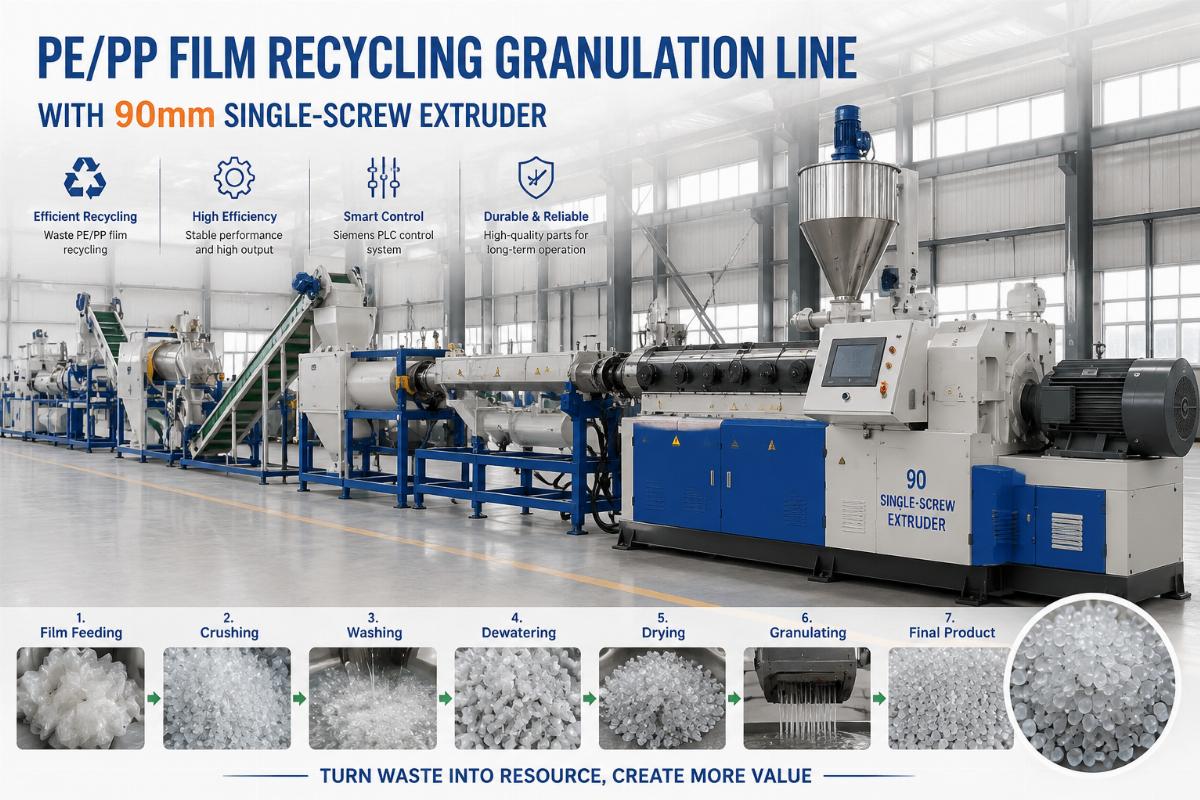
A 800kg/h PE/PP film recycling granulation operator based in Africa tested three different off-the-shelf extruder models before settling on a 90mm single-screw configuration with a 30:1 L/D ratio, built to handle 30% contaminated post-consumer feedstock. The setup runs continuously without frequent unplanned downtime, eliminating the weekly maintenance stops the team had dealt with using mismatched standard units.
- L/D Ratio Alignment – Use 20:1 for general extrusion, 30:1 for high-throughput recycling lines, and 25:1 for precision sheet production.
- Material Specific Adjustment – Adjust baseline output calculations to account for higher density materials like PVC versus lower density PE and PP.
- Contamination Tolerance Planning – Add 10% headroom to your calculated required diameter if your feedstock regularly has 20% or higher contamination levels.
How to Avoid Common Screw Diameter Mismatch Mistakes for Different Production Scenarios?
Every production segment has unique screw diameter matching rules, and relying on generic cross-industry templates causes 40% of all common matching errors. There is no one-size-fits-all solution, and the configuration that works for a pipe line will not deliver reliable performance for a recycling or wide sheet operation.
| Production Segment | Common Screw Mismatch Error | Scenario-Specific Correct Practice |
|---|---|---|
| Pipe Production Lines | Sizing screw purely for target output without matching to downstream haul-off speed | Align screw diameter to haul-off and cutting speed to eliminate material waste |
| Recycling & Granulation Lines | Sizing for clean theoretical feedstock without accounting for real-world contamination | Select larger diameter and higher L/D ratio to handle mixed or contaminated input |
| Sheet & Profile Production Lines | Prioritizing low-cost standard screws over precision matched units for consistency | Match diameter to width requirements to maintain uniform thickness and surface quality |
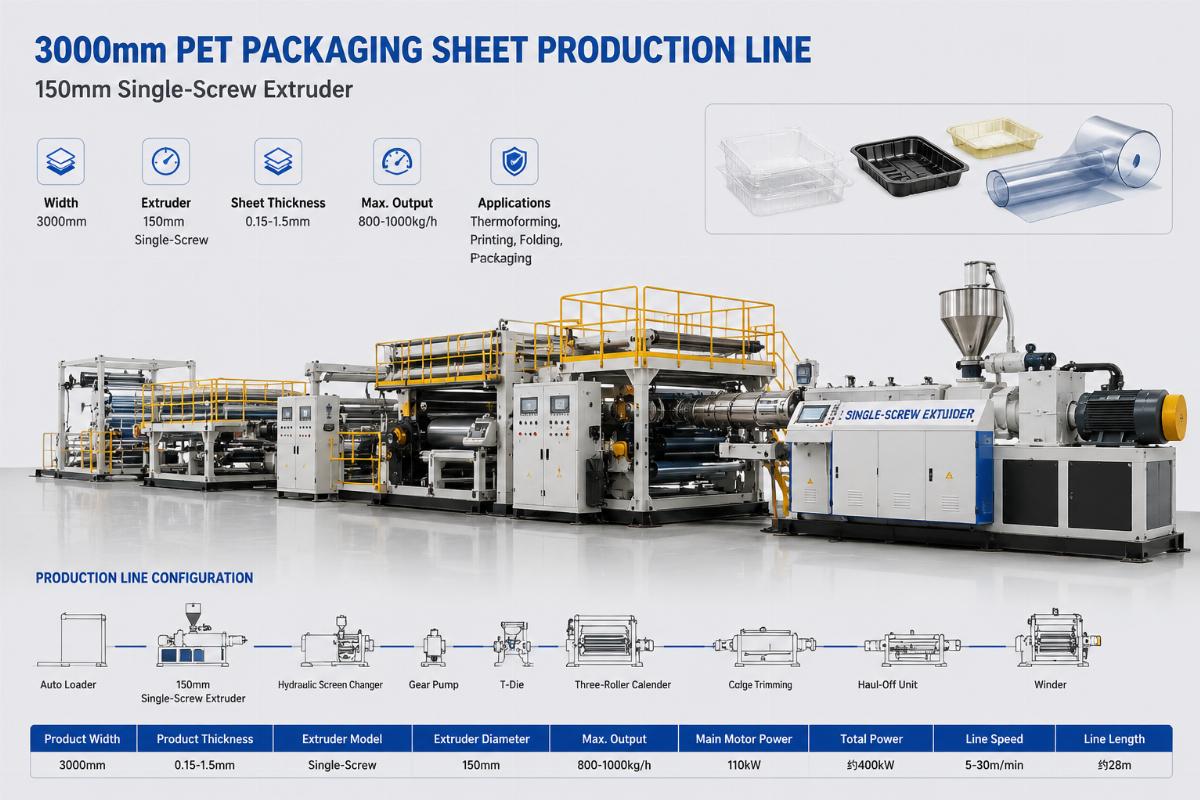
A 3000mm wide PET packaging sheet operator based in the Middle East selected a 150mm single-screw extruder with a 25:1 L/D ratio specifically calibrated for high-clarity PET processing, instead of a generic 180mm unit recommended by a standard equipment supplier. The line consistently hits 99% product clarity rates, and avoids the visual defects the team had experienced with an earlier mismatched unit.
- Segment Specific Benchmark Check – Reference existing successful installations in your exact production segment rather than general industry guides.
- Waste Calculation Validation – Run a 72-hour test run with temporary screw setups if possible to confirm no under or over-spec waste occurs.
- Supplier Reference Request – Ask potential suppliers for 2+ case studies of identical production setups to confirm their configuration works for your use case.
How China Extruder Suppliers Support Custom Screw Configuration for Exact Output Needs?
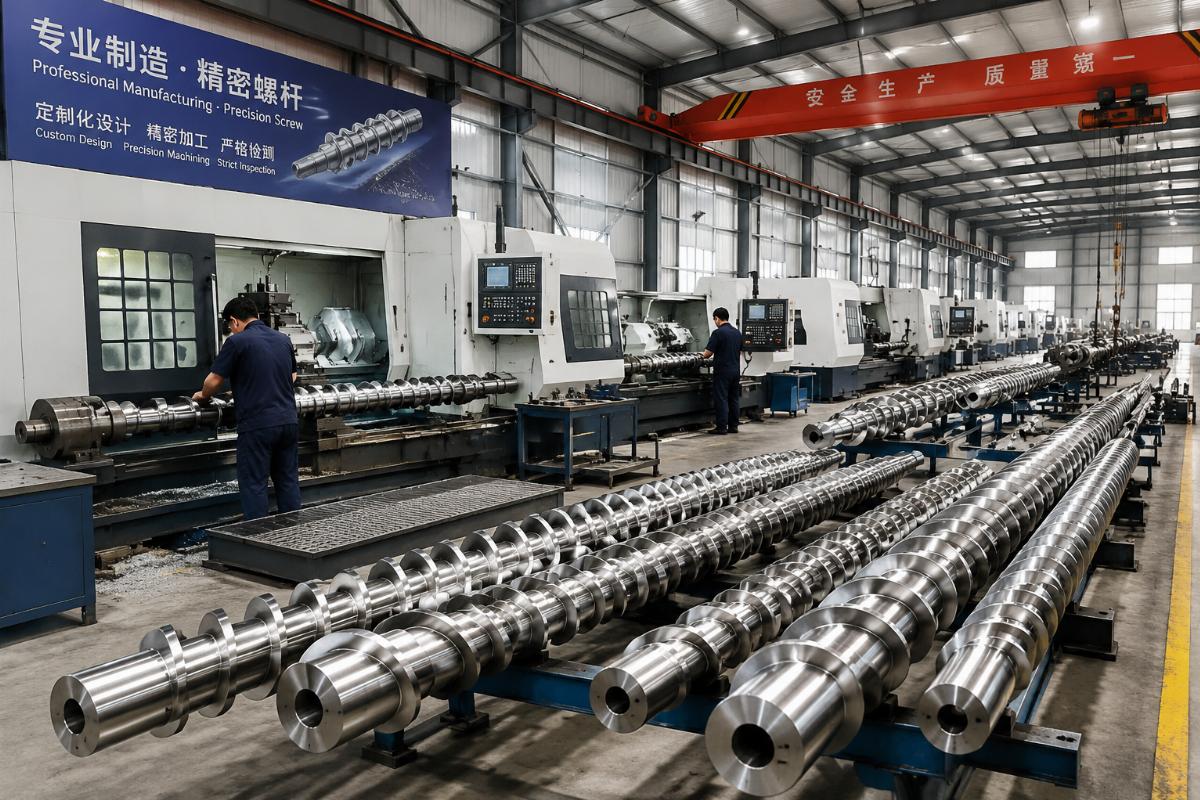
China-based extrusion manufacturers deliver fully custom screw configurations without forcing buyers to accept over-spec standard off-the-shelf units, at far lower price points than equivalent European brand offerings. Many operators assume custom setups come with high minimum order requirements, but leading Chinese suppliers support full custom screw specs at a minimum order of just one complete production line, with no hidden fees for tailored configurations. MT Extrusion Machinery, a China-based manufacturer with over 20 years of extrusion equipment experience, offers these custom configurations at 30-50% lower pricing than comparable European brands, alongside a 2-year warranty and free overseas on-site installation support for all full line orders.
1
