

How to Choose the Right Extruder with Screen Changer: Manual vs Hydraulic vs Continuous for China Sourcing
Most buyers assume continuous screen changers outperform all other types for every production scenario, but their cost advantage only triggers when a single line’s daily output exceeds 1500kg/h. Picking the wrong screen changer type for your plastic extrusion line will directly drag down production uptime, push up material waste rates, and inflate long-term operational costs, while matching the type to your exact production scenario and output requirements can cut 30-50% of unnecessary expenditure compared to defaulting to imported high-end models.
The core selection rule is to align your screen changer choice with your line output, material impurity level, and allowable downtime threshold, rather than blindly pursuing overspecified configurations that deliver no measurable return.
As a team with over 20 years of hands-on experience in plastic extrusion equipment manufacturing, we have supported hundreds of global producers across Southeast Asia, Africa, and the Middle East to optimize their screen changer setups, and we consistently see that even small misalignments between equipment and production needs lead to tens of thousands of dollars in avoidable losses annually [NEED_CITE: Extrusion lines with mismatched screen changers incur 30-40% higher annual operational costs than properly configured setups].
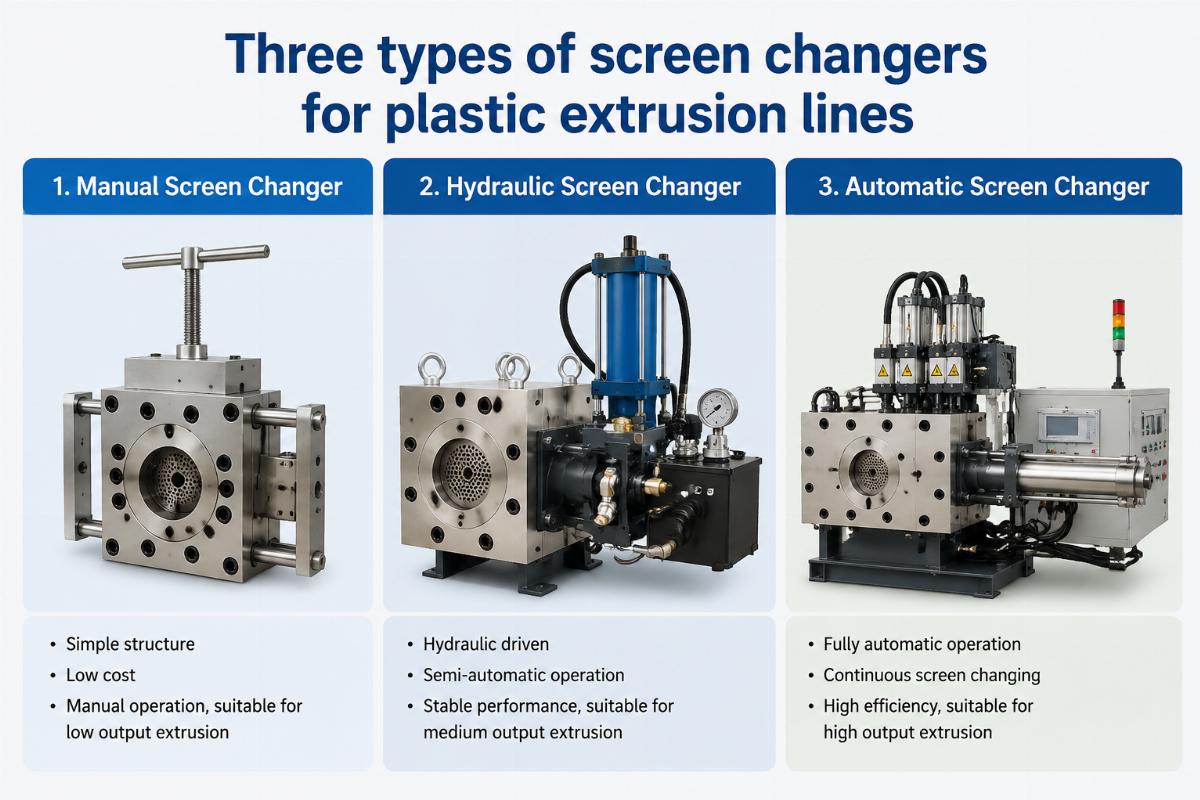
With that context, let’s break down the actionable framework to select the right setup for your operation.
What core production factors should you prioritize when comparing three screen changer types?
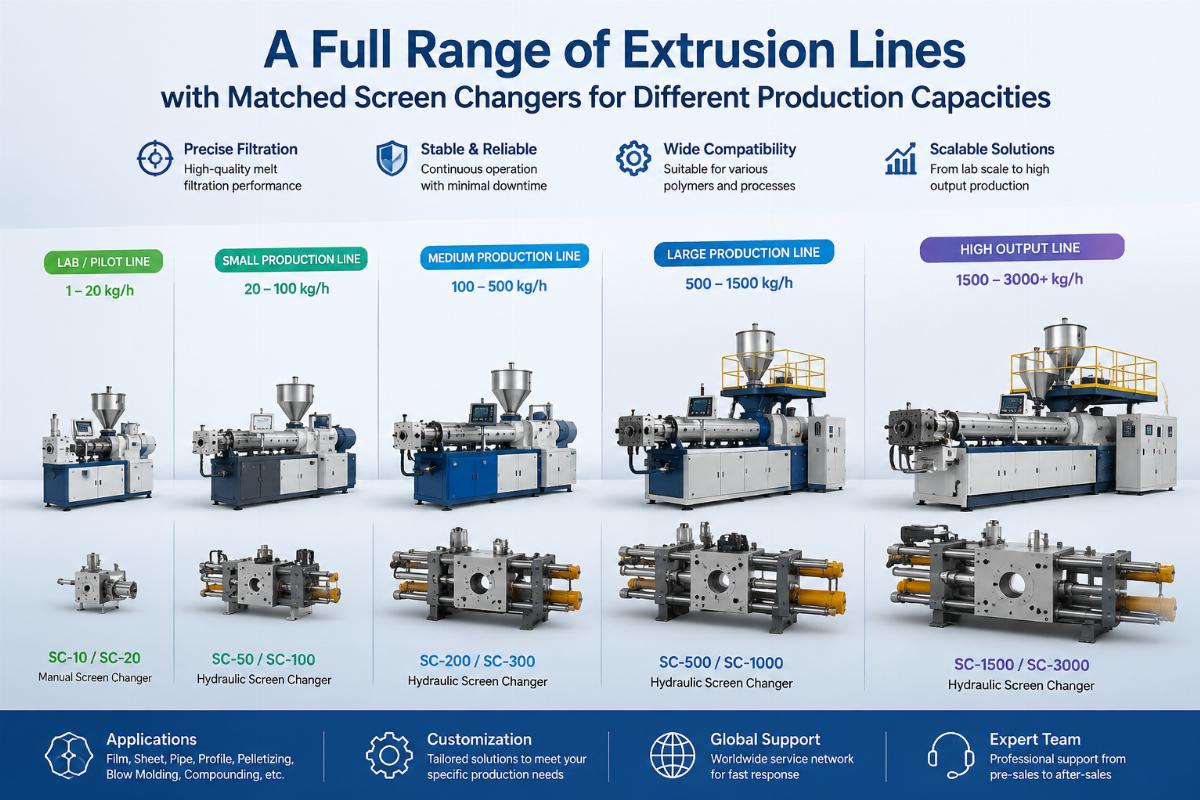
Each screen changer type delivers distinct performance tradeoffs across three core metrics that directly impact your bottom line. The three variants have clear, quantifiable differences in swaps time, suitable output range, and material loss rate: manual units take 1-5 minutes per swap, work best for lines under 500kg/h, and carry a 2-5% annual material waste rate; hydraulic units cut swap time to 10-30 seconds, fit 500-1500kg/h lines, and have a 0.5-2% waste rate; continuous units operate with less than 2 seconds of swap time, are designed for lines over 1500kg/h, and keep waste below 0.3% [NEED_CITE: Standard performance benchmarks for manual, hydraulic, and continuous screen changers from global plastic extrusion industry associations].
| Evaluation Factor | Common Misaligned Practice | Recommended Matching Standard |
|---|---|---|
| Swapping Time Requirement | Prioritizing the fastest possible swap speed regardless of line downtime tolerance | Match swap duration to your production’s acceptable interruption window |
| Line Output Level | Picking the highest-spec screen changer for all lines regardless of throughput | Align type strictly to your line’s rated hourly production capacity |
| Material Impurity Content | Specifying fine filtration for all raw material types even when inputs are clean and consistent | Adjust filtration density and screen changer type to your input material’s impurity profile |
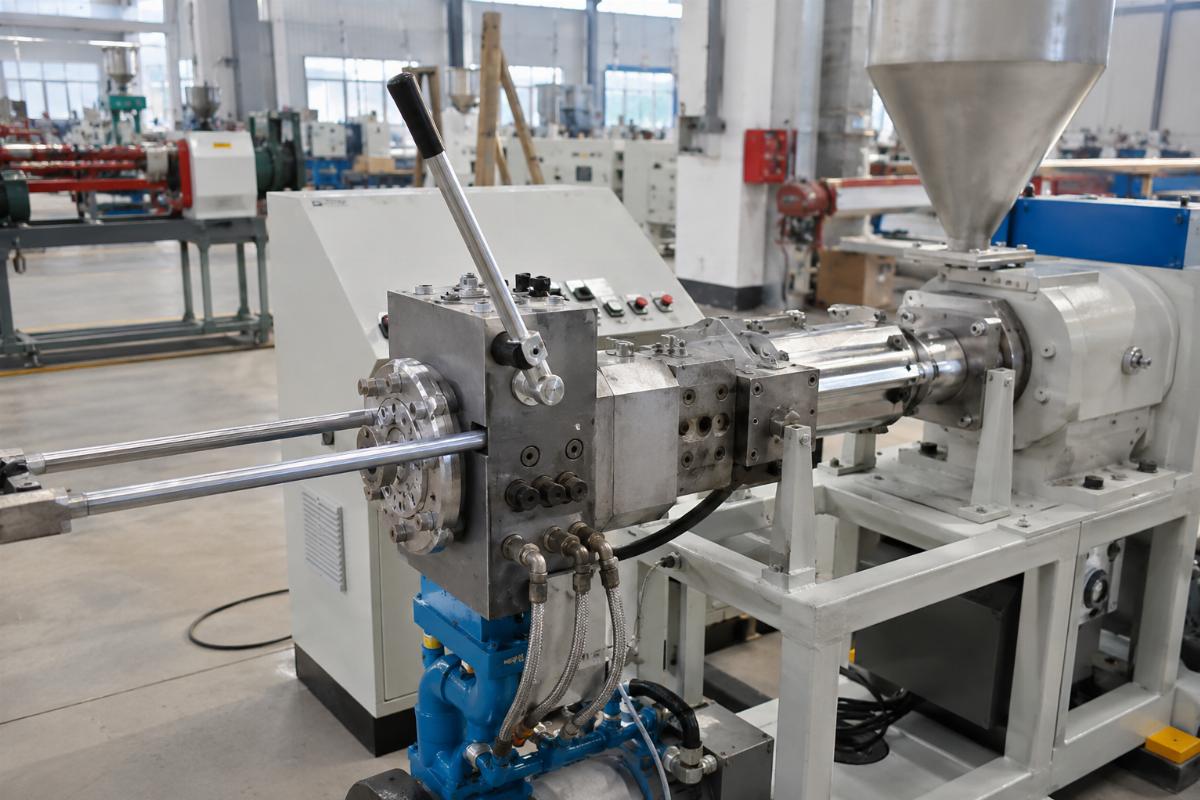
We recently supported a PVC pipe producer in Southeast Asia running an 800kg/h single-screw extrusion line, and after they switched to a properly configured manual screen changer, they kept per-swap downtime under 5 minutes and cut annual maintenance costs to less than 2000 USD, far below the expense of a higher-spec hydraulic unit they initially planned to purchase.
- Output Validation – Confirm your line’s actual stable hourly output over a 72-hour production cycle to avoid overspecifying based on theoretical maximum capacity.
- Impurity Testing – Run a 1000kg sample test of your standard raw material to measure actual impurity levels before selecting a filtration intensity.
- Downtime Tolerance Mapping – Calculate the exact per-minute cost of line interruption for your operation to quantify the value of faster screen swaps.
How does screen changer type impact your extrusion line’s long-term operational cost?
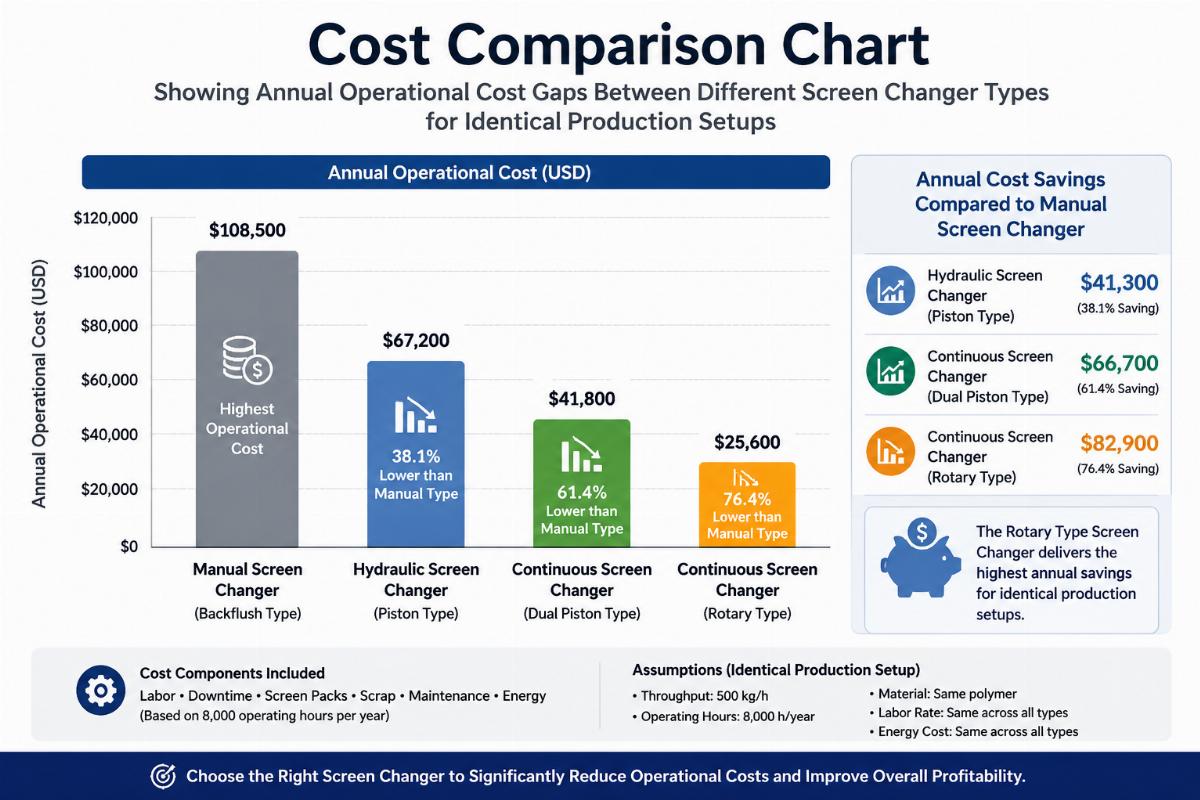
The same production scenario can see a 30-40% gap in annual comprehensive cost just from choosing the wrong screen changer variant. Initial purchase costs follow a clear tiered structure: if manual units are set as the baseline at 1x cost, hydraulic units carry a 2.3x multiple, and continuous units carry a 4.7x multiple, so the upfront price gap is far larger than most first-time buyers anticipate. This means the supposed performance benefits of higher-spec units only justify the extra cost if the operational savings they deliver cover the premium over the full service life of the equipment.
- Initial Cost Calculation – Tally the full upfront cost including installation, spare parts, and required line modifications for each candidate screen changer type.
- Annual Waste Projection – Multiply your annual production volume by the expected material loss rate for each type to quantify recurring material cost differences.
- Maintenance Budget Estimation – Collect verified maintenance cost data from existing users of each unit type to avoid unexpected long-term expenses.
Which screen changer type fits your common plastic production scenarios best?
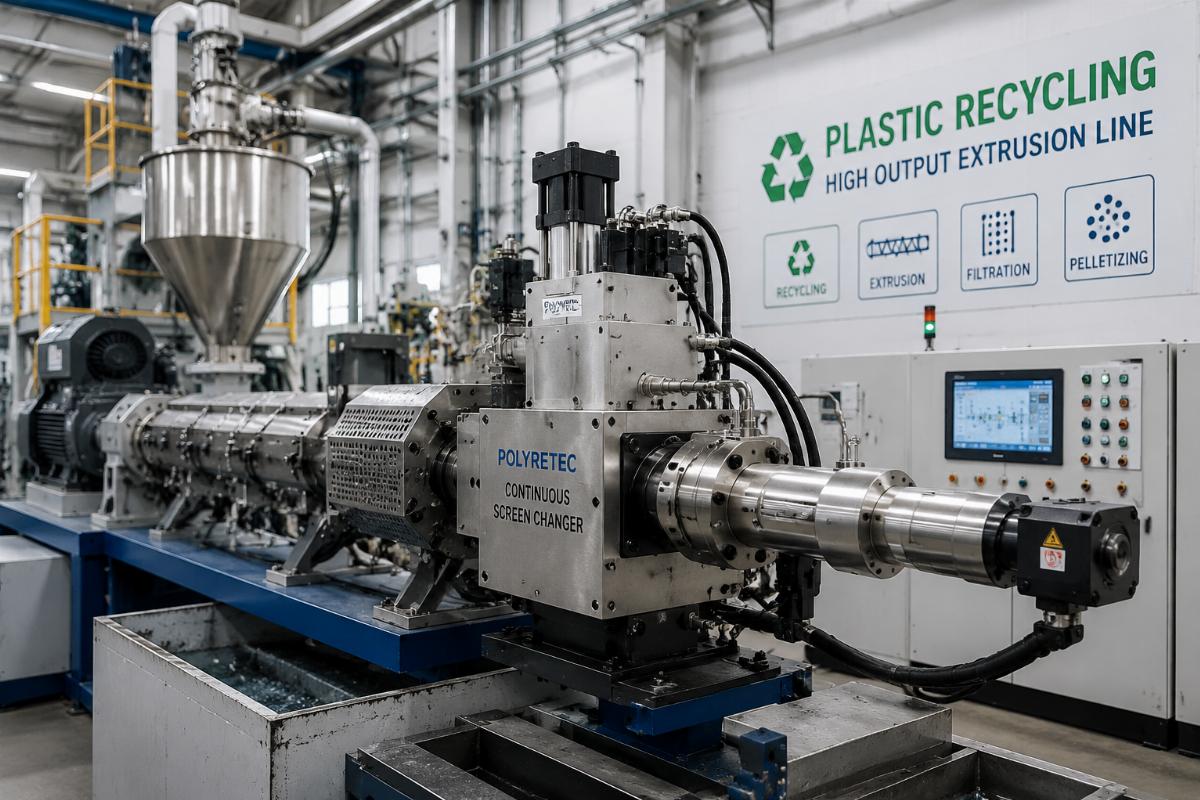
Manual units are the most cost-effective choice for low-output low-impurity production, hydraulic units are the balanced default for most mid-output lines, and continuous units only deliver returns for high-output high-impurity recycling operations. A common counterintuitive finding here is that manual screen changers are not just for experimental small-scale lines: for low-impurity, low-output PVC profile production, their annual comprehensive cost is 35% lower than equivalent hydraulic units, a gap that almost no entry-level procurement teams anticipate. For reference, a recycling and granulation operation in Africa running a two-stage extrusion line processing contaminated PE/PP waste film saw a 42% reduction in annual downtime loss after installing a continuous screen changer, while a WPC profile producer in the Middle East running a hydraulic unit kept screen swap pressure fluctuation under 0.5bar and boosted finished product yield to 98.7%.
- Scenario Alignment Check – Categorize your operation into low-output low-impurity, mid-output general, or high-output high-impurity buckets to narrow your initial options.
- Peer Reference Verification – Request case references from suppliers for operations running the same materials and output levels as your facility.
- Pilot Testing – Run a 30-day side test of the candidate screen changer on one of your existing lines to measure real-world performance before full deployment.
How to avoid common mistakes when sourcing screen changers from Chinese suppliers?
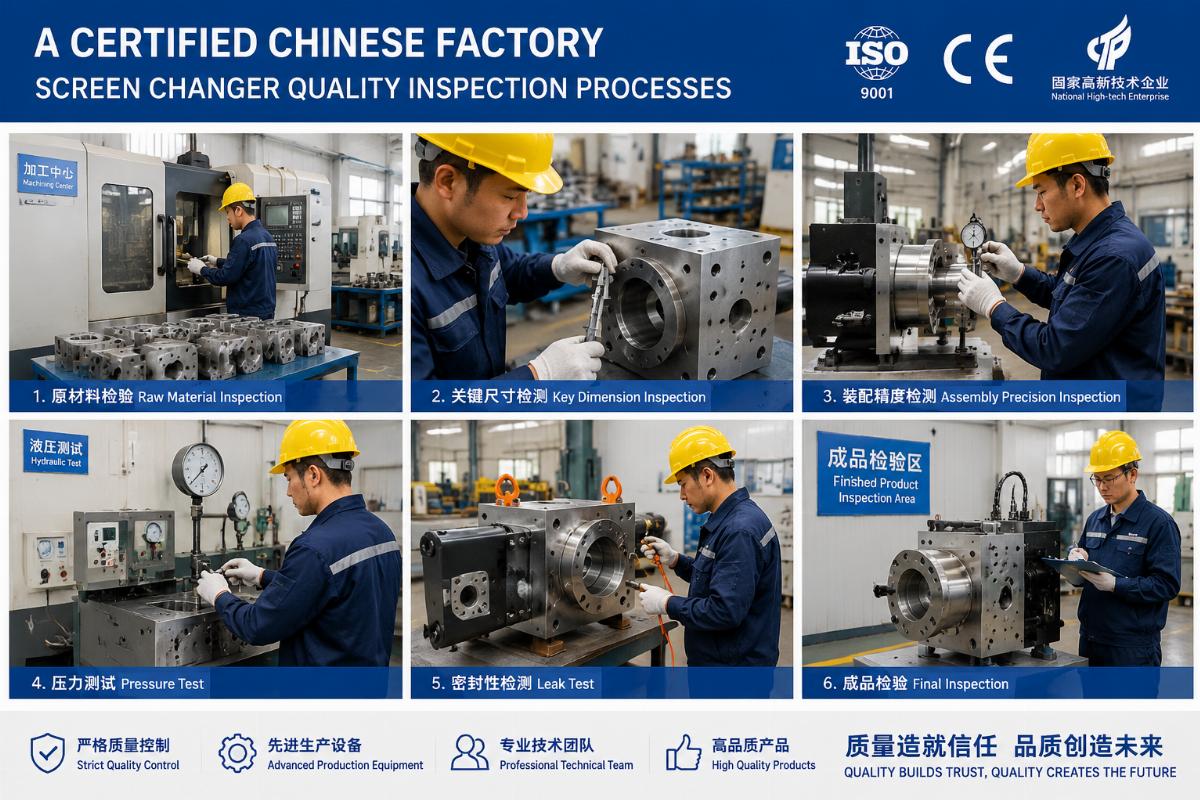
A widespread misconception that imported screen changers are universally more reliable than domestic alternatives is not supported by real operational data. CE-certified Chinese-made screen changers deliver over 8000 hours of continuous trouble-free operation, a performance gap of less than 5% compared to top European brands, while carrying a 30-50% lower price tag. The biggest risk when sourcing from Chinese suppliers is not component quality, but failing to confirm the compatibility between the screen changer and your existing extrusion screw parameters, and relying solely on printed product specs instead of verifying real-world operational records for identical configurations.
- Parameter Compatibility Confirmation – Share your exact screw diameter and line technical specs with suppliers to confirm full fit before placing an order.
- Case Reference Validation – Ask for contact details of existing customers running the same screen changer model on matching extrusion lines to verify performance claims.
- Certification Verification – Require suppliers to provide valid, up-to-date CE certification documents and independent test reports for the units you are evaluating.
What is the proper configuration matching logic for different extrusion lines?
The optimal screen changer setup is always tailored to your extrusion line’s exact screw diameter, rated output, and processed material type to maximize cost performance. With over 20 years of extrusion equipment manufacturing experience, we provide fully customized screen changer matching solutions aligned to individual production scenarios and output requirements, with full adaptation support for extrusion lines with screw diameters ranging from 45mm up to 200mm. For all core customer segments including plastic pipe producers, recycling granulation operators, profile and sheet manufacturers, packaging film producers, and regional extrusion equipment distributors, we test every configuration against real-world production data before finalizing recommendations.
- Screw Parameter Sharing – Provide your line’s exact screw diameter, length to diameter ratio, and power rating to your supplier for baseline compatibility checks.
- Production Requirement Briefing –
